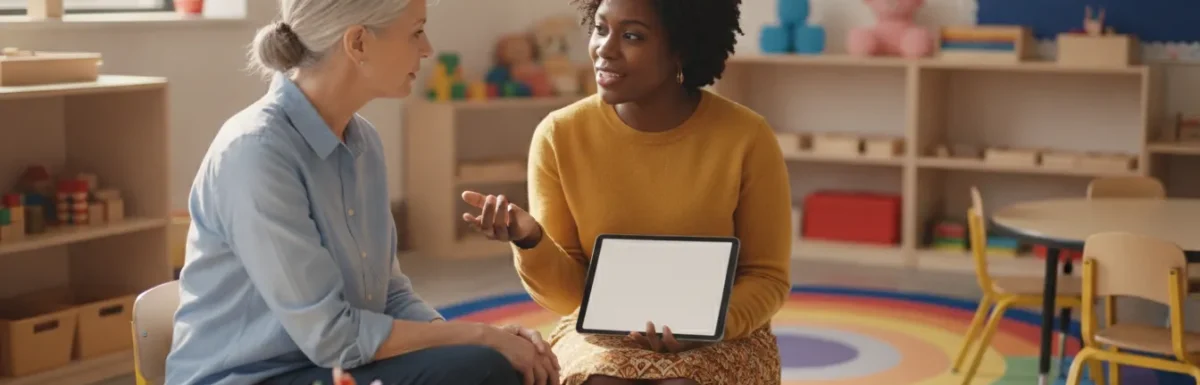
An interview for a preschool teaching position is not only a test of what you know. It is a chance to show how you turn child-development knowledge into safe, responsive classroom practice. Hiring managers want to hear how you guide behavior, support participation, communicate with families, and make thoughtful decisions when a routine or activity does not go as planned.
The strongest answers to preschool teacher interview questions connect your teaching beliefs to a specific classroom example. Briefly describe the situation, explain the action you took, and finish with the result or what you learned. This structure helps an interviewer see your judgment, reflection, and ability to put children’s needs first.
With that approach in mind, preparation becomes more than memorizing responses. You can identify the experiences that best demonstrate your strengths. Then practice explaining them clearly and confidently as you prepare for the topics interviewers are most likely to explore.
Get guidance on your next step in early childhood education
How to Prepare for Preschool Teacher Interview Questions
Strong preparation is less about memorizing perfect responses and more about organizing the classroom experiences you can explain clearly. Before the interview, review the position description and the program’s public information. Note the age group, teaching responsibilities, schedule, family-facing duties, and any priorities the employer states. Prepare to discuss only what you can support with your own training and experience.
Build a story bank from your classroom experience
Create a short list of situations that show how you work with young children and families. Choose examples involving guidance, transitions, play, observation, communication, inclusion, safety, or a challenging moment. For each story, write four notes:
- Situation: What was happening, and what did the children need?
- Action: What did you do, and why did you choose that approach?
- Response: How did the child, group, or family respond?
- Reflection: What did you learn, adjust, or carry into your next interaction?
This structure keeps your answer focused while leaving room for professional judgment. A story about helping a child enter the classroom can show patience, observation, relationship-building, and respect for the child’s feelings. Do not present one technique as a universal solution.
Rehearse concise answers with a child-outcome focus
Practice answering aloud rather than reading from a script. Aim to make your main point early, then give one specific example. Replace broad statements such as “I am good at classroom management” with an explanation of how you establish predictable routines. Observe behavior, offer appropriate choices, and protect children’s safety. Connect your actions to an outcome, such as helping a child participate, communicate needs, build confidence, or engage with peers.
Ask a trusted colleague to give you common prompts, including questions about your teaching philosophy, disruptive behavior, family communication, and a child who refuses to participate. After each response, check whether you explained what you noticed, what you did, and what you would consider next. If you are also updating your application materials, review these preschool teacher resume tips so your resume examples and interview stories present a consistent picture of your experience.
Finally, prepare a few thoughtful questions about the role and the classroom. Ask about team communication, daily routines, and how teachers share observations. These questions help you understand the setting while showing that you are thinking about collaboration and children’s experience.
What Hiring Managers Are Listening For in Your Answers
When you work through preschool teacher interview questions, listen for the concern beneath each prompt. A question about challenging behavior may also be asking how you protect safety, understand development, and maintain a respectful relationship with the child. Expectations vary by program, but strong answers usually connect your decisions to children’s needs and to the responsibilities of an early childhood professional.
Safety and thoughtful supervision
Hiring managers may want to hear how you create a safe learning environment without making the classroom feel restrictive. Explain how you scan the room, anticipate risks, teach age-appropriate safety routines, and respond calmly when a child is hurt or upset. Focus on prevention and supervision rather than presenting yourself as someone who only reacts after a problem occurs.
Developmentally appropriate practice
A useful answer shows that you consider a child’s age, individual development, interests, and ability before choosing an activity or response. Instead of saying that every child must follow the same approach, describe how you offer support, choices, modeling, or additional time when appropriate. This helps demonstrate that your expectations are purposeful and realistic.
Observation and responsive planning
Observation gives teachers information for decisions. Discuss what you notice in children’s play, language, participation, or interactions, and how those observations influence your next step. You might explain how you adjust an activity, provide a new material, or plan a conversation with a family. Keep the example concrete, and distinguish what you directly observed from what you inferred.
Relationships and professionalism
Strong early childhood answers recognize that learning grows from dependable relationships. Show how you build trust with children, communicate respectfully with families, collaborate with colleagues, and protect confidentiality. Professionalism also includes preparation, punctuality, follow-through, and knowing when to ask for guidance. For additional context, you can review these CDA teaching philosophy considerations.
Reflection and continued learning
Interviewers may listen for evidence that you can evaluate your own practice. Describe what you learned from a classroom experience, what you would keep, and what you would change next time. Reflection is not an admission of failure. It shows that you take children’s experiences seriously and are willing to improve your decisions as you gain information.
Across these topics, avoid reciting ideal phrases without an example. Explain what you noticed, what action you took, and how you considered the child’s safety, development, and relationships.
Preschool Teacher Interview Questions About Child Guidance and Classroom Management
Interviewers want to know whether you can protect a welcoming learning environment while responding thoughtfully to individual children. Strong answers show that you observe before reacting, stay calm under pressure, and use guidance strategies that match a child’s developmental level. Avoid describing classroom management as simply making children obey. Explain how you teach expectations, build trust, and help children practice more appropriate choices.
Disruptive behavior and calm redirection
A question about hitting, shouting, running indoors, or interrupting is an opportunity to describe a clear process. First, explain how you would make sure everyone is safe. Then describe what you would observe: what happened before the behavior, what the child may be communicating, and whether the behavior is recurring. You can state that you would acknowledge the feeling without approving unsafe actions, set a concise limit, and redirect the child toward a specific alternative.
For example, you might say, “I would move close, calmly stop the unsafe action, and say, ‘I will not let you hit. You are angry. You can tell me you need space or use the calm area.’ After the child is regulated, I would help them practice the expected response. I would also document patterns that may require team follow-up.” This answer demonstrates safety, emotional support, observation, and follow-through. It also leaves room to follow the program’s policies and collaborate with families.
Refusal to participate and separation anxiety
If a child refuses an activity, explain that participation is not forced without first considering the reason. The child may be tired, unsure of the materials, overwhelmed by the group, or seeking control. You could offer two acceptable choices, invite the child to watch first, adjust the activity, or provide a smaller role. Follow up by observing whether the child joins later and by sharing useful patterns with the teaching team.
For separation anxiety, focus on a consistent arrival routine rather than promising that the child will stop crying immediately. A brief, warm goodbye, a familiar educator, a predictable transition activity, and a reassuring connection with the family can help. Your answer should show empathy for the child and respect for the family’s information, while keeping the classroom routine steady.
Routines and management style
When asked about your management style, describe it as proactive, relationship-based, and predictable. Mention visual or verbal cues, transition warnings, materials prepared in advance, and expectations taught through modeling and practice. Explain how you would adjust the environment when children are waiting too long or moving through a transition unsuccessfully. Predictable routines reduce confusion, but effective teachers still respond to children’s cues.
| Interview focus | What to show in your answer |
|---|---|
| Child guidance | Observation, calm limits, redirection, and a developmentally appropriate choice. |
| Family communication | Specific observations, respectful listening, collaboration, and follow-up. |
| Lesson planning | A clear goal, flexible materials, observation, adaptation, and reflection. |
| Safety and inclusion | Active supervision, access, belonging, and respect for program procedures. |
End with reflection: you review what happened, consult colleagues when appropriate, and use observation to refine the environment or guidance plan. If you are preparing broader interview responses, these inclusive preschool classroom strategies can help you discuss adaptations without labeling a child. Your goal is to show that classroom management is not a separate task from teaching. It is the ongoing work of creating safety, belonging, and opportunities for children to develop self-regulation.
How to Answer Questions About Families, Inclusion, and Safety
Strong answers in this area show that you can build trust while protecting each child’s well-being. Interviewers want more than a general statement that you value families or safety. Explain what you would do, how you would communicate, and how you would adjust your approach when a child or family has different needs.
Discuss progress and challenges with families
When asked how you communicate with families, describe a respectful, specific process. Share observations about a child’s participation, language, social interactions, or emerging skills, then invite the family to add context. If a concern arises, begin with the child’s strengths and describe observable behavior rather than using labels. For example, you might say that a child has difficulty joining group activities after transitions. Explain what support has helped, and ask whether the family sees a similar pattern at home.
Keep the conversation collaborative. Agree on a small next step, document relevant observations according to program procedures, and follow up. Avoid promising a diagnosis or giving legal advice. A thoughtful answer makes clear that family information is handled respectfully and shared only with the appropriate people under the program’s policies.
Show cultural responsiveness and inclusion
Answer inclusion questions with concrete classroom actions. You might mention learning children’s names and family preferences correctly, incorporating varied books and materials, and checking that examples do not assume one family structure. Invite families to share traditions when they are comfortable. Do not treat one cultural practice as representative of an entire group. Ask respectful questions and remain open to correction.
For a child who needs an adaptation, explain that you would observe the child’s strengths and barriers. Consult the family and relevant team members, and adjust the environment or activity. Possible adaptations include visual cues, additional processing time, a quieter participation option, accessible materials, or a different way to demonstrate learning. You can find more practical ideas in this guide to inclusive preschool classroom strategies.
Make safety part of your daily practice
For safety questions, connect your answer to active supervision rather than relying on a single rule. Describe positioning yourself so you can see and hear children, scanning the whole space, counting or checking attendance during transitions, and anticipating hazards before children begin an activity. Mention that health and safety routines include handwashing, cleaning, safe storage, allergy awareness, injury response, and following the program’s established procedures. Choose examples you have actually practiced, and state when you would notify a supervisor or follow an emergency plan.
Confidentiality also matters. Explain that you would discuss a child’s records, behavior, health information, or family circumstances only through authorized channels. You would not share identifying details in casual conversations or on social media. These answers demonstrate judgment, consistency, and respect for children and families, which are central themes in preschool teacher interview questions about professional responsibility.
Lesson Planning and Teaching Philosophy Questions
Questions about lesson planning reveal how you turn child development knowledge into thoughtful classroom practice. Instead of describing a perfect activity, explain how you set a meaningful goal, choose materials, and decide what children are ready to explore. A strong answer connects planning to observation rather than treating every lesson as a fixed script.
Start with a clear, developmentally appropriate goal
Describe what children will have an opportunity to do, not simply what the teacher will present. For example, a plan might invite children to compare natural objects, use descriptive language, or collaborate during dramatic play. Explain how you would introduce the experience, observe children as they participate, and adjust the level of support. This shows that your planning is intentional while remaining responsive.
If an interviewer asks about your teaching philosophy, connect your beliefs to visible classroom choices. You might explain how play gives children meaningful ways to practice language, problem-solving, self-regulation, and relationships. Your answer can also acknowledge the teacher’s role in extending learning through questions, modeling, carefully selected materials, and encouragement. For additional preparation, review this guide to CDA teaching philosophy.
Show how you differentiate without labeling children
Good lesson planning leaves room for different interests, communication styles, abilities, and levels of experience. You could offer several ways to participate, such as drawing, building, movement, conversation, or hands-on exploration. You might simplify a step, add a visual cue, provide adaptive materials, or extend the challenge for a child who is ready for more complexity. Keep the focus on access and engagement, not on lowering expectations.
Observation should guide those decisions. Explain that you would document what children say and do, look for patterns, and use that information when planning the next experience. If children lose interest, need more time, or take the activity in an unexpected direction, flexibility matters. You can preserve the learning goal while changing the materials, grouping, pacing, or questions.
Include reflection in the planning cycle
Finish your example by explaining how you would reflect. Ask whether children were engaged, whether the materials supported the intended goal, whose participation was limited, and what you would change next time. Scenario-based professional development can help educators practice these decisions with realistic classroom situations, but an interview answer should stay specific to your own reasoning and experience. The strongest response demonstrates a cycle of planning, observing, adapting, and reflecting rather than promising that every lesson will go exactly as planned.
How to Give a Strong Classroom Example
When an interviewer asks what you would do in a classroom situation, explain how your judgment would work in practice. Avoid answering with a general belief such as “I would stay calm.” A useful response moves from the situation to your action, the result you observed, and what you learned.
Use this structure to keep your answer focused:
- Situation: Briefly describe the classroom context and the specific challenge. Identify the children’s needs without labeling a child as “bad,” “difficult,” or “unmotivated.”
- Action: Explain what you did and why. Mention how you maintained safety, offered developmentally appropriate choices, adjusted the environment or activity, and communicated with other adults when appropriate.
- Result: Describe what changed. The result might be improved participation, a calmer transition, stronger peer interaction, or useful information gathered through observation. Keep the outcome honest rather than claiming that one strategy solved everything immediately.
- Reflection: Close with what the experience taught you and how you would use that learning again. Strong reflection shows that you observe, adapt, and continue developing your practice.
Illustrative example
For example, imagine you are asked how you would respond when a preschool child refuses to join a small-group activity. You might say: “During a small-group art activity, one child stayed near the bookshelf and said no when invited to join. I first made sure the child was safe, acknowledged that joining felt difficult, and offered two choices: watching from a nearby seat or helping distribute the materials. I avoided forcing participation and continued the activity for the other children. After a few minutes, the child chose to hand out the paper and then joined for part of the activity. I observed that the transition into the group was the challenge. I would offer advance notice and a classroom job before the next small-group lesson.”
This example demonstrates patience, respectful guidance, observation, and adaptation. It also gives the interviewer evidence of what you actually did instead of relying on broad claims about classroom management. If your example involves inclusion or adapting an activity, review these inclusive preschool classroom strategies before your interview.
Choose an experience you can explain clearly, protect children’s privacy, and be ready to discuss what you would change. A thoughtful answer to preschool teacher interview questions does not need to sound perfect. It should show sound judgment, reflection, and a commitment to helping children participate successfully.
Connect with National CDA Training for your next career step
Frequently Asked Questions
What should I bring to a preschool teacher interview?
Bring several printed copies of your resume, a short list of professional references, and a few concise classroom examples. You may also prepare a brief teaching philosophy and examples showing how you support routines, guide behavior, communicate with families, and adapt activities for individual children.
How should I answer a question about challenging behavior?
Describe how you first observe the behavior, consider the child’s developmental needs and possible triggers, and respond calmly. Explain the specific guidance strategy you would use, how you would protect the safety of the group, and how you would reflect or communicate with the family afterward.
What classroom examples are strongest in an interview?
Choose examples that show a clear situation, your action, and the result for the children. A strong example might explain how you helped a child join a routine, adjusted an activity to support participation, or partnered with a family. Keep the story concise and identify what you learned.
How can I discuss inclusion during a preschool interview?
Explain how you learn about each child’s strengths, interests, communication style, and support needs. Then describe practical adaptations, such as changing materials, modeling a step, offering choices, or adjusting the environment. Emphasize belonging, respectful observation, collaboration, and keeping expectations developmentally appropriate.
Get started with your next step in early childhood education
Strong interview answers become easier to give when your training connects professional knowledge with realistic classroom decisions. If you want to build confidence for your next opportunity, explore National CDA Training’s online CDA training and professional development resources. Get started with online CDA training and continue developing skills you can bring to your classroom and future interviews.