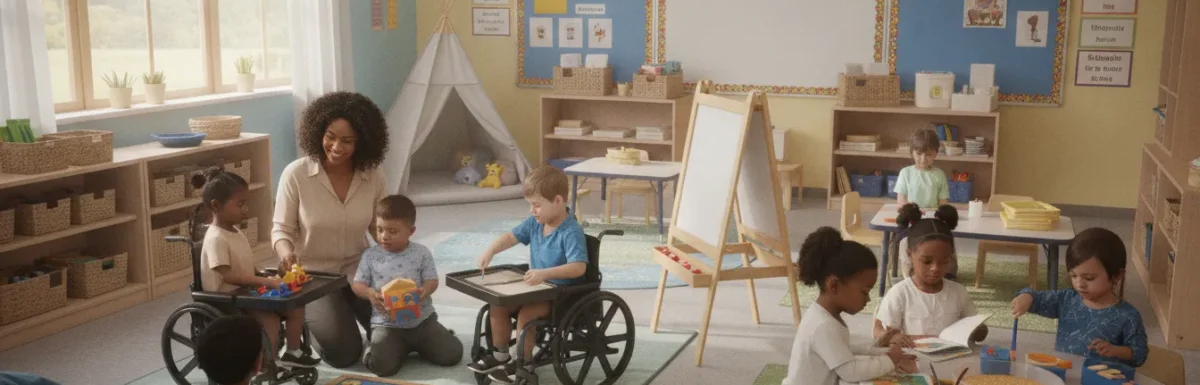
Preschool classrooms are filled with vibrant energy and diverse learning needs that require deliberate and specialized support. When children with developmental delays or physical challenges enter a general education setting, educators must be prepared to adapt their instruction. Successfully welcoming these young learners means understanding the legal, structural, and practical tools designed to help every child thrive.
Early childhood special education is a specialized branch of education that provides tailored instruction. Developmental therapies, and structural accommodations to children ages three to five with developmental delays or disabilities. Guided by federal mandates like the Individuals with Disabilities Education Act, this discipline guarantees that eligible children receive a free appropriate public education in the least restrictive environment. Preschool and daycare teachers use individualized education programs to implement daily accommodations, modify classroom materials, and design inclusive lessons. By aligning general education classrooms with these therapeutic support systems. Early childhood special education ensures that young learners with unique developmental needs have equal opportunities to engage, play, and make meaningful progress alongside their peers.
Inclusive preschool classrooms thrive when teachers understand how to translate federal rules into daily classroom interactions. To build this supportive environment, educators must first explore the foundational principles that define special services for our youngest learners. We will examine these guidelines in detail by addressing the question, What Is Early Childhood Special Education?
What Is Early Childhood Special Education?
Early childhood special education is a service built for children ages three to five who have developmental delays or disabilities. This service gives young learners specially designed instruction to help them grow and learn alongside their peers. For preschool teachers, this field provides the tools needed to support every child in an inclusive classroom setting.
Special services are not just about academics. They also cover speech therapy, physical therapy, and developmental aids that help children build life skills. A kid who struggles with speech might get support to learn how to talk with friends. While a kid with physical delays might get help to move around the room. Preschool teachers work with specialists to make sure these services happen throughout the normal school day.
The Principle of Inclusion
At the heart of early childhood special education is the rule of inclusion. Under federal law, Part B of the Individuals with Disabilities Education Act requires that children with disabilities receive a free appropriate public education in the least restrictive environment. This law presumes that the first placement choice for any child is the regular classroom they would normally attend. A child should only be moved to a separate setting when their needs cannot be met with extra help in the regular class.
Inclusion means that kids with delays play and learn with kids who do not have delays. This setup helps all children build social skills and empathy from a young age. To make inclusion work, teachers must observe each child’s learning style to find and remove barriers to active participation.
Scaffolding and Teacher Readiness
To support all children, teachers must scaffold learning and use different ways to teach. Scaffolding means you give a child temporary help to reach a goal, then slowly take that help away as they get stronger. For example, you might use a picture schedule to help a child learn the daily routine, or add thick handles to crayons to help them paint.
When you use different ways to teach, you change how you share facts to meet each child’s unique strengths. You might use small groups, simple sign language, or physical toys to teach a shape. Understanding these methods helps preschool teachers feel confident when they work with special education team members to support young learners.
How Do IDEA and ADA Protect Preschool Children?
Federal laws protect children with disabilities and give them equal access to learning. These laws shape how you run your classroom and help every child join in daily activities. As a teacher in early childhood special education, you must know how these rules protect young learners and what they require you to do.
The Right to a Free Appropriate Public Education
The Individuals with Disabilities Education Act (IDEA) is a major federal law. Part B of this law requires a free appropriate public education (FAPE) for all children with disabilities ages 3 through 21. Under IDEA Part B guidelines, public schools must provide special education and services to meet each child’s unique needs at no cost to families. This means children with developmental delays can get speech therapy, physical therapy, or special teaching starting at age three.
The Least Restrictive Environment
IDEA also says that children with disabilities must learn in the Least Restrictive Environment (LRE). The law presumes the first placement option considered for each child is the regular classroom they would attend if they did not have a disability. Before a school can place a child outside the regular educational setting, the team must consider the full range of supplementary aids and services. This means you must try to support children in your general classroom with extra help, tools, or changes before thinking about a separate special education classroom.
Reasonable Modifications under the ADA
The Americans with Disabilities Act (ADA) protects children in both public and private settings. Title II of the ADA applies to all state and local programs, including public preschools. It requires reasonable modifications to policies or practices unless it fundamentally alters the program. For private childcare centers and preschools, Title III of the ADA applies. Under ADA Title III regulations, private centers must make reasonable modifications to accommodate children with disabilities. This might mean altering a classroom setup, changing a daily schedule, or training staff on specific physical needs.
How LRE Plays Out in a Real Classroom
To understand LRE, look at how a child with a physical disability participates in circle time. Instead of sending the child to a separate room for gross motor play, the teacher makes small changes. For a child who uses a walker, the teacher clears wide pathways and places a firm cushion on the carpet. The teacher might also use large, soft foam blocks that are easy to grasp. This allows the child to stay in the room and build social skills alongside peers. This simple scenario shows how supplementary aids keep children in their natural learning environment.
Understanding the IEP Process for Preschool Classrooms
Every child deserves a good start in school. For young learners with developmental delays, the Individualized Education Program (IEP) is the starting place for classroom accommodations. In early childhood special education, preschool teachers must know how to navigate this process. You need to understand how to turn legal plans into active daily routines that support development.
What is an IEP in Preschool?
An IEP is a legal document that outlines specific learning goals and accommodations for a child with special needs. Under the Individuals with Disabilities Education Act (IDEA), every child has a right to support in the Least Restrictive Environment. This means that a child with disabilities should learn alongside their peers in a regular classroom whenever possible. The IEP team must consider potential harmful effects, such as a loss of belonging, before moving a child from a regular setting. You should work closely with families and specialists to implement the plan.
The Five Steps of the IEP process
- Know the IEP accommodations: Read each child’s IEP carefully before school starts. You must have direct access to all required accommodations and a designated special education contact to ask questions.
- Collaborate with the special education team: Meet with special education teachers, speech therapists, and occupational therapists. This ensures that everyone uses consistent strategies to help the child make progress.
- Implement accommodations daily: Set up your classroom environment and materials to match the IEP. For example, you might add handles to toys, create wider pathways for walkers, or use speech devices to support communication.
- Document child progress: Keep simple, daily notes on how the child interacts with materials and peers. Note any barriers to active participation, as this data helps the IEP team adjust goals during annual reviews.
- Communicate with families: Share regular updates with parents about classroom wins and challenges. Building a strong home-to-school connection helps the child practice social and motor skills in both environments.
Setting and supporting preschool IEP goals
Preschool IEP goals usually focus on three key areas: social skills, communication, and motor development. For social goals, a child might practice taking turns during block play. Communication goals may involve using assistive technology to request a snack. Motor goals often require physical changes to classroom materials. When you build inclusive classroom strategies, you help every child feel a sense of belonging while gaining key developmental skills.
Classroom Accommodations and Modifications That Work
Inclusive preschool classrooms require practical tools to support young learners with diverse developmental needs. Under the Individuals with Disabilities Education Act (IDEA), teachers must ensure that children receiving inclusive classroom strategies have equal opportunities to engage. Finding the right tools starts with close observation. Teachers should observe each child’s learning style, note barriers to active participation, and collaborate with families and specialists to devise instructional strategies. This collaborative approach ensures that classroom adaptations align directly with the child’s developmental goals.
Environmental Changes
Simple shifts in the physical classroom layout can remove major learning barriers for young children. Teachers can arrange furniture to create wider pathways, which allows children who use walkers or adaptive equipment to move around without help. Sensory spaces can also help. A quiet corner with soft pillows and dim lighting gives children a safe space to calm down when they feel overwhelmed. Adding clear visual borders, like colored tape on the floor or carpet squares, helps children understand where to sit and play during group activities.
Material Adaptations
Young children with motor delays often need changes to standard classroom materials to build self-help skills. According to the Texas Education Agency, simple accommodation examples include the alteration of materials by adding handles or texture for grasping. For instance, teachers can slip foam grips over crayons, glue wooden pegs to puzzle pieces, or use velcro straps on paintbrushes. Textured tools like sensory bin items with high-contrast borders can also make play more inviting. These simple changes help children work on activities with less adult help.
Instructional Modifications
Instructional changes help children with cognitive or communication delays follow daily preschool routines. To make activities accessible, teachers must scaffold learning and ensure differentiated instruction for all learners while providing appropriate accommodations and modifications for students with disabilities. Instead of using long verbal directions, teachers can use clear visual cues, step-by-step picture cards, and live modeling. Reducing the size of group activities during circle time also helps. This change keeps children from losing focus and allows for more direct, one-on-one teaching moments.
Assistive Technology
High-tech and low-tech communication tools play a big role in professional development in special education. Assistive technology tools include speech devices, picture cards, and simple communication boards that let non-verbal children express their wants and needs. For instance, a child can point to a laminated picture card of a milk carton to ask for a drink during snack time. Teachers can find more resources on speech support devices through the U.S. Centers for Disease Control and Prevention. Using these tools early prevents frustration and helps young learners build vital social bonds with classmates.
Differentiation Strategies for Inclusive Classrooms
Every child deserves a seat at the table in early childhood special education. To make this happen, preschool teachers must understand how to adjust their teaching methods. They must also learn how to create a rich learning environment where all children can participate. Designing an inclusive classroom means that each child gets what they need to thrive. Let us look at how teachers can make this happen daily.
Accommodations Versus Modifications
Teachers must know the difference between accommodations and modifications. Accommodations change how a child learns. For example, a child might use a thick pencil grip or sit near the teacher. Modifications change what a child learns. This might mean shortening a task or teaching fewer vocabulary words. According to guidelines from the Texas Education Agency, teachers must scaffold learning and ensure differentiated instruction for all learners. This means you keep expectations high but offer the right support to help children meet them.
| Strategy Type | What It Changes | Preschool Example | Example for a Child with Special Needs |
|---|---|---|---|
| Accommodation | How a child learns | Child uses a visual schedule to follow the daily routine | A child with autism uses a picture chart showing each step of the hand-washing routine |
| Modification | What a child learns | Child traces letters while peers write them independently | A child with fine motor delays traces their name instead of writing it from memory |
| Environmental Support | The physical learning space | Quiet corner with reduced lighting and soft seating | A child with sensory processing disorder uses a beanbag chair in a dim corner during free play |
| Assistive Technology | Access to learning tools | Child uses a communication board to express needs | A non-verbal child taps pictures on a tablet to request a snack or choose a center |
Small Group Rotations and Scaffolding
Small groups are perfect for teaching children with developmental needs. In a small group, you can watch each child closely. You can use scaffolding to guide them step by step. If a child struggles to count, you can model the task first. Then, you let them try with your help. Over time, you slowly remove your support as they gain confidence. Using inclusive classroom strategies during these small group sessions ensures that every child can join the activity at their own pace.
Varied Entry Points in Learning Centers
Learning centers should have different entry points. This means children can play and learn with the same materials in different ways. At the blocks center, one child might stack simple shapes. Another child might build a complex bridge. This approach supports what the Texas Education Agency calls meaningful access. This principle means ensuring students with disabilities have equal opportunities to engage with and make progress in the general education curriculum. When you design centers this way, learning becomes natural and fun for everyone.
Peer Modeling and Social Play
Peer modeling is a strong tool in early childhood special education. Children learn a lot by watching their classmates. You can pair a child who has developmental delays with a peer who can show them how to share or talk. This builds social skills and a sense of belonging. Peers can show how to play with toys or how to follow classroom rules. This practice creates a warm, supportive community where children help each other grow every single day.
How CDA Training Prepares You for Inclusive Classrooms
Inclusive teaching in inclusive classroom strategies needs more than a basic list of rules. You must build daily habits that keep all children safe, involved, and active in the learning process. Child Development Associate (CDA) training gives you the tools to turn special education theory into real work in your preschool room.
Designing Environments for Safety and Support
To support foundational early childhood education knowledge, you must first plan a space where every child can move and play. CDA Subject Area 1 focus is on Planning Safe and Healthy Learning Environments. This training helps you look at your classroom layout and make smart changes. For example, you learn to widen pathways for wheel chairs or use low shelves for easy reach. These physical updates ensure that children with mobility limits can reach toys and tools without help. When you adjust the physical space, you prevent accidents and help children learn to build vital self-help skills.
GET STARTED NOW! Enrolling in online CDA training prepares you to manage diverse classroom needs with confidence. Call (269) 444-6128 or visit our enrollment page today.
Building Social and Emotional Connections
Inclusive rooms must also address social and emotional needs. CDA Subject Area 3 guides teachers in Supporting Social and Emotional Development. This module shows you how to guide peer play and help children manage big feelings. You will learn to use visual cues and clear routines that make the day calm and predictable. For preschool children in professional development in special education, these tools prevent stress and reduce challenging behaviors. Good training teaches you how to teach peer empathy, share tools, and build strong classroom relationships.
Building Real Skills Through Scenario Training
Traditional lectures do not prepare you for the fast pace of a real classroom. This is why National CDA Training uses a scenario-based methodology. This system lets you use mental practice to face virtual classroom situations. By solving real-life challenges online, you build fast and natural habits for your actual job. For instance, you might practice how to guide a child with sensory issues during a loud circle time. This practice helps you react with care and skill when real challenges occur. You learn to make fast, smart choices that protect a child’s safety and sense of belonging.
Frequently Asked Questions
How does IDEA apply to preschool?
Part B of the Individuals with Disabilities Education Act requires public programs to provide a free appropriate public education to eligible children with disabilities ages three through 21. According to the U.S. Department of Education, this education must occur in the least restrictive environment. This law presumes that a regular preschool classroom is always the first placement option the team considers.
Do private childcare centers have to follow the ADA?
Yes, private childcare centers must follow national disability laws. According to ADA.gov, Title III of the Americans with Disabilities Act covers private childcare centers and preschools. These businesses must make reasonable changes to their policies and practices to support and welcome children with disabilities in their programs.
How do you accommodate special needs in preschool?
According to the Texas Education Agency, preschool teachers can use simple changes like altering classroom materials to add handles or textures for easier grasping. Other helpful choices include rearranging the physical space for children who use walkers, showing kids how to use tools, and using assistive speech devices.
Where should a preschool teacher find student accommodations?
The starting place for any classroom accommodation is the child’s Individualized Education Program. The Iowa IDEA Information system states that preschool teachers must have full access to this document. The program lists the exact support, services, and special education contacts a teacher needs to help the child succeed.
Ready to build your inclusive classroom skills?
Delaying special education training can lead to missed learning opportunities and compliance challenges in your preschool classroom. Meeting the diverse needs of every child requires practical, scenario-based skills that you can use immediately. By starting your training today, you can quickly gain the confidence to support children with IEPs and create a truly inclusive learning space.
Ready to enroll in CDA training and build your inclusive classroom skills today? Contact National CDA Training to take the first step toward a more supportive, effective classroom environment.