
Every preschool teacher faces behavior challenges. A child refuses to clean up. Another hits a friend during play. These moments test patience and skill. But what if most of these struggles could be prevented before they start? Positive behavior support (PBS) offers a proven framework that shifts the focus from reacting to misbehavior to teaching children the skills they need to succeed. This approach to behavior management in preschool builds classrooms where children feel safe, understood, and motivated to make good choices. In this guide, we explore proactive strategies that reduce challenging behaviors, strengthen social-emotional development, and connect directly to CDA Competency Goal 3. Whether you are a new teacher or a seasoned educator, these evidence-based techniques will help you create a calm, productive learning environment.
Behavior Management Preschool: What Is Positive Behavior Support in Preschool?
Positive Behavior Support (PBS) is a clear, research-based framework for early childhood classrooms. Traditional behavior management preschool methods often relied on reacting to misbehavior after it happened. In contrast, PBS shifts the focus from punishment to prevention by teaching children what to do. This approach builds a warm, structured environment where young learners can succeed.
A Proactive Teaching Framework
Researchers at Vanderbilt University show that Positive Behavior Support is a clear, helpful process. This method gives teachers and families a direct way to understand and address persistent challenging behavior in young children. By focusing on individualized methods, teachers can find the root cause of a child’s struggle.
This system is not about quiet classrooms or strict rules. Instead, it is about giving children the tools they need to share their feelings. In high-quality early childhood programs, most children will respond well to proactive strategies like teaching social skills, redirection, and prevention techniques. When teachers use these tools, children learn how to solve problems and play with others without major conflicts.
How Prevention Minimizes Classroom Conflict
To make PBS work, teachers must change how they view classroom challenges. Instead of waiting for a problem to start, they plan ahead to stop issues before they occur. A major part of this work involves how teachers set up the room. Studies show that environmental arrangement is a key prevention strategy that helps reduce the chances for challenging behaviors to occur in a classroom setting.
By creating clear pathways and neat learning centers, teachers help children know exactly what to do. While these steps work for most kids, some children need more focused support. For those who experience severe learning or developmental delays, teachers can use specialized behavior support in preschool to ensure that every child gets the right help to succeed in school.
Replacing Punishment with Teaching
Traditional discipline often relies on time-outs or scolding. These reactive methods tell children what not to do, but they do not teach new skills. PBS replaces these old methods with active teaching. Researchers at the University of Florida explain that proactive behavior management focuses on telling and showing children what they should do. Instead of saying no, teachers model positive actions so children can make good choices on their own.
Proactive vs. Reactive Discipline: Why Prevention Beats Punishment
Every preschool teacher faces daily behavior challenges in the classroom. In traditional settings, teachers often rely on reactive discipline by waiting for a child to misbehave and then giving a punishment. By setting up proactive behavior management, preschool classrooms can run much more smoothly. This positive discipline shifts the focus from punishment to prevention.
Teaching Expectations Instead of Reacting to Errors
At its core, proactive discipline involves teaching clear rules instead of waiting to react to misbehavior. Research shows that proactive behavior management focuses on showing children what they should do rather than what they should not do. When you teach these skills early, you help children learn what to do before they make a mistake. For example, instead of telling a child to stop running, you can show them how to use walking feet.
When teachers set up a positive environment, they help children feel safe. Consistent classroom routines and clear expectations help preschool teachers minimize the reactive cycle of discipline. You can support this work by building social skills every day. This style of teaching connects directly to SEL and behavior management by helping children learn to guide their own actions.
How Proactive and Reactive Methods Compare
To see how these two styles work, we can compare them side by side. Proactive methods focus on prevention, while reactive methods focus on consequences. The choice between these paths shapes the whole classroom climate.
| Dimension | Proactive Discipline | Reactive Discipline |
|---|---|---|
| Approach Style | Teach positive behaviors and set clear routines | Punish negative behavior and use time-outs |
| Timing | Before misbehavior occurs | After misbehavior occurs |
| Teacher Role | Guide and mentor who models skills | Enforcer who focuses on consequences |
| Child Outcome | Learns self-regulation and coping skills | Feels shame, fear, or anger |
| Classroom Culture | Calm, safe, and supportive | Tense, stressful, and chaotic |
Choosing Prevention for Long-Term Success
Using proactive behavior supports helps you build a strong foundation for your class. When you spend time teaching expectations, you save time that you would otherwise spend dealing with crises. Children learn best when they feel trusted and understood rather than when they are afraid of making mistakes. Over time, these positive habits make the day easier and more fun for everyone.
By choosing prevention over punishment, you can make your classroom a space where children thrive. This shift does not happen overnight, but the results are well worth the effort. Teachers who use these strategies report fewer disruptions and more time spent on learning activities. Ultimately, proactive behavior management empowers both you and your students.
Classroom Routines and Environmental Design That Prevent Challenging Behaviors
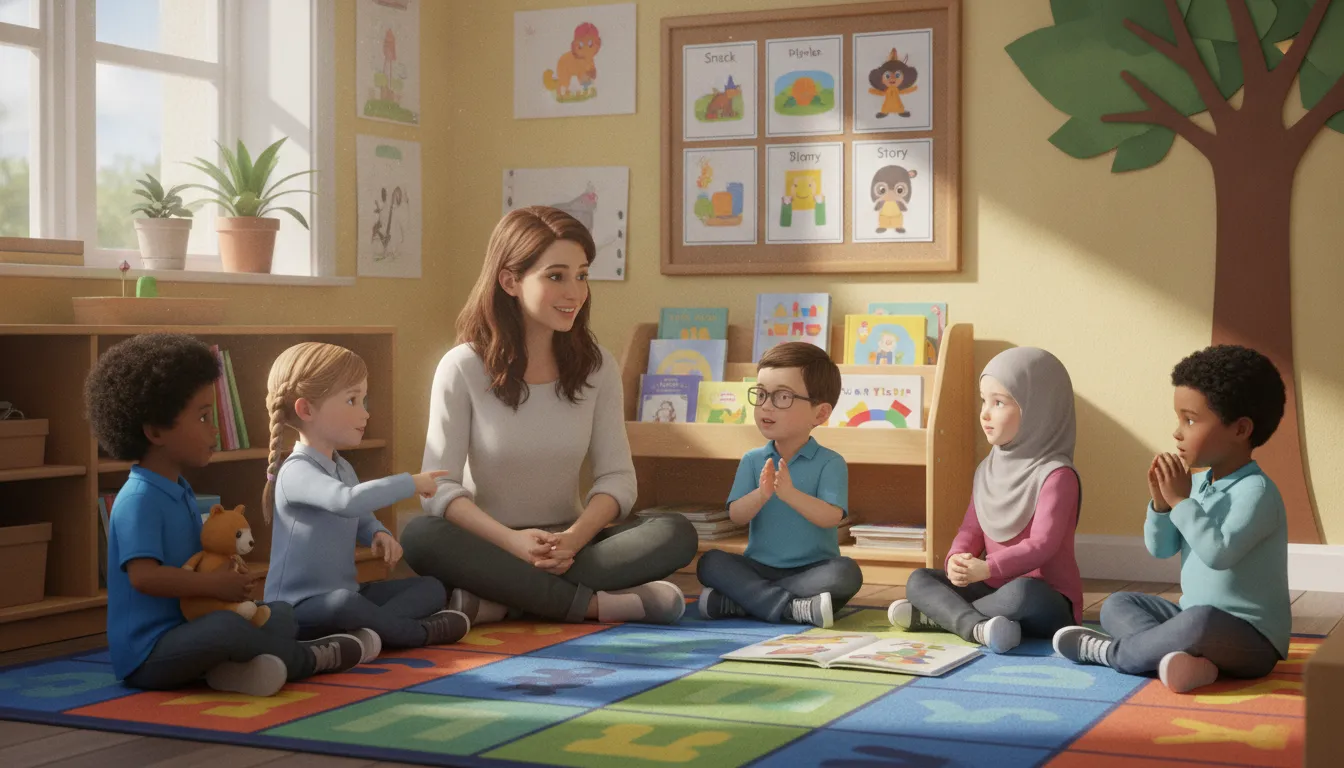
Good preschool classroom management depends on planning ahead rather than reacting to problems. When teachers set up their rooms with care, they can stop hard behaviors before they start. Clear daily schedules and smart room design are key tools for this work.
Arranging the Room to Reduce Classroom Clutter
The physical setup of an early childhood room directly affects child actions. Vanderbilt University research shows that environmental arrangement is a key prevention strategy that helps cut down on challenging behavior in the classroom. When classroom spaces are defined, children know exactly what to do in each area.
To build a calm space, teachers should set up learning zones with clear boundaries. Use low shelves or rugs to split the room into small spots. This setup stops kids from running or chasing each other. Keeping the room quiet and neat also helps children focus on play.
Classroom layout plays a big role in how children move and interact. High-traffic areas like the doorway, cubbies, and sink need plenty of space. If these spots are too tight, children can easily bump into each other. This physical contact often leads to frustration and conflict.
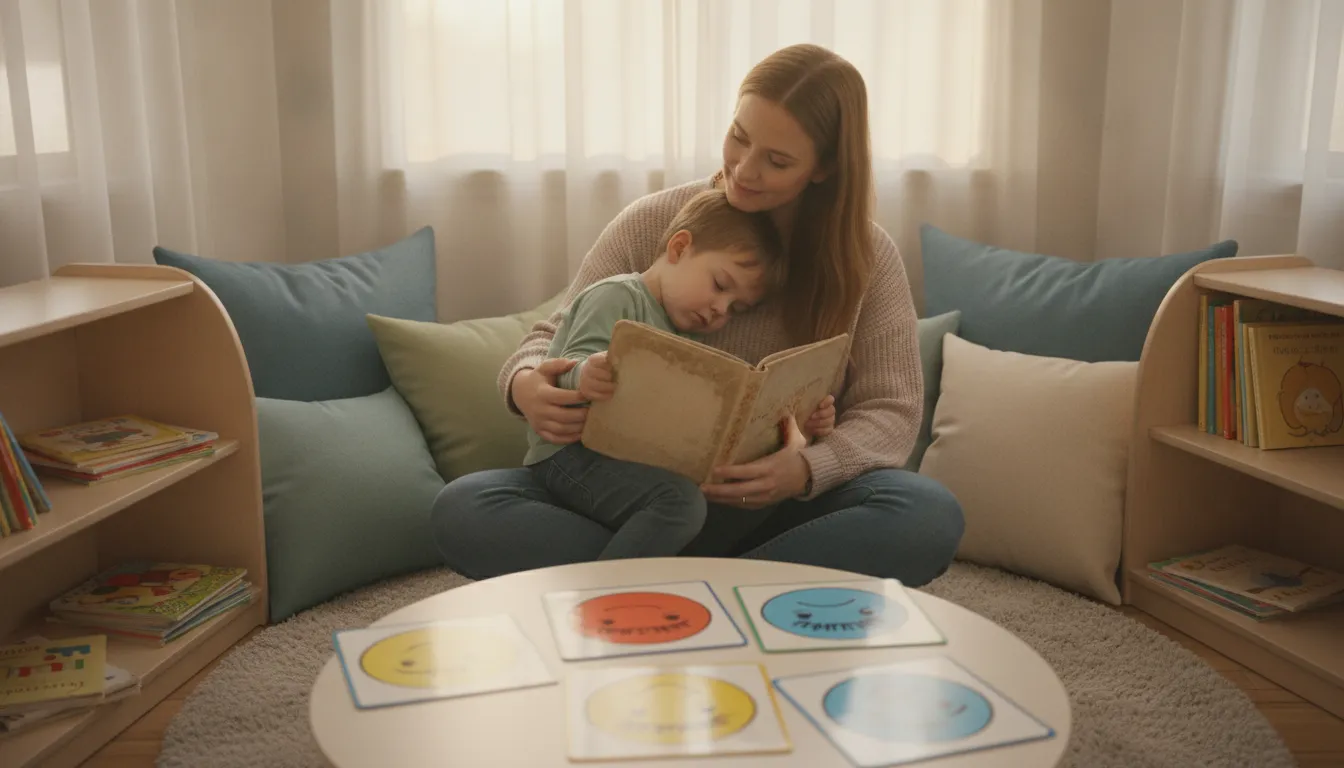
Create a cozy quiet spot in the classroom, sometimes called a calm corner. This space should have soft pillows, books, and quiet toys. When a child feels overwhelmed, they can visit this spot to rest. This small change in room design gives children a safe place to manage their feelings.
Establishing Predictable Daily Schedules
A predictable day gives young children a sense of safety. When kids know what comes next, they feel safe and act out less. Using steady routines and clear rules helps teachers minimize the reactive cycle of discipline. A schedule with simple drawings can show the daily order of events.
Moving from one task to another can cause stress for kids. Teachers can make these transitions easy by giving warnings before a change. For example, you can sing a short song or blink the lights five minutes before cleanup. This step helps children finish their work without stress.
A daily routine should balance active times with quiet times. Scheduling a quiet story time after outdoor play helps children calm their bodies. When the daily rhythm stays the same each day, children can transition between tasks with ease.
Visual schedules are especially helpful for children who are still learning language. A poster at eye level with drawings of circle time, lunch, and play can serve as a guide. Point to the chart throughout the day to remind children what comes next. This builds a sense of order and trust.
Teaching Behavioral Expectations Before Activities
Sharing rules right before a new task is a key part of positive behavior support. The University of Florida notes that sharing behavior expectations in advance helps children remember what to do. This simple step sets children up for success.
For instance, before group reading, show the children how to sit and listen. Explain that they should raise their hands to speak. Talking about these rules first helps every child know what to do.
Teachers should state rules in a positive way. Instead of saying what not to do, say what to do. For example, say “use walking feet” instead of “do not run.” This positive phrasing gives children a clear action to follow.
Practice these rules as a group during circle time. You can act out different classroom scenarios together. Let the children practice sharing toys or asking for a turn. This hands-on practice helps children learn the social skills they need to play well together.
5 Essential Strategies for Effective Behavior Management in Preschool
Every preschool teacher needs a toolkit of reliable strategies. The most effective approach to behavior management in preschool combines prevention with positive teaching. Here are five essential strategies that work in real classrooms every day.
- Set Clear, Positive Expectations. Before any activity, tell children exactly what to do. Instead of “no running,” say “use walking feet inside.” Post visual rules at eye level with simple pictures. According to researchers at the University of Florida, sharing behavior expectations in advance helps young children understand and remember what to do. This small step prevents confusion and reduces the need for correction later.
- Use Specific Praise and Positive Reinforcement. Catch children making good choices and name exactly what you see. Instead of “good job,” say “I love how you shared the blocks with Maria.” Specific praise tells children exactly which behavior to repeat. Positive reinforcement builds self-esteem and motivates children to keep making good choices. It also shifts the classroom culture toward celebrating success rather than correcting mistakes.
- Teach Social-Emotional Skills Explicitly. Many challenging behaviors happen because children lack the words or skills to express their needs. Dedicate time each day to teaching feelings vocabulary, conflict resolution, and friendship skills. Use puppets, picture books, and role-play to practice these skills. When children know how to say “my turn” or “I need a break,” they are far less likely to hit, grab, or throw a tantrum. This aligns directly with social emotional learning activities that build core classroom skills.
- Use Redirection and Offer Choices. When a child begins to struggle, redirect them to a positive alternative before the behavior escalates. For example, if a child throws blocks, say “blocks are for building on the table. Would you like to build a tower or a house?” Offering two acceptable choices gives the child a sense of control while keeping the classroom safe. This technique works because it addresses the need behind the behavior and avoids power struggles in the classroom.
- Apply Consistent Follow-Through with Logical Consequences. When a child crosses a limit, the consequence must be logical and directly connected to the behavior. If a child dumps a puzzle on the floor, the logical consequence is picking up the pieces, not losing recess. Consistency is key because when children know that expectations stay the same every day, they feel secure and act out less. Reactive punishments like time-outs teach children what not to do, while logical consequences teach children what to do instead.
Enroll in CDA training online to master these strategies through hands-on scenario practice and build the classroom management skills that set great teachers apart.
CDA Competency Goal 3 and Positive Behavior Support
The Child Development Associate (CDA) credential is the national standard for early childhood educators. Competency Goal 3 requires candidates to demonstrate skills that support children’s social and emotional development, and this is where positive behavior support directly applies. To see how this competency looks in practice, review our CDA Competency Statement 3 examples for detailed guidance.
What CDA Competency Goal 3 Covers
CDA Goal 3 states that the candidate must support social and emotional development and provide positive guidance. This competency includes helping children develop self-regulation, building relationships with peers and adults, and learning to express emotions appropriately. The Center on the Social and Emotional Foundations for Early Learning at Vanderbilt University emphasizes that supporting young children’s social and emotional development is foundational to effective behavior management.
How PBS Skills Appear in CDA Assessments
During a CDA observation, assessors look for evidence of positive guidance techniques. They watch to see whether the candidate uses redirection, models appropriate behavior, offers choices, and reinforces positive actions. These are the same proactive strategies at the heart of PBS. A candidate who masters positive behavior support is well prepared to demonstrate the skills that CDA assessors look for during their verification visit.
Building Competency Through Practice
The best way to master these skills is through deliberate practice. CDA candidates need opportunities to apply behavior management strategies in realistic classroom scenarios before they are assessed. This hands-on preparation builds the confidence and intuitive responses that make positive guidance second nature. The CDA subject areas cover social-emotional development as a core requirement, and practicing these strategies in realistic contexts prepares you for success.
How National CDA Training Prepares You for Real Behavior Challenges
Reading about behavior management strategies is one thing. Applying them confidently in a real classroom is another. That is where National CDA Training’s scenario-based methodology makes the difference. Our scenario-based training approach helps teachers build intuitive responses through realistic practice.
Learning Through Realistic Classroom Scenarios
Our training program does not just teach theory. You step into realistic classroom situations through guided scenarios that challenge you to apply positive behavior support techniques in the moment. A child refuses to join circle time. Two children argue over a toy. A toddler has a meltdown during transitions. These scenarios mirror the everyday challenges preschool teachers face. You get the chance to practice your response in a safe learning environment.
Building Intuitive Responses Through Mental Practice
Scenario-based training is scientifically proven to build intuitive responses. Instead of memorizing a list of strategies, you develop the automatic reactions that experienced teachers rely on. When a real child struggles, you will not need to pause and remember what to do because the right response will feel natural. This is the same approach used in high-stakes professions like aviation and medicine, and it works just as well for early childhood educators.
Flexible Training for Working Professionals
Our program is fully online and self-paced, designed for teachers who are already working in early childhood settings. You can complete your CDA training on your own schedule, applying what you learn directly in your classroom the next day. This immediate application reinforces your skills and helps you see results with your own students. For a complete roadmap, explore our CDA portfolio workbook to stay organized throughout the process.
Frequently Asked Questions About Behavior Management in Preschool
What Is Behavior Management in Early Childhood Education?
Behavior management in early childhood refers to the strategies teachers use to teach children expected behaviors, promote self-regulation, and create a safe, productive classroom environment. Unlike punishment-focused discipline, effective behavior management focuses on prevention, teaching children what to do, and reinforcing positive choices. The goal is to help children develop the social and emotional skills they need to succeed in school and life.
What Are the 5 Principles of Behavior Management in Preschool?
The five core principles include clear behavior expectations, consistent schedules, positive reinforcement, explicit social skills instruction, and proactive classroom design. These principles form the foundation of effective behavior management in preschool classrooms. They are supported by research from organizations like the Center on the Social and Emotional Foundations for Early Learning (CSEFEL) at Vanderbilt University.
What Are the Best Proactive Behavior Management Strategies for Preschoolers?
The most effective proactive strategies include establishing predictable daily schedules, providing visual cues and reminders, offering children choices within acceptable limits, using specific praise to reinforce positive behavior, and teaching expectations before activities begin. Proactive strategies prevent challenging behaviors by addressing children’s needs before problems arise. According to the University of Florida’s CEECS program, telling and showing children what to do rather than what not to do is one of the most effective proactive techniques available.
How Do You Handle Challenging Behaviors in a Preschool Classroom?
When challenging behavior occurs, start by observing to understand the function or need behind the behavior. Stay calm and use redirection to guide the child toward a positive alternative. Offer choices to give the child a sense of control. Teach the desired behavior directly rather than simply punishing the undesired action. For persistent challenges, document the behavior patterns and consider whether adjustments to the environment, routine, or instruction may help.
Why Is Positive Reinforcement Effective for Preschool Behavior Management?
Positive reinforcement is effective because it builds self-esteem, clarifies expectations, and motivates children to repeat positive actions. When a teacher says “I love how you waited for your turn” instead of just “good job,” the child learns exactly which behavior to repeat. This approach creates a classroom culture focused on success rather than correction. Positive reinforcement also strengthens the teacher-child relationship, which is itself a powerful predictor of positive behavior outcomes.
Ready to Build Your Classroom Management Skills?
Mastering positive behavior support is a critical skill for every preschool teacher. It is also a key competency evaluated during your CDA assessment. National CDA Training offers a comprehensive, self-paced online program built on a unique scenario-based methodology. You will practice responding to realistic classroom situations, building the intuitive skills that make positive guidance feel natural. Call (269) 444-6128 to start your CDA training today.
Ready to earn your CDA credential and build the classroom management skills that set great teachers apart? Our program is designed for working professionals who need flexible, high-quality training. Learn more about our 120-hour CDA training online or call us at (269) 444-6128 to discuss which track fits your goals.