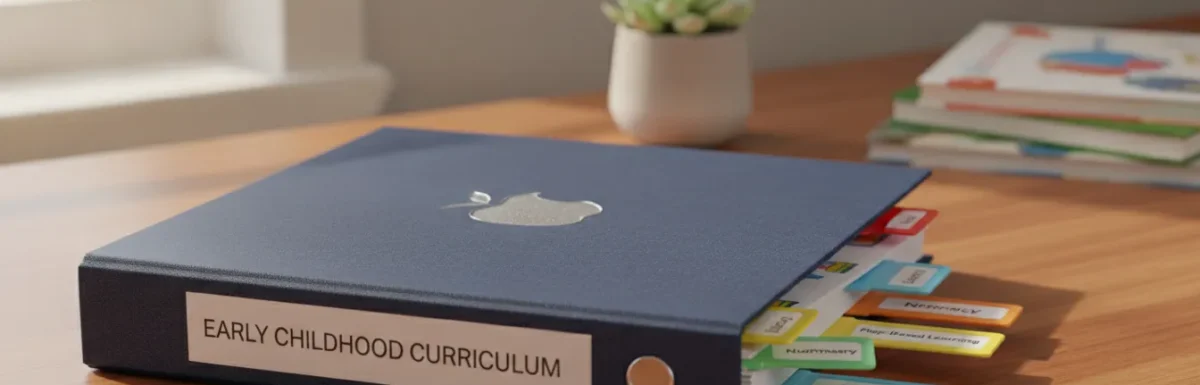
Most teachers feel lost when they start their certification paperwork. This big task can stop even the best teachers from reaching their goals. Mary Wardlaw made the CDA portfolio workbook to turn this confusing job into a clear plan.
The CDA portfolio workbook is a tool built by Mary Wardlaw, Ed.S., to make your path to certification much smoother. This workbook gives you a clear path to finish your professional binder without the stress. According to Texas A&M Agrilife, the professional portfolio is a required tool for your visit. The workbook breaks down the tough work of gathering proof into small tasks that you can finish one by one. You will find help for every part, from writing tasks to book lists. Using this guide helps you meet all the rules for the CDA credential. It takes the guesswork out and saves you hours of stress. You will feel ready and sure of yourself when the day comes for your visit.
Many teachers wonder why the binder feels so hard to start. It is helpful to look at Why Preparing a CDA Portfolio Feels So Overwhelming to see how you can beat the stress. Once you know what makes the job feel big, the path begins with understanding the core requirements.
Why Preparing a CDA Portfolio Feels So Overwhelming
Building a professional portfolio is one of the biggest hurdles for early childhood teachers. It is not just a folder of your work but a mandatory documentation tool for your CDA visit. Many teachers feel stuck when they see the long list of tasks. You have to gather forms, write statements, and track your hours all while working a full-time job. This heavy load can lead to stress and slow down your career goals.
The burden of documentation
The Council requires three main types of evidence to prove you are ready for your credential. These include a test, a site visit, and your professional portfolio. The portfolio itself holds many parts like family surveys and six long competency statements. You also need to write a full professional philosophy statement. Getting all these CDA portfolio requirements right takes time and sharp focus.
Missing pieces and organization gaps
One small mistake can cause big delays. If you lose a form or miss a resource item, you might not pass your review. Many educators try to use plain binders, but they often lack a clear path. This is why a CDA portfolio workbook is so helpful. It gives you a roadmap so you do not have to guess what comes next. A structured guide helps you see what is missing before your visit begins.
Turning stress into a plan
You can beat the stress by breaking the work into small steps. Instead of looking at the whole pile, focus on one section at a time. The right tools help you turn a messy desk into a clean, ready-to-show binder. Using a CDA portfolio workbook makes the process feel much less like a chore. With a clear plan, you can finish your work and feel proud of your path as a teacher.
Inside Mary Wardlaw’s CDA Portfolio Workbook: A Step-by-Step Solution
Building a professional portfolio is a key part of getting your CDA. This binder holds all the papers you need for your CDA visit. But for many busy teachers, gathering all these items feels hard. That is why Mary Wardlaw, Ed.S., made a special tool to help. Her CDA portfolio workbook is a clear guide that turns a big job into small, easy steps. With over 20 years of work in early childhood, she knows how to make the work simple for you.
A Clear Path for Busy Teachers
This workbook acts as a map for your training. It gives you a clear frame to follow so you do not miss any parts. You will find help for each of the six areas you must show. The workbook makes sure you meet all the CDA portfolio requirements without the stress. It was built by an expert with an Ed.S. degree and two decades of leadership. You can trust that the steps are right and easy to follow as you work toward your goal.
Real Tools for Real Classrooms
One great part of this solution is how it links to your daily work. It helps you take what you do in class and put it on paper. The CDA portfolio workbook is made to simplify the task of proving your skills. It helps you see how your daily tasks fit the rules. This means you spend less time guessing and more time teaching. By using this guide, you can be sure your binder is ready for the CDA Verification visit where it will be a tool for reflection.
Everything You Need in One Place
You do not have to search for what goes where. The guide keeps you on track so you can focus on your students. It helps you stay organized so that every paper is in its right spot. Having a solid plan means you can move forward with high trust. This workbook is the best way to turn your hard work into a finished portfolio that shows your best self.
How Scenario-Based Training Integrates with Your Portfolio
Building your portfolio is much easier when your training prepares you for real-world tasks. National CDA Training uses a unique method called scenario-based learning. This approach lets you practice how to handle common classroom events through 100% online coursework. Because the training mirrors what you do every day, you can quickly turn your lessons into facts for your CDA portfolio workbook.
Writing competency statements with ease
One of the hardest parts of the portfolio is writing your competency statements. These six reflections must show you know how to meet the needs of young children. Our scenario-based training builds your skills by giving you specific classroom problems to solve. This helps you translate your everyday work into the professional evidence required by the CDA Council. When you finish a module, you will already have the words you need for your portfolio.
Flexible learning for busy teachers
Most teachers have full schedules and need a way to study that fits their lives. The 120-hour online courses at National CDA Training allow you to learn at your own pace from any place. This CDA portfolio building course connects directly to your tasks. Instead of guessing what to write, you follow a clear path that leads to a finished binder. This plan keeps you on track so you can meet every standard without feeling stuck.
Turning practice into evidence
Every time you solve a scenario in your training, you are creating a record of your growth. This practice makes it simple to pick the right items for your resource collection. By using the CDA portfolio workbook alongside your training, you ensure that every piece of paper serves a purpose. You will feel ready for your visit because you have practiced these skills in your online modules long before your specialist arrives.
Organizing Your Resource Collection with the AI-Powered Assistant
The Resource Collection is a big part of your binder. It asks you to gather items that show you are ready to lead a classroom. Many teachers feel stuck when they try to find and sort these files. Using a CDA portfolio workbook helps you stay on track from day one.
This tool turns a long list of tasks into a clear plan. You can finish it in your spare time without stress. Since the CDA Professional Portfolio is a needed part of your visit, sorting your work now is vital.
Meeting the Resource Collection III Requirements
Resource Collection III, or RC III, focuses on reading and learning. You must create a book list that has 10 children’s books. These books should cover a range of themes to show you can help different kids. Choosing books that reflect the lives of your students is a great way to show your skills.
The CDA portfolio workbook gives you a place to log each title and author. This ensures you do not miss any small points. You should pick stories that help kids learn about their world and their feelings. The goal is to show how you use books to teach social skills.
When you sort these items well, you prove that you know how to plan a learning space. Seeing clear CDA portfolio examples can help you see how other teachers have built their lists.
Building Family Support Through RC IV-4
The CDA also asks you to think about the families you serve. In section RC IV-4, you must find three websites that help parents know about child growth. You also need to include posts from each site to share with the families. This section shows that you are a partner in a child’s life.
It moves your work beyond the classroom and into the home. Finding the right links can take a lot of time if you do not have a guide. A good workbook helps you find and save these sites fast. It ensures that the tools you pick are helpful and easy for parents to read. By sharing this info, you help families support their kids’ learning in a deep way.
Using the AI-Powered Portfolio Assistant
One of the best tools for modern teachers is the AI-powered Portfolio Assistant. This helper is built into your training to help you sort your files with ease. It works with your workbook to keep your files in the right order. This means you spend less time searching for lost papers and more time on your teaching.
The helper can help you find where each item goes. It checks if you have met every rule before you ship your work. With this tech help, you can move through the certification process with more peace. It takes the guesswork out of building a complex file. You can trust that your Resource Collection is full and right before your big visit.
Neatness Counts: Formatting Your Portfolio for the Verification Visit
The CDA Verification Visit is a big day for every early childhood expert. During this time, a pro will look at your binder. This person is the CDA Professional Development Specialist. They use your portfolio to think about your work and skills. It is a tool for reflection during the visit (F009). A neat binder shows that you are ready for the job. It makes a great first impression when the specialist arrives.
Organizing with Purpose
One major goal is to put every item in the right order. This is a key step to make sure you meet the CDA requirements (F006). If your papers are messy, the specialist might miss a key part of your work. Using a CDA portfolio workbook can make this task much easier. It gives you a clear map to follow from start to finish. You will not have to guess where each document goes.
Protecting Your Hard Work
The CDA program helps teachers who work with children from birth to age five (F012). These young kids learn fast, and their teachers must be just as sharp. You can learn more about how to get a CDA certificate by reading our latest guides. A clean binder shows that you are an expert who cares about the small details. It proves you have the focus needed to lead a classroom well.
Steps to Assemble Your Binder
To ensure your portfolio looks professional, follow these simple steps:
- Purchase a clean, white three-ring binder that is one to two inches thick.
- Place every single document inside a clear plastic sheet protector to keep it clean.
- Use sturdy plastic tabs with printed labels to mark each section of your portfolio.
- Arrange the sections in the exact order required by the CDA Competency Standards.
- Review the entire binder one last time before your Professional Development Specialist arrives.
| Feature. | Unorganized Portfolio. | Organized Portfolio. |
|---|---|---|
| Page Order. | Loose or mixed up items. | Items in the required sequence. |
| Tabs and Labels. | No tabs or handwritten scraps. | Clear, printed tabs for sections. |
| Document Care. | Wrinkled or stained pages. | Pages inside clear sheet protectors. |
| Ease of Review. | Hard for the specialist to read. | Fast and simple to check. |
Choosing the Right Tools
The tools you use to build your binder matter. You should buy a sturdy three-ring binder that is the right size. A one-inch or two-inch binder usually works the best. Do not overfill it, or your pages might tear. You should also use clear sheet protectors for every page. These plastic sleeves keep your papers safe from dust and spills. They also make it easy to flip through your work.
Why a Professional Look Matters
A clean binder is not just about how it looks. It is about being clear and easy to read. When the specialist looks at your work, they want to see your growth. A messy binder can get in the way of that goal. It may cause stress for you and for the person reading it. A tidy set of papers lets your skills shine. It shows that you can handle the busy life of a teacher.
Using Your Portfolio Workbook
Your CDA portfolio workbook acts like a guide for your journey. It tells you what to do at each step of the way. By following it, you can avoid common mistakes that others make. For example, some people forget to label their items. Others might leave out a key statement. Your workbook works like a checklist to keep you safe. Use it every day as you build your resource collection.
Remember that this portfolio is for you, too. It is a record of your best days in the classroom. When you look back at it, you should feel proud of your work. That pride will show through when you talk to the specialist. Keeping it neat is one way to honor your own hard work. It helps you stay calm and ready for the verification visit.
Frequently Asked Questions
What age groups are covered by the CDA credential?
The CDA program is for teachers who work with kids from birth to five years old. According to the Arizona Department of Education, it also focuses on helping the families of these young kids. This age range covers babies and preschool students in many places. The binder you build shows you have the right skills to teach this group and meet their needs.
Can I complete my CDA portfolio while working full-time?
Yes, you can build your binder while you work a full-time job. Many teachers have busy schedules and need a way to finish their work at home. According to National CDA Training, flexible online tools help you manage your time. A good workbook allows you to finish each section in small steps. This makes the whole process much easier for any active teacher to handle.
Does the CDA Council offer a digital version of the portfolio?
Yes, you can use digital tools like the E-Portfolio to keep your files in order. The CDA Council provides this tool to give you step-by-step help for each part. Mary Wardlaw’s workbook also uses a smart tool to make the job easier. These options are great for busy teachers who want to keep their records in a neat and safe way.
Can I use free templates for my CDA portfolio?
Some teachers look for free templates, but they may not meet all the current rules. Using a proven workbook ensures you follow the latest standards. According to Texas A&M AgriLife, you must organize your files in an exact order. A simple guide helps you avoid mistakes that could slow down your certificate. It is a smart way to ensure your binder is ready for the visit.
Ready to organize your professional CDA portfolio with ease now?
Putting off your certification work only makes the task feel more heavy and much harder to finish as your big final deadline gets much closer. Every day you wait is another day you are not moving toward the higher pay and better job roles you really want to reach soon. You can schedule a free consultation today to save many hours of lost time and avoid the deep stress of missing a key needed document.
Are you ready to schedule a free consultation and start your journey toward success as an early childhood educator today? Call (888) 926-0405 to schedule a free consultation and learn how to finish your work very fast and easy.