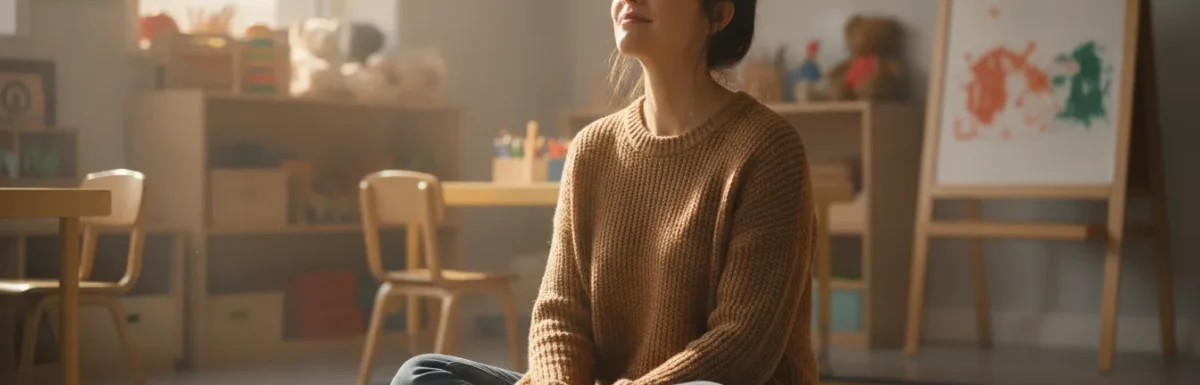
Preschool teaching asks you to stay patient, attentive, and emotionally present. You also manage routines, relationships, documentation, and constant classroom needs. Feeling tired after a demanding day is understandable. When exhaustion, detachment, or a sense of ineffectiveness continues, it deserves attention rather than self-blame.
Explore flexible online CDA training.
Preschool teacher burnout is a persistent pattern of emotional and physical depletion that can affect how you experience your work. It is not a sign that you care too little or need to work harder. Support may include naming workload pressures, talking with a supervisor or trusted colleague, protecting realistic recovery time, and seeking qualified professional help when concerns are serious or ongoing.
Recognizing the pattern is the first practical step. A closer look at changes in energy, feelings, and daily classroom responses can help separate ordinary work stress from a deeper concern. It can also clarify what support may be useful.
What Does Preschool Teacher Burnout Look Like?
Preschool teacher burnout is more than having a difficult week or feeling tired after a demanding day. Ordinary work stress may improve when a teacher has time to recover, practical support, or a temporary change in responsibilities. Burnout is a persistent pattern in which the strain does not seem to lift. And the work begins to affect a teacher’s energy, outlook, and ability to feel effective.
That pattern can be difficult to recognize in early childhood settings because caring deeply about children often goes hand in hand with carrying substantial emotional and practical demands. A teacher may continue showing up, planning activities, and meeting children’s needs while privately feeling increasingly depleted. This is not a reason to assign blame. Burnout should be met with empathy and practical, nonjudgmental support, not advice to simply work harder.
Possible signs that stress has become a persistent concern include:
- Feeling drained before the day begins or struggling to recover between shifts.
- Becoming unusually detached, irritable, or discouraged about work that once felt meaningful.
- Having less patience or emotional capacity for ordinary classroom challenges.
- Feeling ineffective, overwhelmed, or unable to keep up even when making a strong effort.
- Thinking frequently about leaving the field without being able to identify one clear cause.
These signs are not a diagnosis, and experiencing one does not prove that burnout is present. They are prompts to pause and look at the broader pattern. Workload, classroom expectations, staffing, leadership, resources, and support can all shape how pressure is experienced. A teacher should not be expected to solve a workplace problem alone.
Research can help explain why individual experiences differ. One preschool teacher study examined job demands and resources in a specific group of teachers, so its findings should not be treated as a universal measure of burnout. It did, however, reinforce the importance of considering the setting around the teacher rather than viewing burnout only as a personal weakness. If concerns are serious, persistent, or affecting daily life, seeking support from a qualified healthcare or mental-health professional is an appropriate next step.
Why Preschool Teacher Burnout Happens
Preschool teaching asks educators to manage several demanding forms of work at the same time. A teacher may guide learning, supervise safety, respond to big feelings, communicate with families, document progress, and keep classroom routines moving. The emotional labor is substantial because children need calm, patient adults even when the room is noisy, unpredictable, or short on support. Carrying those responsibilities day after day can become overwhelming. That does not mean a teacher lacks commitment or resilience.
A large academic study of 10,581 preschool teachers across 34 counties in 18 Chinese provinces examined factors associated with job burnout. Its findings offer a useful framework, although workplace conditions differ from one setting to another. The researchers found that job demands were associated with more burnout, while job resources were associated with less. In practical terms, the balance between what a teacher is asked to do and the support available to do it matters. Read the study on preschool teacher burnout for its full context and limitations.
Daily demands can compound
Classroom management is one important example. Supporting children through conflict, transitions, challenging behavior, and changing needs requires attention and emotional regulation. When staffing, planning time, materials, or consistent routines are limited, the same classroom challenges may consume more energy. Role commitments can add another layer. Teachers may feel responsible not only for children, but also for family communication, team coordination, compliance tasks, and the reputation of the program. Business or organizational issues can create pressure that teachers cannot solve from inside the classroom.
Resources and voice change the experience
The study associated lower burnout with teacher cooperation, input into decisions, kindergarten resources, and salary. These findings point to conditions leaders can examine, such as whether teachers have reliable materials. Realistic schedules, opportunities to collaborate, and a meaningful voice in decisions that affect their work. They also show why one teacher’s experience may differ from another’s, even when both care deeply about children.
| Pressure or support. | What it can look like. | Useful response. |
|---|---|---|
| Job demand. | Too many roles, difficult transitions, or sustained classroom-management strain. | Review priorities, coverage, and shared responsibilities. |
| Job resource. | Peer cooperation, decision-making input, materials, or planning support. | Protect and expand the supports teachers can use. |
| Workplace context. | Center policies, staffing patterns, and operational expectations. | Address system conditions instead of blaming one teacher. |
Preschool teacher burnout is therefore best understood in context. Personal coping skills may help, but asking an exhausted teacher to simply work harder overlooks the conditions creating the strain. A more useful response is to identify which demands are persistent, which resources are missing, and where support or changes are possible. Teachers deserve practical, nonjudgmental support, and serious or persistent concerns may warrant qualified professional help.
Practical Ways to Respond to Burnout This Week
You do not have to solve every source of strain in one week. A more useful approach is to identify what is happening, make one or two workable changes, and bring specific concerns to people who can share responsibility. Use this plan as a starting point, not as a promise of quick recovery.
-
Name the pattern you are noticing
Set aside a few quiet minutes to write down what has changed. You might notice dread before work, less patience during transitions, difficulty recovering after the day, or a growing sense that ordinary tasks require more effort. Record when these experiences occur and what was happening around them. Naming a pattern is not the same as diagnosing yourself. It gives you clearer information to discuss with a supervisor, trusted colleague, healthcare professional, or mental-health professional if the concern persists.
-
Separate controllable factors from structural factors
Make two short lists. On one, place actions within your immediate influence, such as preparing a transition routine or asking a colleague to review a challenging part of the day. On the other, place conditions that require leadership attention, such as staffing levels, schedule demands, inadequate planning time, or unclear responsibilities. This distinction protects you from treating a workplace problem as a personal failure. Research on preschool teachers has associated both job demands and available resources with burnout, so individual effort is only part of the picture.
-
Ask for one specific form of support
Replace “I am overwhelmed” with a concrete request. You might ask for protected planning time, help during a difficult transition, a review of non-teaching duties, or a brief weekly check-in. Bring your notes about the pattern and the conditions contributing to it. A specific request gives a director or lead teacher something practical to respond to, while also making it easier to determine whether the support is actually provided.
-
Simplify one recurring classroom routine
Choose one high-friction moment rather than redesigning the entire classroom. A consistent visual cue, fewer transition steps, prepared materials, or a predictable choice can reduce repeated decisions for both children and adults. Review these resources on positive preschool classroom strategies and preschool behavior support strategies for ideas that may fit your setting. Adapt any strategy to your group and your center’s policies.
-
Protect a realistic period of recovery
Choose a small boundary you can communicate and keep, such as taking your full break when coverage allows. Leaving on time on one agreed day, or declining an optional task until urgent responsibilities are complete. Rest is important, but it cannot compensate indefinitely for unsafe staffing, excessive workload, or other unresolved workplace conditions. Pair personal recovery with the support and workload conversations those conditions require.
-
Seek appropriate help when concerns persist
If exhaustion, distress, or other concerning experiences continue or interfere with daily life, speak with a qualified healthcare or mental-health professional. You can also continue documenting workplace conditions and ask your supervisor what changes are possible. Professional development, peer support, boundaries, rest, and qualified care can work alongside one another. No single routine, course, or act of determination should be expected to fix burnout by itself.
How Childcare Leaders Can Support Preschool Teachers
Support for preschool teachers should begin with listening, not blame. When a teacher describes feeling depleted, distracted, or unable to keep up, a leader can ask what is making the work harder and listen for patterns. The goal is not to decide whether the teacher is trying hard enough. It is to understand which demands, routines, or workplace conditions need attention.
Research on preschool teachers has associated lower burnout with teacher cooperation, participation in decision-making, and adequate kindergarten resources. The same study linked classroom management, role commitments, and business issues with increased burnout. These findings do not prescribe one solution for every center, but they reinforce an important point: workplace context matters. Leaders should examine the system around a teacher rather than treating burnout as an individual failure.
Review workload and resources together
Schedule a private, focused conversation about the teacher’s responsibilities. Review planning time, classroom coverage, transitions, paperwork, family communication, supply access, and the duties that regularly extend beyond the workday. Ask which tasks consume the most energy and which responsibilities could be paused, shared, simplified, or reassigned. A practical response might include protected planning time, clearer coverage during breaks, more reliable classroom materials, or help with a recurring routine.
Follow up with specific actions and a date to revisit them. A general instruction to “take care of yourself” cannot replace adequate staffing, workable expectations, or access to needed resources.
Include teachers in decisions and build peer support
Teachers often know which changes would improve a classroom because they experience the routines every day. Invite them to help shape schedules, classroom procedures, professional learning priorities, and approaches to common behavior challenges. Explain what can change now, what requires more planning, and why certain limits exist. Honest communication helps preserve trust even when every request cannot be granted.
Peer cooperation also needs structure. Use brief team problem-solving meetings, shared planning time, mentoring, or a buddy system so teachers do not have to solve recurring challenges alone. For centers seeking an organized development option, CDA training for staff retention describes how practical training can support stronger childcare teams. Leaders can also review CDA training for center staff when a cohort-based approach fits the center’s needs.
Support should be ongoing and practical. Notice improvement, ask what remains difficult, and adjust the plan. When concerns are serious or persistent, encourage the teacher to seek qualified healthcare or mental-health support as appropriate.
Can Professional Development Help When You Feel Burned Out?
Professional development can help a teacher regain a sense of progress, strengthen classroom confidence, and reconnect learning with daily practice. It cannot, by itself, treat burnout or repair the conditions causing it. If you are carrying an unreasonable workload, working without enough staff or resources. Or struggling with serious and persistent concerns, training should be one part of a broader support plan. Workload conversations, rest, workable boundaries, peer or supervisor support, and qualified healthcare or mental-health support may also be needed.
The most useful learning is practical and connected to the questions you face with children each day. National CDA Training uses realistic classroom situations and asks learners to make decisions they may encounter in real classrooms. This kind of scenario-based practice is intended to build mental practice, classroom confidence, and immediate application rather than rely only on memorization. For an educator who feels unsure about a classroom response, that preparation may make the next decision feel more manageable.
For a broader explanation of how continuing education can support classroom growth and career direction, read this guide to CDA professional development. Learning can be encouraging when it gives you a clear next step, but it should not become another demand to complete while you are already depleted.
What flexible CDA training can offer
National CDA Training’s curriculum includes 120 clock hours across eight CDA content areas. Those areas include safe and healthy learning environments, social-emotional development, program operation, and maintaining professional commitment. The professional commitment area includes ethics, professionalism, continuing education planning, and professional development goals. These subjects can help you build a stronger foundation for your work and identify skills you want to develop next.
The training is 100% online and available 24/7, which allows working educators to study around employment and other responsibilities. Explore the details of the scenario-based CDA training approach to see how realistic classroom preparation fits into the program. If you are looking for the full time requirement and content-area structure, review the 120-hour online CDA training information.
Use professional development as support, not as proof that you should tolerate unsafe, unsustainable, or unsupported conditions. A course may expand your options and confidence, while meaningful recovery also depends on the environment around you. When the concern is persistent or serious, reaching out to a qualified professional is an important act of care, not a failure to cope.
When to Seek Professional Support
Preschool teaching can include demanding seasons, and feeling tired after a difficult week does not automatically mean something is seriously wrong. However, concerns deserve closer attention when they continue over time. Interfere with your ability to work or care for yourself, or do not improve after reasonable rest and workplace support. Persistent exhaustion, emotional strain, or a growing sense that you cannot manage should not be dismissed as a personal failure.
Start by noticing the pattern and describing it honestly. You might write down how long the concern has lasted, what situations make it worse, and whether it is affecting sleep, relationships, concentration, or daily responsibilities. This is not a way to diagnose yourself. It simply gives you clearer information to share with a qualified healthcare or mental-health professional.
Consider reaching out for professional support when the concern feels serious, persistent, or increasingly difficult to manage. Additional support is also appropriate when it affects everyday functioning, relationships, or the ability to work safely.
It may be time to reach out if rest, boundaries, peer support, or a workload conversation have not relieved the strain. You can also ask for help when you are unsure whether the experience is ordinary work stress or something that needs additional attention.
A qualified professional can help you understand your situation and identify appropriate next steps. You can also speak with a trusted supervisor about workplace conditions, but workplace changes and professional healthcare support serve different purposes. One should not be treated as a substitute for the other. Seeking help is a responsible act of care for yourself and the children you serve. Burnout should be met with empathy and practical, nonjudgmental support, not pressure to simply work harder.
Ready to build practical classroom confidence? Explore online CDA training.
Frequently Asked Questions
What is preschool teacher burnout?
Preschool teacher burnout is a persistent pattern of emotional and physical exhaustion, reduced energy for classroom responsibilities, or growing detachment from work. It is more than having a difficult week. The causes may include workload, classroom demands, limited resources, role expectations, and workplace conditions. Burnout should be approached with empathy, not as a personal failure.
How is burnout different from ordinary work stress?
Ordinary stress may ease after rest, a manageable schedule, or help with a specific challenge. Burnout tends to continue and affect how you feel, think, and function at work over time. If concerns are serious, persistent, or interfering with daily life, speak with a qualified healthcare or mental-health professional. This article is educational and does not diagnose a condition.
What can a preschool director do to support a burned-out teacher?
Start with a private, nonjudgmental conversation and ask which demands are most difficult. Then review staffing, schedules, classroom resources, decision-making input, and opportunities for peer cooperation. A study of preschool teachers found that cooperation, decision-making, and kindergarten resources were associated with lower burnout, while classroom management and role commitments were associated with higher burnout: research findings.
Can professional development help with burnout?
Professional development may support confidence, practical decision-making, and a sense of progress when it is flexible and connected to real classroom needs. Scenario-based training can help educators rehearse responses to common situations. It cannot replace adequate staffing, workload changes, rest, or qualified mental-health support, and it should not be presented as a treatment for burnout.
Ready to Explore Flexible CDA Training?
Professional development can offer a practical way to build classroom confidence and keep moving toward your goals, especially when learning fits your schedule and connects to daily teaching. If you are ready to explore that option, explore flexible online CDA training from National CDA Training.