Writing your CDA competency statement 1 is the first major step toward completing your professional portfolio. This document explains how you manage hazards and promote hygiene to support learning. Mastering this section sets a strong foundation for your training.
The CDA competency statement 1 is a required reflective essay that documents an educator’s ability to maintain a safe and healthy learning environment. According to the Council for Professional Recognition, this statement must cover three areas: safety, health, and the learning environment. You must write this piece in your own words to describe how you reduce classroom injuries and prevent illness. You also need to explain how you use physical space to help child development. A strong statement links your daily actions to broader competency goals while providing evidence of your professional practice. You should aim for 200 to 500 words and include specific examples from your own work. By focusing on these pillars, you show that your classroom is a secure place for children.
You might feel unsure about how to start this writing task or what details to include. Understanding the core requirements is the best way to move forward. The first step is learning “What Is CDA Competency Statement 1?” and the path begins with:
What Is CDA Competency Statement 1?
Your first writing task for the professional portfolio is CDA competency statement 1. This section is one of six required reflective competency statements that every candidate must write. It focuses on how you create a safe space for children. This statement is the foundation of your portfolio because safety is the top priority in early childhood education. It shows your skill in earning your CDA credential through real work.
The Goal and Functional Areas
This statement covers CDA Competency Goal I. The official goal is to establish and maintain a safe, healthy learning environment. To meet this goal, you must write about three specific functional areas. These areas are safe, healthy, and learning environment. Each part asks you to show how you keep kids from harm and help them grow.
Writing this section helps you think about your daily habits. You will explain how you check for risks, help with health, and set up your room. Many teachers use CDA reflective competency statement examples to see how others write these parts. Your text should show that you follow health rules from the Centers for Disease Control and Prevention (CDC) and other groups.
The Base of Your Portfolio
Competency statement 1 is often the longest part of the writing task. Since it covers three areas, it needs enough facts to prove you are a skilled teacher. You must write the statement in your own words. The council wants to see your voice and your own classroom work. It is the best way to show the CDA Professional Specialist how you run a good program.
This statement also connects to items in your resource collection. For example, your first aid card and weekly menu link to being safe and healthy. You can check a CDA portfolio requirements checklist to make sure all your files match your goal. Starting with a strong statement sets the tone for your whole application.
Breaking Down the Three Functional Areas of CS1
To write a great CDA competency statement 1, you must know the three parts of this goal. These are called functional areas. Each area looks at a new way you care for kids in your room. When you write your paper, you need to show how you meet each one. You can find more help in our CDA portfolio requirements checklist.
Keeping Children Safe (FA1)
The first part is all about safety. Your main goal here is to stop kids from getting hurt. You do this by watching them closely and checking for risks. A safe room has toys that are in good shape and floors that are clear. You also need to know what to do if there is a crisis. This area is the base for all the work you do with young kids. It ensures that every child can play without risk of harm.
For one case, you might write about how you check the play area every day. You look for broken glass or loose bolts on the swings. You also check that the mulch is deep enough to cushion a fall. This shows that you take steps to keep kids out of harm’s way. The CDA Council says that stopping and cutting down on hurts is the core of this first area. By staying alert, you create a space where parents feel good about leaving their children.
| Functional Area | What It Covers | Example Writing Topic |
|---|---|---|
| FA1: Safe | Injury prevention, supervision, hazard checks, emergency preparedness | Describe your daily safety inspection routine and how you position yourself during outdoor play |
| FA2: Healthy | Illness prevention, handwashing, sanitation, nutrition, allergy management | Explain your handwashing procedure and how you teach children to make healthy food choices |
| FA3: Learning Environment | Room arrangement, accessible materials, routines, visual schedules, classroom community | Describe how your classroom layout supports independence and how visual cues help children feel secure |
Promoting Health and Nutrition (FA2)
The second part looks at health. You want to keep kids from getting sick and help them grow strong. This includes teaching them how to wash their hands the right way. It also means keeping your room clean and giving them food that is good for them. You should show these healthy habits to the kids every single day. Good health starts with clean habits and a diet full of fresh foods.
In your paper, you could tell about your handwashing steps. Describe how you help kids wash up before they eat or after they play outside. You might also talk about how you scrub the water table or toys with soap to kill germs. These small tasks show that you care for the body of every child in your care. When children are healthy, they have the energy they need to learn and play.
Setting Up the Learning Environment (FA3)
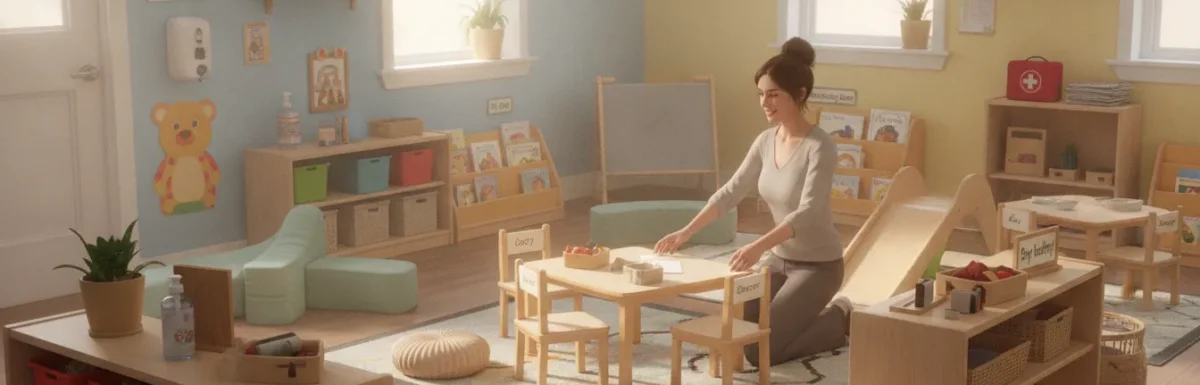
The last part is about the room itself. You should use space, tools, and plans to help kids learn and feel safe. A good room has low shelves so kids can reach toys on their own. It also has a steady plan that kids can count on. When kids know what to expect, they feel safe enough to play and try new things. A well-set room helps kids work on their own and be bold in their learning.
Think about a time you changed your room to help a child. Maybe you moved the blocks to a quiet spot so kids could think better. Or maybe you put photos of the kids on the walls to help them feel at home. You could also describe how you use labels with pictures so kids know where things go. These choices show that you use your space as a tool for growth. This matches the goal of making a safe and fun place for kids to play.
The 4-Part Structure for Writing Your Statement
Writing your first competency statement can feel like a big job. To make it easy, you can use a simple four-part plan. This plan helps you cover all the rules from the Council for Professional Recognition. It also ensures you stay within the 200 to 500 word limit for your writing.
Start with the goal and functional areas
You should start your first paragraph by naming Competency Goal I. This goal is to set up and keep a safe and healthy place for kids to learn. You must also list the three functional areas: Safe, Healthy, and Learning Environment. This shows the reviewer that you know the CDA reflective competency statement examples and the standards for your portfolio.
Share a specific classroom example
Next, tell a short story about something you do in your room. Pick one clear moment that shows how you keep kids safe or healthy. You might describe how you check the playground for hazards every morning. Or, you could write about how you lead a fun hand-washing song before lunch. Use your own words to describe your actions and the materials you used.
Explain the impact on child growth
After your story, explain why your action was good for the children. This part connects your work to how kids grow and learn. For example, a clean and organized room helps a child feel secure and ready to play. When kids feel safe, they are more likely to explore and try new things. This step proves you understand how a good environment helps children reach their goals.
Reflect on your work and future plans
The final part is to think about how you can do even better. Reflection is a key part of professional growth in early childhood education. Write about one thing you want to learn or change in your classroom. You might decide to update your safety checklist or add new natural materials to your science area. This shows you are always working to improve your skills as a teacher.
- Identify the Goal: State that you aim to maintain a safe and healthy learning environment.
- List the Areas: Explicitly name the Safe, Healthy, and Learning Environment functional areas.
- Tell Your Story: Describe a real event from your classroom that shows your skills in action.
- Explain the Why: Connect your classroom example to the developmental needs of your students.
- Reflect and Plan: Share what you learned and one step you will take to improve your room.
Let’s put the structure into practice. The following writing prompts will help you generate specific, compelling content for each functional area of your CDA competency statement 1. Use these prompts as starting points, then customize them with your own classroom experiences.
Writing Prompts for FA1: Safe
For the safety functional area, focus on specific actions you take every day to prevent injuries. Try answering these prompts in your draft:
- Daily safety checks: Describe your morning classroom inspection. Do you check for loose screws on furniture? Do you test that outlet covers are secure? Walk through your routine step by step.
- Supervision strategies: How do you position yourself during free play to see all children? What is your system for counting children during transitions or outdoors?
- Emergency preparedness: Describe how you practice fire drills or severe weather procedures with your class. How do you help young children stay calm during drills?
- Playground safety: What specific hazards do you check for on the playground? How do you teach children to use equipment safely?
Example sentence starter: “Each morning before children arrive, I walk through the classroom to check for hazards such as…”
Writing Prompts for FA2: Healthy
For the health functional area, emphasize routines that prevent illness and promote nutrition. Consider these prompts:
- Handwashing routines: Describe your step-by-step handwashing procedure. Do you use a song to time it? How do you ensure every child washes thoroughly before meals?
- Sanitizing practices: What is your daily cleaning schedule for toys, surfaces, and shared materials? How do you handle illness outbreaks like a cold going through the classroom?
- Nutrition education: How do you help children learn about healthy food choices? Do you involve them in serving themselves or trying new foods?
- Allergy and medication management: If you have a child with a food allergy, how do you keep them safe during meals and snacks?
Example sentence starter: “To promote health in my classroom, I teach children to wash their hands by singing…
Writing Prompts for FA3: Learning Environment
For the learning environment functional area, explain how your classroom setup supports exploration and security:
- Room arrangement: How have you organized your learning centers (blocks, art, reading, dramatic play)? Why did you place them where they are?
- Accessible materials: Describe how you store materials so children can reach them independently. How does this build their confidence and decision-making skills?
- Routines and schedules: What does your daily schedule look like? How do visual cues or picture schedules help children feel secure and know what to expect?
- Classroom community: How do you display children’s work, photos, or family pictures to create a sense of belonging?
Example sentence starter: “My classroom is arranged into distinct learning centers that allow children to move freely and choose activities that interest them…”
Full Example: Competency Statement 1
Below is a complete sample that addresses all three functional areas within the 200-500 word range. This example follows the 4-part structure: Goal, Example, Why, Reflect.
“My practice supports Competency Goal I: To establish and maintain a safe, healthy learning environment. I address this goal through the functional areas of Safe, Healthy, and Learning Environment.
Each morning, I inspect my classroom for hazards before children arrive. I check that outlet covers are secure, shelves are stable, and small objects are out of reach of infants and toddlers. During outdoor play, I position myself to see the entire playground and count children regularly. To promote health, I teach a handwashing song that lasts 20 seconds, and we sing it before meals and after using the bathroom. I sanitize toys and surfaces daily, especially during cold and flu season. My classroom is organized into clear learning centers with low, open shelves so children can access materials independently. A picture schedule on the wall shows the daily routine, which helps children feel secure because they know what comes next.
These practices directly support child development. A safe environment allows children to explore without fear, which builds their confidence and curiosity. Healthy routines reduce illness and teach lifelong habits that protect children’s wellbeing. An organized, predictable classroom reduces anxiety and helps children develop self-regulation and independence.
Moving forward, I plan to add more natural materials like plants and wooden toys to my learning environment. I also want to learn more about culturally inclusive materials that reflect the diverse families in my program. I will continue to reflect on my classroom practices to ensure every child feels safe, healthy, and ready to learn.”
This example gives you a model to adapt. Swap in your own classroom details, your own routines, and your own reflections. The Council reviews your portfolio to see your teaching, not a generic template. Use this structure, but fill it with your authentic voice.
Common Mistakes to Avoid in CS1
Writing your CDA competency statement 1 can feel hard at first. Many teachers worry about what to say or how much to write. When you make mistakes, it can slow down your path to a CDA credential. To help you succeed, avoid these common errors that can hurt your portfolio score.
Writing Too Broadly
One big mistake is being too vague. Some teachers write about general safety rules instead of what they do in their own room. The CDA Council needs to see your own words and real work. Instead of saying “I keep kids safe,” tell about one clear action. Talk about how you check for small toy parts or how you watch children on the playground. Giving a clear example shows you know how to use safety rules.
If you need more tips on how to build your work, check out our CDA portfolio help guide. This guide can help you find the right words for your statement. It also shows you how to connect your writing to your real-life teaching skills. This makes it easier to show your worth as a teacher.
Skipping Functional Areas
Another common slip is missing one of the three Functional Areas. Your statement must cover safe, healthy, and learning environments. Some writers focus only on safety but forget to talk about health or the physical space. This is a problem because each area is a key part of CDA competency statement 1. To fix this, use a checklist to make sure you mention all three parts. This ensures your statement meets all the early childhood safety standards set by experts.
A good statement should show how you promote health through hand washing or cleaning toys. It should also explain how you set up your classroom to help kids learn. If you leave one area out, your statement may not show your full skill set. Be sure to give each of the three areas its own space in your writing. You can also find help from government early learning rules for more ideas.
Ignoring Word Count and Structure
Many teachers write too much or too little. The Council asks for a limit of 500 words per statement. Going over this limit can make your portfolio hard to read. It is best to aim for about two paragraphs that are clear and direct. Also, do not forget to add a reflective closing. You should explain why your actions matter for a child’s growth. Without this reflection, the statement is just a list of tasks.
You should also link your writing to your portfolio evidence. For example, mention your First Aid card or your weekly menu. These items prove that you follow the rules you wrote about. If you do not link to this evidence, your statement loses its power. Keep your writing active and focused on the kids to make the best impact. Using active words shows your role as a leader in the classroom.
Linking CS1 to Your CDA Portfolio
Your CDA competency statement 1 does not stand alone. To build a strong professional portfolio, you must link your written words to real evidence. This proof lives in your Resource Collection (RC). By matching your statement to these items, you show the CDA Council that you follow safe and healthy habits every day in your classroom.
Matching RC Items to Your Statement
Several items in your Resource Collection prove you meet the goals for a safe and healthy environment. You must include a copy of your valid First Aid and CPR certification. This proves you can handle medical emergencies. You also need a copy of a weekly menu from your center. This menu shows how you provide healthy meals and meet child nutrition needs. You can find more details in our CDA portfolio requirements checklist to ensure you have every piece.
Your weekly lesson plan is another key piece of evidence. It shows how you use space and materials to help children learn. You may also include classroom photos that show your safety policies in action. These items act as the “show” to your “tell.” When you write about keeping kids safe, these RC items give the proof. This link between your writing and your resources makes your portfolio professional and complete.
Labeling and Privacy Rules
Clear labels help the CDA PD Specialist find your evidence fast. You should label each item in your Resource Collection to match the statement it supports. For example, mark your weekly menu as part of your “Healthy” goal. This shows you are organized and understand the CDA standards. A well-labeled portfolio reflects the 20 years of leadership Mary Wardlaw brings to our training programs.
Privacy is a top priority when you use photos or records. You must get parent permission before you put any child’s photo in your portfolio. If you do not have a signed form, you should remove or blur child faces. You must also take out any private info like last names or birth dates from your classroom documents. Following these rules keeps your center safe and shows your professional ethics. You can learn more about these standards at the CDC website which offers guidance on child safety.
Using Evidence to Support Claims
Your Resource Collection items should support the claims you make in your written statement. If you write about a daily health check, your lesson plan should show when that check happens. This creates a clear path for the reader to follow. It proves that your words are not just ideas, but real actions you take. This consistency is what the CDA Council looks for during your verification visit.
Each piece of evidence adds weight to your reflective statement. When you link them well, you build a story of your teaching skill. This makes your competency statement 1 a powerful part of your career path. Using these real tools helps you grow as a teacher and meet the highest bar for early childhood care.
Frequently Asked Questions
How many words should a CDA Reflective Competency Statement be?
Each reflective statement must be 500 words or less according to the Council for Professional Recognition. Most candidates find that 200 to 500 words is the ideal length. This allows enough space to cover the three functional areas with real classroom examples. Your writing must be in your own words to pass the review. Aim for two short and clear paragraphs that show your work.
What portfolio evidence goes with CDA Competency Statement 1?
You should link your statement to items in your Resource Collection that show safe and healthy habits. This includes your First Aid and CPR card, a weekly menu, and a lesson plan. According to CDA standards, these items prove you can maintain a safe environment. If you use photos of your classroom, make sure you have parent permission or hide the children’s faces to keep them safe.
How much is the CDA Council application fee?
The fee to apply for your initial CDA credential is $425 when you submit your portfolio to the Council for Professional Recognition. This fee is separate from the cost to complete your 120-hour CDA training online. If you are doing a CDA renewal, the starting price is $149. Many educators use our training programs to ensure their portfolio is correct before they pay this fee and schedule their official visit.
Can someone help me write my CDA Competency Statement 1?
You must write the final statement in your own words, but you can use guides and workbooks for help. Mary Wardlaw’s workbook and our CDA reflective competency statement examples provide clear prompts to help you start. Our training also gives you the mental practice needed to write strong examples. Using a structured plan helps you name the goal, share an example, and reflect on your teaching skills.
Ready to enroll in CDA training with portfolio support?
Using CDA reflective competency statement examples as a guide makes your writing task much easier. If you wait to start, you might lose your drive and miss out on better pay or new jobs. You can stop the stress of trying to learn the rules on your own and get help today. Our training shows you how to turn your work into strong goals that meet every rule. You will move through the process faster with a clear plan and expert help to guide you. Every minute you wait is time you could spend earning your credential and reaching the next step.
Ready to enroll in CDA training with portfolio support? Call (269) 444-6128 to talk to an expert and start your training today.