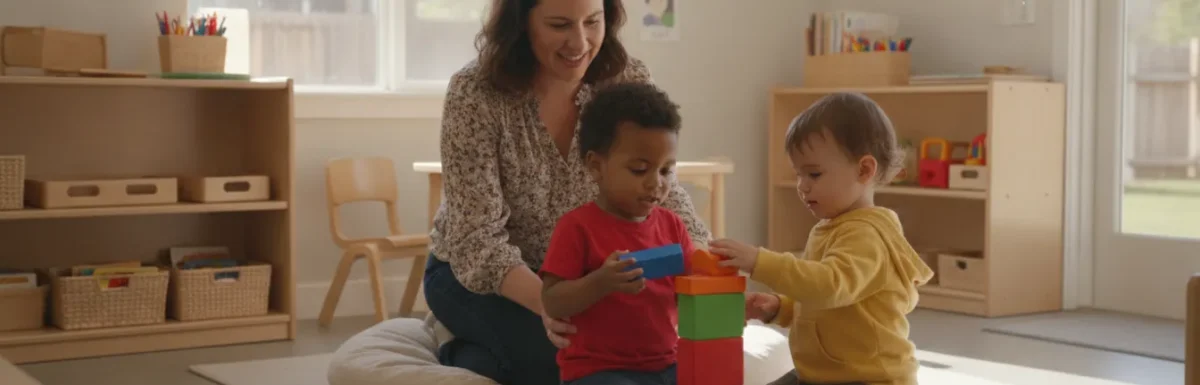
Earning your CDA credential needs you to document your skills through a professional portfolio. You must draft six reflective competency statements that explain your approach to early childhood care. These essays turn your classroom work into clear proof of your teaching ability.
Ready to earn your CDA credential? Contact National CDA Training today or call our experts at (269) 444-6128 to learn how we can help you build a professional portfolio that stands out.
Finding CDA reflective competency statement examples helps you know how to write the six essays needed for your professional portfolio to earn your early childhood credential. As stated by the Council for Professional Recognition, the professional portfolio is a required part of the process that proves your skills and your classroom work. These essays should be 200 to 500 words and must explain how your daily actions meet the needs of kids across the six core competency standards. You must show how you keep children safe, support their learning, and work with families to build a strong foundation for their growth and development. Our guide provides clear templates and samples to help you draft your own statements with confidence so you can finish your training and start your career.
Starting your portfolio essays can feel like a big task without a clear plan. Learning more about What Is a CDA Reflective Competency Statement? helps you draft your own samples with less stress by showing you the basic rules. The process begins with understanding the core purpose of this reflective document, which is to connect your real-world classroom experiences directly to the national competency standards.
What Is a CDA Reflective Competency Statement?
A Child Development Associate (CDA) reflective competency statement is a written piece where you talk about your skills as a teacher. It is a key part of your portfolio. It shows how you meet national rules. These statements are more than just schoolwork. They let you explain why you do what you do in the classroom. By writing these, you show that you know the needs of young kids and their families.
The Core of Your Professional Portfolio
The CDA portfolio requirements make these statements a must-have for your certification. Each candidate writes six of them. Each one focuses on a goal, like keeping kids safe or helping them learn. You will usually write between 200 and 500 words for each one. This length gives you enough space to share your thoughts. Looking at CDA portfolio examples can help you see how to build your own work.
Your portfolio proves your worth as a pro. It holds your training records, your work history, and these written thoughts. The Council for Professional Recognition looks at these to see if you are ready for the job. These statements are the heart of that review. They tell the story of your daily life in a daycare or preschool. They show that you have the skill to help children grow and thrive in a group.
Bridging Theory and Classroom Practice
One main goal of these statements is to link what you learned in books to what you do with kids. High-quality early care and education programs help kids do better all through their lives. When you write your statements, you explain how you give that high-quality care. You might talk about how you set up a safe room or how you talk to parents. This turns big ideas into real steps that help kids every day. It shows you are not just following rules but thinking about your work.
Teachers use these statements to link their plans to child results. For example, you might write about a game that helps a child learn to share. You then explain why that game works based on what you know about how kids grow. This process proves that you can use your training. It makes your daily tasks feel more vital. You see that every small choice you make helps a child reach a new goal.
A Record of Your Professional Growth
Writing a CDA reflective competency statement is also a way to see how much you have learned. You get to look back at your time as a teacher and see how you have changed. These thoughts help you find your own style and voice. It shows your growth from a new teacher to a skilled pro. You can see which parts of the job you do well and where you want to get better. This helps you set goals for your future in the field, including planning to renew your CDA credential as your career advances.
These thoughts are an honest look at your teaching beliefs. They show what you value most when you work with young learners. When you write from the heart, you make a portfolio that is truly yours. It becomes a record of your hard work and your love for teaching. This makes the whole process feel less like a test and more like a proud display of your skills. Your words will show that you are a true teacher who cares about the future of every child in your care.
What Is Included in a CDA Professional Portfolio?
The CDA Professional Portfolio is a key part of your path. It acts as a full record of your work and skills. Building this folder shows you can meet the needs of young kids and their families. It is a required part of getting your CDA credential. You can use a CDA portfolio requirements checklist to track your steps and make sure you have every item.
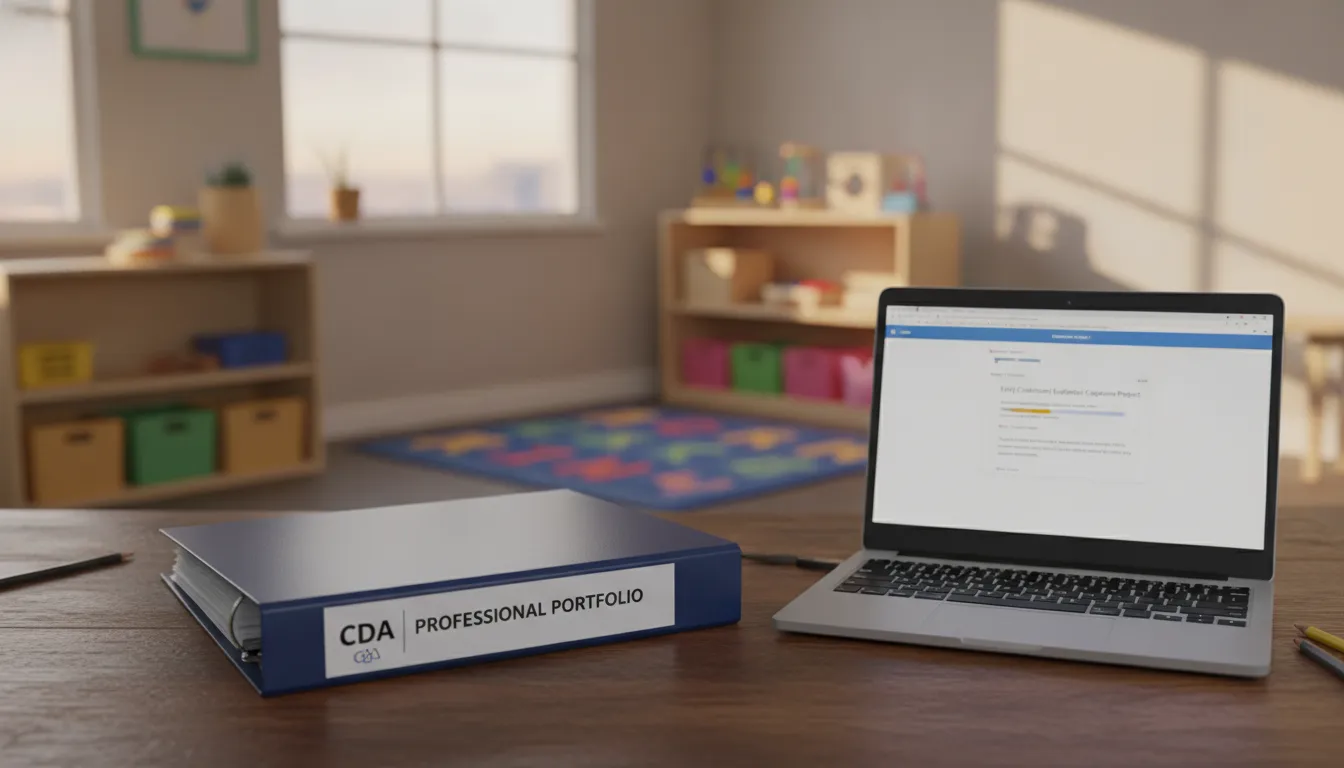
The Resource Collection
The Resource Collection is a group of ten items you use in your daily work. This part of your folder shows the tools you use to help kids learn. One item you must include is a set of lesson plans. These plans should show how you teach many topics and age groups. You also need to add a weekly menu to show you understand good food habits. High-quality early care programs help a child’s long-term growth and social skills.
Another part of the group is a bibliography of books for kids. You should choose books that show many ways of life. This shows you can create a rich learning space. You will also include proof of your training and a short story of your past jobs. Keeping these items neat is vital to meeting the CDA portfolio requirements for your own setting.
Family Questionnaires
The Family Questionnaire is a tool to gather thoughts from the parents of the kids you teach. You must hand these out to each family in your care. Their answers help you see how well you talk to and support them. It is important to get these back and keep them in your folder. This part shows that you value the bond between home and school. It also proves you are open to growth and change based on what parents need.
Reflective Competency Statements
The Reflective Competency Statements are the heart of your folder. There are six of these in total. Each one links to a CDA Competency Standard. These pages explain the “why” behind your teaching. They bind all your other papers together. Looking at CDA reflective competency statement examples can help you start your own. Each page should be 200 to 500 words long.
In these pages, you write about your goals and how you reach them. For example, in the first one, you might talk about child safety. Teachers play a huge role in protecting kids from hurt while they learn. You explain the steps you take to keep the room safe every day. This part of the folder proves you are a pro who thinks deeply about your work.
The Six CDA Competency Standards and Focus Areas
Every CDA student must show they have the skills to work with young kids. The Council for Professional Recognition uses six standards to measure this. These rules cover everything from safety to how you talk to parents. You must write a reflective statement for each one. This part of your CDA portfolio requirements shows that you know how to use your training every day.

Each standard breaks down into smaller goals called focus areas. You should look at these goals when you look for CDA portfolio examples to help you write. These focus areas guide your writing and help you stay on track. They ensure you cover all the parts of a high-quality classroom. Research from the CDC shows that good early care leads to better life outcomes for children.
| Competency Standard | Core Focus Areas |
|---|---|
| Standard I: Safe and Healthy Learning Environment | Safety, health, and the learning space. |
| Standard II: Physical and Intellectual Competence | Physical growth, mental skills, speech, and art. |
| Standard III: Social and Emotional Development | Self-worth, social skills, and good behavior. |
| Standard IV: Relationships with Families | Working with parents and keeping open lines of talk. |
| Standard V: Program Management | Keeping records and running a smooth daily plan. |
| Standard VI: Professionalism | Growing as a teacher and following ethical rules. |
Planning your competency statements
Writing your statements takes time and thought. You need to write between 200 and 500 words for each one. This length gives you enough room to tell how you work without being too long. Start by reading the goal for each standard. Then, think about how you meet that goal in your work. You should have a clear plan before you start to type your final draft. You will need to complete your 120 hours of required CDA training to build the foundation for strong competency statements.
Many teachers find it helpful to look at CDA reflective competency statement examples before they start. Seeing how others talk about their work can give you good ideas. But your statements must be your own work. They should show your own style and the needs of the children you teach. Make sure each statement shows your growth and your love for your work.
Connecting standards to daily work
The best statements use real stories from the classroom. Do not just list what you do. Instead, tell why you do it and how it helps the children. For example, do not just say you keep the floor clean. Tell how a clean space helps stop hurts and keeps children safe. Teachers have a big job in protecting children from harm while they learn.
Using these details makes your portfolio stronger. It proves to the person checking your work that you are a true expert. It shows you know the reason behind every rule and task. When you link your daily actions to the CDA standards, you show you are ready for your credential. This deep link between theory and practice is what makes a great teacher stand out.
How Do You Write a CDA Reflective Competency Statement?
Writing your CDA reflective competency statement is a big part of your growth. These papers show that you know how to put your training into use. You will need to write one paper for each of the six CDA standards. This helps you meet the full CDA portfolio requirements. Most papers should be between 200 and 500 words to explain your work well.
Study the standard
First, you must look at the exact goal you are writing about. Each standard has a list of tasks you should follow. For example, some focus on keeping children safe. Others look at how you help them learn. When you know the goal, you can pick the best stories from your room to share. This helps you show that you run a high-quality program that helps kids grow. High-quality early childhood education helps kids do better in life.
Try to find the main “why” behind the standard. If the goal is safety, think about how you check your room for risks. If the goal is health, write about how you teach kids to wash their hands. Your writing should show that you are an expert. It should show that you know how to keep kids on the right path. Use clear and simple words so your ideas are easy to find.
Reflect on your classroom work
Next, think of real times you helped a child. Use these stories to show your skills in action. Do not just list what you do each day. Instead, tell a story about one child or a group task. This makes your work feel real. It shows the Council that you can think about your work and make it better.
Think about how your actions help kids learn new things. Maybe you changed a lesson when you saw a child was stuck. Or maybe you found a new way to help kids get along. These small moments are the best CDA reflective competency statement examples to use. They show that you are a pro who cares about the results of your work.
- Read the goal. Look at the exact CDA standard you need to meet. Make sure you know what the Council wants to see from your work.
- Pick a story. Think of a time when you used a skill to help a child. Real stories make your writing strong and clear.
- Write your first draft. Put your thoughts down on paper. Aim for a length of 200 to 500 words to make sure you give enough facts.
- Check your work. See if your words match the goal. Ask yourself if a reader would see how you keep kids safe and happy.
- Use a digital tool. Write and save your work with the National CDA Training Digital Portfolio Assistant. This tool makes it easy to keep your papers in one place.
Draft your final statement
When you draft your final version, keep your sentences short. Aim for about 13 to 18 words per sentence. This helps the reader follow your path. Use active words like “I plan” or “I teach” instead of “plans are made.” This shows you are the one in charge of the learning space.
Check your work one last time to make sure you hit every part of the standard. Every paper you write is a chance to show your pride in your work. If you need help, you can use the National CDA Training site to find more tips. Good writing will help you get your CDA credential and move forward in your career.
Need professional guidance while drafting your competency statements? Try our Digital Portfolio Assistant or call us at (269) 444-6128 to speak with an early childhood education specialist today.
CDA Reflective Competency Statement Examples: Structural Guidelines
Building a strong portfolio is a key part of the CDA credential process. Each part of your work must show how you meet the standards for early child care. The CDA Professional Portfolio requires you to write a reflective statement for each of the six main areas of skill. These parts prove that you know how to give children a safe and healthy place to learn. They also show how you help young children reach their best.
Word count and length rules
Your writing should be clear and to the point. Most experts agree that a good CDA portfolio rule is to keep each statement between 200 and 500 words. This length is often about two typed pages. You must write one of these for all six parts to finish your work. If your writing is too short, it may not show enough detail about your skills. If it is too long, it might lose focus on the main goal.
Good early child care teachers help children stay safe and teach them how to avoid harm. As noted by the Centers for Disease Control and Prevention, teachers play a huge role in child safety. Your writing must show these daily tasks in a professional way. Using clear CDA reflective competency statement examples can help you see how to group your thoughts. Just make sure the final work is your own.
Keeping your work honest
You must write every word of your competency statements yourself. Using someone else’s work is not allowed and could hurt your career. Your portfolio must show your own growth and your own way of teaching. Copying from online samples can lead to your work being sent back. High-quality programs help kids grow in social and emotional ways. You want your portfolio to show that you are the one making that happen for the children in your care.
Honest writing is the best way to show you are ready for the job. When you look at CDA portfolio examples, pay attention to the flow. Notice how they link a rule to a real classroom event. You can use the same setup, but the story must be yours. This keeps your work true and shows your value as a teacher.
How to use ideas from samples
Samples are great tools for learning how to plan your pages. They show you where to put your ideas and how to start each part. Use them to understand the tone you should use. You can look at how others talk about child growth or safety. Then, think about a time you did those things in your own school or daycare.
- Look at the main themes in the sample.
- Check how many sentences are used for each point.
- Use the same headings to stay on track.
- Write about your own unique classroom moments.
By following these steps, you can build a portfolio that stands out. It will meet all the rules and show your hard work. This process helps you become a better teacher while you earn your credential.
How Do You Structure Your CDA Portfolio for Success?
A strong professional portfolio is more than a binder of work. It is a tool that shows your skills as a teacher. The CDA Professional Portfolio must be organized so a reviewer can find facts fast. You can use a physical binder or a digital file. Either way, it must look neat and be easy to read. Following a clear plan helps you stay on track and meet all CDA portfolio requirements.
Organizing your materials
Most people use a three-ring binder with tabs. Use one tab for each part of the CDA Council checklist. This makes it simple for the Professional Development Specialist to see your work. Each section should have a clear label. You must write every part in your own words. Do not copy from other sources. Your goal is to show how you help children learn and grow. High-quality programs help kids reach better long-term outcomes in life.
Building the competency sections
The core of your binder consists of your writing. You will need six sections for the competency goals. Start each section with your reflective statement. These pages explain why you do what you do in the classroom. Use a clean font like Arial or Times New Roman. Make sure the text is large enough to read easily. You may also want to look at CDA portfolio examples for layout ideas. Keep your papers current and up to date.
Preparing for the visit
Your portfolio must be ready before your verification visit. It should be portable so you can carry it to the site. If you use a digital format, make sure you have a back-up copy. Check that all your resource items are in the right spots. A well-built portfolio shows that you are a pro. It proves you have the knowledge to keep kids safe and happy. This step is a big part of getting your CDA credential.
Frequently Asked Questions
How many reflective competency statements must I write for a CDA portfolio?
You must write six reflective competency statements for your portfolio. Based on the ChildCareEd guide, one statement is needed for each of the six CDA Competency Standards. These standards range from keeping a safe and healthy learning space to showing a commitment to professionalism. Each statement shows how you use your skills in a real classroom to help young children grow.
How long should each CDA reflective competency statement be?
Each CDA reflective competency statement should have a length between 200 and 500 words. This is about two pages of typed text for each entry. Following these writing rules helps you provide enough detail about your teaching methods. Your answers should explain how your daily actions meet the needs of children and help them learn in a positive way.
Is the CDA Professional Portfolio a mandatory part of the credentialing process?
The CDA Professional Portfolio is a needed part of the CDA Credentialing process. As noted by the CDA Council, you must finish this portfolio to show you have the skills for the job. It acts as a professional record of your work and includes many key parts. These parts include your reflective statements, a philosophy statement, and many resource items.
Where can I find help with writing my CDA reflective competency statements?
If you need help, the CDA Portfolio Assistant from National CDA Training is a great tool. This tool uses AI to help you write your competency statements more easily. You can also use the CDA Portfolio Workbook for more tips and examples. These tools help make the portfolio process less stressful so you can focus on your work as an early childhood teacher.
Ready to finish your CDA competency statements?
Putting off your CDA work can slow down your career and stop you from getting the pay raise you need to help your family. If you do not start your statements now, you might fall behind and miss the chance to earn your badge before the end of this year. Starting today will put you on the fast track to success so you can focus on the work you love doing with your kids. Our team will give you the tools you need to write every statement and finish your CDA portfolio without any extra stress.
Ready to schedule a free consultation? Call us at (269) 444-6128 to talk to a CDA expert and get the help you need today.