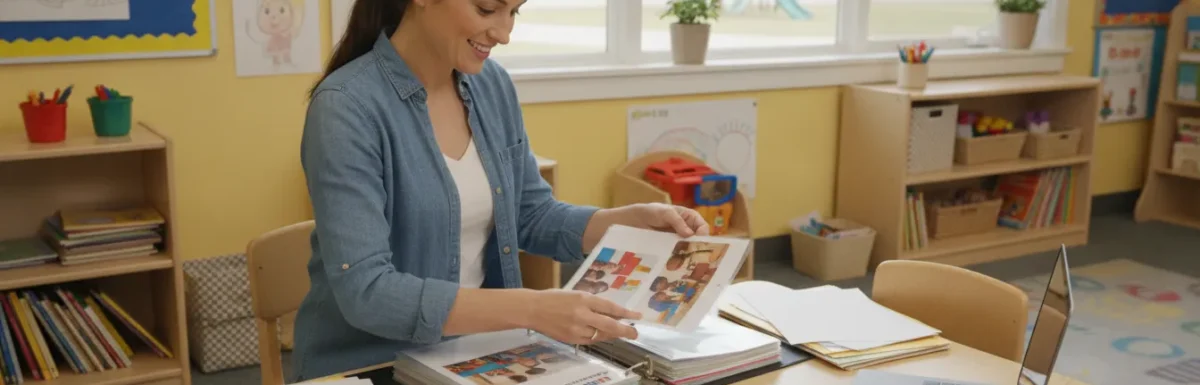
Getting ready for a verification visit starts with sorting your files before the specialist arrives at your classroom door. Our scenario-based training is built for working teachers who need to handle these visits with confidence.
Enroll in our 120-hour CDA training program today to start your journey.
The CDA verification visit is a critical assessment step. During this visit, a Professional Development Specialist observes your teaching skills and reviews your professional portfolio. This evaluation follows the R.O.R. model: Review, Observe, and Reflect.
According to the CDA Council, you have six months from your “Ready to Schedule” notice to finish the visit and exam. The specialist watches your work with children and checks that your resource file is complete. They look for certificates and parent questionnaires.
Earning this credential validates your commitment to high-quality care. It helps you advance your career while meeting state licensing rules.
Knowing exactly what the specialist looks for can help you feel more organized on the day of your visit. Understanding the process helps you show your best teaching work. The path toward success begins by exploring What Is the CDA Verification Visit, starting with:
What Is the CDA Verification Visit?
The CDA verification visit is the final on-site assessment for teachers seeking a Child Development Associate credential. It is a key step where a trained professional reviews your work in a real classroom. This visit shows that you have the skills needed to lead young children. The Council for Professional Recognition sets these standards to help early childhood teachers grow.
Role of the Specialist
A Professional Development Specialist, also called a PD Specialist, leads the visit. These experts have deep roots in early childhood education. They do not just check a list of tasks. Instead, they use their skills to coach and mentor each teacher. This peer review process helps you think about your work and find ways to improve. Knowing the verification visit requirements helps you feel ready for this meeting.
The Purpose of Assessment
The visit confirms that you can apply what you learned in your training. It proves you can provide a safe and healthy space for kids. The Council uses a specific method for this check called the R.O.R. Model. This stands for Review, Observe, and Reflect. By using this model, the specialist ensures you meet national goals for child care. Most teachers find that the CDA observation and verification visit is a chance to show their best work.
Settings and Scope
This visit happens in the place where you work with children from birth to five years old. It applies to many types of programs. These include Head Start, pre-k, and infant-toddler rooms. It also covers family child care and home visitor roles. No matter the setting, the goal remains the same. The process makes sure that all kids have access to teachers who meet high professional standards.
Understanding the R.O.R. Model: How Your PD Specialist Evaluates You
The CDA verification visit is a key step to become a licensed teacher. It is not a scary test. Your Professional Development (PD) Specialist uses the R.O.R. Model to lead the visit. This stands for Review, Observe, and Reflect. It is built to help you grow through coaching.
By using this method, the expert can see the full picture of your work. They look at your prep, your time with kids, and your own thoughts on your teaching. This ensures that the CDA observation and verification visit is fair for every person.
A Coaching Approach to Your Visit
The Council for Professional Recognition made the R.O.R. Model to help your growth. Your specialist is not just there to check boxes. They bring years of skill in early childhood teaching to the visit. Their goal is to help you find your best traits and see where you can improve. This approach makes the visit a chance to learn from a peer.
Your expert will use a scoring tool to track your progress. They focus on how you meet the core standards of the field. This helps keep the bar high for early care and teaching. It also gives you a clear path for your future career in child care.
The Three Steps of the R.O.R. Model
The visit flows through three main parts. Each one builds on the last to give a full view of your teaching. You should prepare for each step to ensure your visit goes well. It is important to feel ready to share your work with the expert.
- Step 1: Review. In this part, the expert looks through your Professional Portfolio. They check your resource set, transcripts, and certificates. They want to see that your files match the skill standards. This step proves you have the knowledge needed for the job.
- Step 2: Observe. The expert will watch you work with children in your normal classroom. They look at how you guide the kids and keep them safe. This is a time to show your real skills in action. You don’t need to do anything extra. Just teach as you usually do.
- Step 3: Reflect. This final part is a talk between you and the expert. You will discuss the strengths found in your portfolio and the classroom. You can also talk about your goals for the future. This talk about your work is a big part of the growth process.
Finalizing Your Scores
After the visit ends, you must go online to confirm it took place. Once you do this, the expert has a set time to turn in your scores. They submit the results through the YourCouncil platform within 48 hours. This quick turn helps you get your results faster so you can move forward.
The scores come from a range of work. The Council looks at your documents and the observation notes. This multi-part view helps make sure every CDA is earned through hard work and skill. It is the best way to prove you are a pro in your field.
Step-by-Step Guide to Compiling Your CDA Professional Portfolio
You must have your CDA Professional Portfolio ready before your PD Specialist calls for the pre-visit checklist. The Council for Professional Recognition requires this file to be complete at the time of the pre-visit checklist call. Follow these steps to meet all step-by-step portfolio examples for a successful CDA verification visit.
Organize your training and health records
Start by gathering proof of your 120 hours of formal CDA training. You will need official transcripts or training certificates that show you covered all eight CDA subject areas. You also must include a valid Pediatric First Aid Certificate. Keep these original documents in the front of your binder so the specialist can find them quickly during the review.
Build the Resource Collection
The Resource Collection is a set of ten specific items. These items show you know how to find helpful tools for your work. You should use a resource collection checklist to track each item. These must cover different CDA competency areas. The list includes items like local family service agencies and weekly lesson plans that you have used in your classroom.
Write your professional statements
Next, you will write six Statements of Competence and your Professional Philosophy statement. Each statement of competence focuses on one of the six CDA Competency Goals. These short essays explain how you put your skills into practice every day. To make this easier, National CDA Training offers a Digital CDA Portfolio Assistant. This tool helps you organize your thoughts and draft your statements based on real classroom work.
- Organize training records: Gather transcripts and certificates for 120 hours of CDA training.
- Include health certificates: Place your current Pediatric First Aid and CPR certificates in the file.
- Compile the Resource Collection: Gather 10 specific resources across CDA competency areas.
- Write Statements of Competence: Draft six statements, one for each CDA competency goal.
- Write your Professional Philosophy: Create a summary of your goals as a teacher.
- Collect Parent Questionnaires: Gather all forms and ensure the envelope seals are broken.
- Final Assembly: Arrange all items in the exact order listed in the CDA Competency Standards book.
What to Expect During the Classroom Observation
The classroom observation is a core part of your CDA verification visit. It follows the R.O.R. model, which stands for Review, Observe, and Reflect. During this phase, the Professional Development (PD) Specialist watches you work with children in a real setting. This step helps the CDA Council see how you apply what you have learned to your daily work.
Observation Length and Timing
A full visit often takes about four hours. You will need to get the okay from your center director to block off this time. The PD Specialist often spends about two hours watching you lead the classroom. This gives them enough time to see your routine and how you handle different parts of the day. You can use a CDA observation preparation guide to help you get ready for this window of time.
What the Specialist Watches
The specialist looks for how you talk with the children in your care. They want to see you use positive guidance and keep the kids safe. They also look at how you set up tasks that are good for their age.
Your actions should show that you meet the CDA competency goals. For example, the specialist may watch how you help kids share toys or solve small conflicts. They check how you manage the room and follow your lesson plans.
The goal is not a perfect performance but a safe, supportive environment. The specialist wants to see how you guide children through their day with care and skill.
Implementing Your Lesson Plans
The specialist wants to see that your classroom matches your lesson plans. Your space should be set up so that kids can find what they need and play in a safe way. This means having toys and books that fit the theme of your week.
When you follow your plans, it shows you are a professional who knows how to lead a class. The specialist looks for these links between your written work and your real life teaching.
Keeping Your Natural Style
It is best to stick to your normal daily routine. You do not need to create a special show for the visit. The specialist wants to see your true teaching style with the children.
The room should show the plans you made in your portfolio. If the room has art on the walls or clear labels, it shows you are ready. If a child has a hard time, just use your normal tools to help them. Do not feel that you must hide the challenging parts of teaching. This shows the specialist that you can handle real world tasks with ease.
Staying calm and steady is better than putting on an act. The specialist knows that children can be unpredictable, so they look at how you react.
How to Schedule Your CDA Verification Visit and Meet the Deadline
Scheduling your CDA verification visit is a big step in your career. You have worked hard to build your portfolio and learn new skills in the classroom. Now you must set a date to show what you know to a pro. This step needs you to work with your Professional Development Specialist. You should act fast to stay on track for your goal.
Steps to Set Your Visit Date
Once the Council reviews your sign-up, you will get an email to start the next phase. You can take the CDA exam and finish your visit in any order that works for you. Follow these steps to get your visit on the calendar.
- Check your email for the notice. Look for a message from cdaready@cdacouncil.org. This email tells you that the Council has approved your file. You can now set your visit date.
- Reach out to your PD Specialist. Your specialist should call or email you within five business days of the notice. But the Council suggests that you contact them first to save time. Fast people often get their dates set much sooner.
- Pick your test order. You do not have to take the exam before the visit. Decide if you want to meet with your specialist first or take the test at a Pearson VUE site. You can book the test by calling 1-866-507-5627.
- Get your Director’s okay. The visit usually takes about four hours to complete. Talk to your center Director to make sure they approve the date and time. You will be busy with the check during this time.
- Confirm the visit details. Once you and your specialist agree on a time, confirm the place and the start time. Make sure they have the right address for your school or home care site.
- Answer the pre-visit call. Your PD Specialist will call you at least 48 hours before the visit. They will check that your verification visit requirements are met. This call is the time to ask questions about the day.
- Prepare your documents. On the day of the visit, you must have your full portfolio ready for review. You also need to show a state photo ID to the specialist before they start the check.
Meeting the Six-Month Deadline
You must watch the clock once you get your notice. You have exactly six months to finish both the exam and the visit. If you do not finish both parts in six months, you will lose your $425 application fee. The Council will also close your file. This means you would have to start over from the start and pay the full cost again.
It is best to start preparing for your CDA verification visit as soon as you can. Do not wait until the last month to reach out to your specialist. If you plan ahead, you can avoid stress and meet your deadline with ease. Our training uses a unique scenario-based method to help you feel ready for these checks.
Practical Tips to Prepare for a Successful CDA Verification Visit
Preparation is the key to a stress-free CDA verification visit. By organizing your materials early and practicing your classroom routines, you can enter the evaluation with confidence. Using a comprehensive CDA training that prepares you for real-world scenarios makes this process much smoother.
Organize and Review Your Portfolio Early
Your Professional Portfolio is a main part of the review. Start gathering your items well before your PD Specialist calls for the pre-visit checklist. You must have all certificates, transcripts, and parent surveys ready. The CDA Council rules say your portfolio must be complete at the time of the pre-visit call. This early check helps you find any missing pieces so you can fix them before the actual visit starts.
Set Up Your Learning Environment
The classroom observation is where you show your teaching skills. Make sure your environment reflects the CDA competency goals. Organize your learning centers and display daily schedules where they are easy to see. Having clear materials and a structured space helps children follow routines during the observation. National CDA Training uses a unique, scenario-based approach that helps you practice these classroom setups mentally before the Specialist arrives.
Communicate with Your Center Director
A successful CDA verification visit needs good timing and support. You should talk to your Director as soon as you get your Ready to Schedule notice. The visit typically takes about four hours, so you need to plan for coverage. Confirm all dates and times with your Director to ensure a smooth day. Clear communication ensures that your center is ready and that you have the time needed to focus on your evaluation.
- Verify your identification. Have your government-issued photo ID ready to show at the start of the visit. The Specialist must check this ID before the evaluation begins.
- Review competency standards. Read through the CDA standards and prepare examples from your daily work. This helps you explain your teaching choices during the reflection phase.
- Practice your philosophy. Be ready to talk about your teaching goals. Use the scenario-based training methods to practice explaining how you handle classroom challenges.
- Prepare your classroom. Check that your materials are safe and meet all standards. Ensure children have access to diverse toys and learning tools.
- Confirm the schedule. Check in with your Director and staff to make sure everyone knows the visit time. Plan for a normal day so the Specialist sees your true routine.
- Get plenty of rest. Aim for a full night of sleep before the visit. Being well-rested helps you stay calm and focused during the four-hour observation.
- Stay calm and natural. Breathe and be yourself while working with the children. The Specialist wants to see how you naturally lead and support your students.
Frequently Asked Questions
Can I choose the order of my CDA exam and verification visit?
Yes, candidates have the choice to pick the order that works best for them. You can complete the verification visit before or after you take the CDA exam. According to the Council for Professional Recognition, you must finish both steps within six months of getting your notice. This choice helps working teachers manage their time while they balance job duties and training tasks.
How long does the CDA verification visit typically take?
A standard CDA verification visit usually takes about four hours to complete. During this time, the PD Specialist reviews your portfolio, watches your work with children, and leads a talk on what you did. It is vital to ask your center Director for permission before you book this visit. Planning for a full four-hour block ensures that the Specialist can see your whole daily routine and give a fair review of your teaching skills.
What happens if I miss the six-month verification visit deadline?
Missing the six-month deadline to finish your exam and verification visit has bad effects. If you do not meet this cutoff, you will lose your application fee. The Council will also close your candidate record, which means you must start the whole process over from the start. To avoid this, track your date closely and set your visit as soon as you are ready to show your skills.
What documents do I need to show the PD Specialist?
You must show your original Professional Resource File and a government-issued photo ID. Your portfolio should hold your education records, a valid pediatric first aid certificate, and six statements of competence. You also need your life story and parent forms with the seals already broken. Preparing these items early shows your PD Specialist that you are ready to meet the high standards for an early childhood teacher.
Ready to enroll in CDA training with National CDA Training?
Putting off your CDA verification visit prep can lead to missed deadlines and a lost application fee because you have only six months to finish. Starting your training today gives you the time to build a professional portfolio that meets every Council standard while you continue your classroom work. This help ensures you are ready when the Specialist arrives to observe your teaching so you can earn your credential today. Do not wait until the last minute and risk losing your progress or failing to meet the strict Council requirements for your professional career.
Ready to enroll? Call (269) 444-6128 to talk to a CDA training expert today for more information.