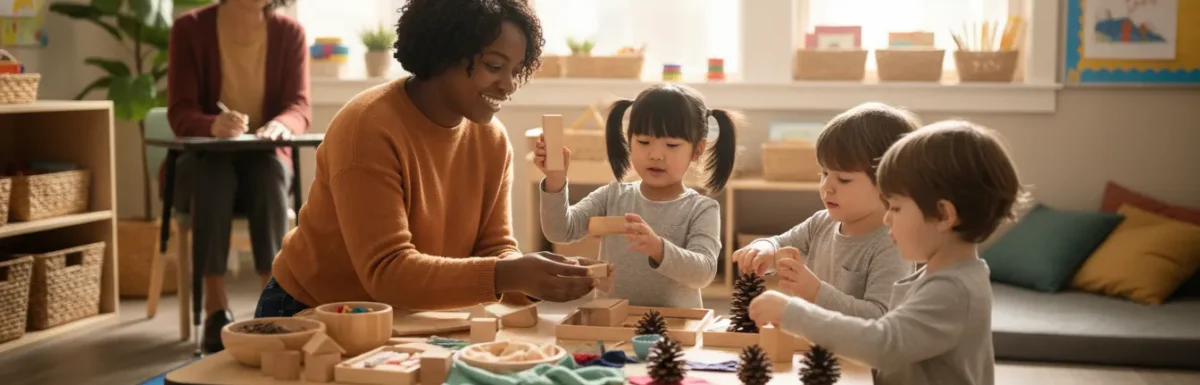
A polished classroom matters less than the choices you make inside it. Evaluators want to see safe routines, purposeful teaching, and calm responses that support real preschoolers.
Prepare with National CDA Training’s scenario-based preschool CDA program
Preschool CDA observation prep means practicing how you teach, guide, and respond during a normal classroom day, not staging a perfect performance. Evaluators look for clear evidence that you keep children safe, support learning and development, build positive relationships, and act professionally throughout daily routines. Prepare by reviewing the competency standards, checking your room and routines, rehearsing likely transitions, and organizing the professional portfolio required at your Verification Visit. Practice explaining why you chose an activity, how you adapted it, and what you would change after reflecting on the children’s responses. Your goal is to show sound judgment, connect your choices to children’s needs, and stay responsive when the day does not follow your plan.
Knowing what happens during a preschool CDA observation helps replace guesswork with a clear plan for the visit. Before building your checklist, see how the observer watches your teaching, reviews your materials, and invites reflection on your daily practice. Here’s how.
What happens during a preschool CDA observation?
During a preschool CDA observation, a PD Specialist watches your normal classroom practice, reviews required professional materials, and discusses your decisions with you. The visit is designed to reveal safe, responsive, developmentally appropriate teaching across real routines, not to reward a scripted or flawless performance.
The purpose of the verification visit
The verification visit lets a PD Specialist see how your daily teaching reflects CDA competency areas. It is not a staged lesson or a test of perfect classroom control. The observation is one part of a broader assessment that also uses an exam and a professional portfolio, as the Council for Professional Recognition explains.
During preschool CDA observation prep, plan to follow your normal classroom schedule. Children may need help, plans may shift, and small disruptions may happen. The Specialist needs to see your usual choices and how you respond when the day changes.
What the PD Specialist evaluates
The Specialist watches for clear evidence of safe, caring, and purposeful practice. That evidence may appear in how you arrange the room, speak with children, guide behavior, and support learning. Your choices should fit the children in front of you, not a rehearsed script.
- Keep health and safety routines consistent throughout the visit.
- Use warm, respectful language with children and adults.
- Offer activities that invite children to take part and make choices.
- Guide behavior calmly while helping children learn social skills.
- Adjust your support when a child needs more time or another approach.
Observable practice matters more than a polished performance. A memorized lesson can feel stiff and may not show how you make sound choices in real situations. Scenario practice can help you prepare, since it builds calm responses without asking you to act out a perfect day.
What to expect during the visit
Have your materials ready before the Specialist arrives, then focus on the children. The official candidate checklist says you must bring your Professional Portfolio and Competency Standards book to the visit. National CDA Training’s CDA observation course book can help you organize those materials and review expectations.
Your portfolio gives context for what the Specialist sees. It includes evidence such as competency statements, resources, family feedback, and professional reflection. The candidate checklist also calls for a Reflective Dialogue worksheet based on family feedback and your areas for growth.
Expect to discuss your work with the Specialist, not simply receive a score for one activity. Be ready to explain why you made a choice and what you might change next time. Honest reflection shows professional judgment, especially when the classroom did not follow the plan.
The best approach is simple: prepare your evidence, know your routines, and teach as you normally do. If an unexpected moment occurs, pause and respond to the child. That real response often shows more about your practice than a flawless activity could.
Your preschool CDA observation prep checklist
Good preschool CDA observation prep makes your usual teaching easier to see. It should not turn the room into a staged display. Focus on clear plans, safe spaces, and routines that children already know.
Tasks to complete before the visit
Use this checklist during the week before your visit. Work through one item at a time, then review the full plan with your site leader.
-
Review your portfolio and visit materials. Check each section for missing pages, labels, and required forms. Bring your Professional Portfolio and Competency Standards book to the visit. The official CDA candidate checklist can guide your final review.
-
Check the room for safety and access. Walk through each learning area at a child’s height. Clear blocked paths, test materials, and place supplies where children can use them safely.
-
Practice familiar routines. Keep arrival, cleanup, meals, and transitions close to their normal form. Prepare simple cues that help children know what comes next without long teacher directions.
-
Prepare a flexible lesson plan. Choose an activity that fits the children’s current interests and skills. Gather all materials, plan open-ended questions, and note how you can adjust the task.
-
Confirm details with site leadership. Review the visit date, observer access, staff roles, and any center rules. Make sure another adult knows how to handle calls, visitors, or routine office needs.
-
Create backup plans. Prepare a second activity, extra materials, and an indoor option for outdoor time. Decide how you will respond if attendance, weather, or a child’s needs change the schedule.
A calm, real classroom
Your observer needs to see how you support children during a normal day. Keep the room organized, but do not add unfamiliar displays or routines just for the visit. A sudden change may confuse children and make teaching harder.
Think through common moments before they happen. Picture a child leaving an activity early or two children wanting the same toy. Consider what you will do if a transition takes longer than planned. This mental practice helps you respond with calm choices instead of rushing.
Keep your plan useful, not rigid. The observer can then see how you notice children’s needs and adjust your teaching. If plans change, stay present and explain directions in simple terms. A steady response shows more than a perfect schedule.
Your final readiness check
The day before the visit, place your portfolio and needed materials in one easy-to-find spot. Review your lesson goal, backup plan, and staff roles. National CDA Training’s observation preparation guide adds more detail about observer expectations.
Before children arrive, scan the room once more. Confirm that exits are clear, learning areas are ready, and daily supplies are stocked. Then follow the routines your group knows and let your everyday teaching guide the visit.
How do you demonstrate developmentally appropriate practice?
You demonstrate developmentally appropriate practice by matching interactions, activities, expectations, and support to the children in front of you. Evaluators look for warm relationships, meaningful choices, active learning, flexible responses, and routines that protect safety while respecting each child’s age, abilities, culture, and individual needs.
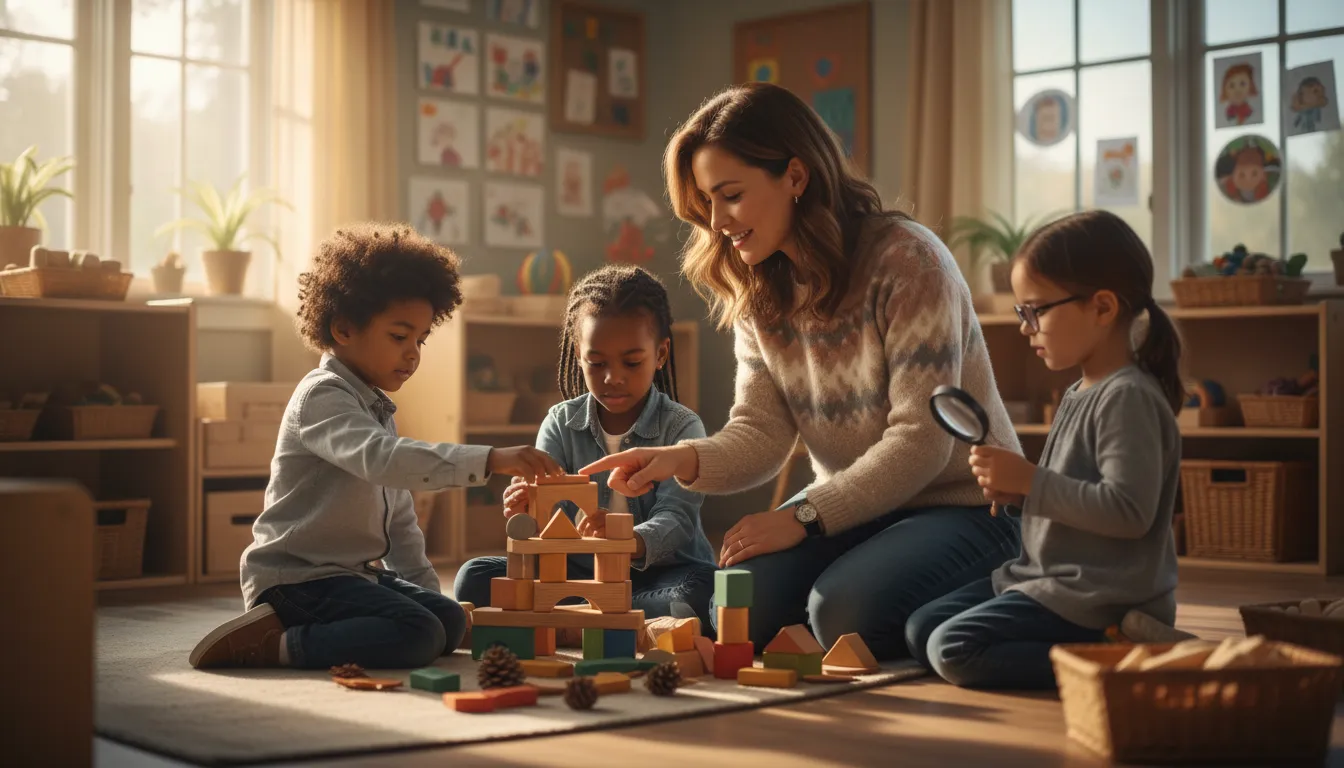
Developmentally appropriate practice is easiest to see in the small choices a teacher makes throughout the day. During preschool CDA observation prep, focus on meeting each child where they are rather than staging a perfect lesson. The observer should see warm relationships, clear limits, and support that changes with each child’s needs.
The CDA assessment uses several sources of evidence, including an observation and a professional portfolio, according to the Council for Professional Recognition. Your actions in the classroom should match the teaching choices you describe in your portfolio.
Responsive relationships and child choice
Start with how you speak and listen. Greet children by name, move to their eye level, and give them time to answer. Notice their ideas and build on them. If a child shows you a block tower, ask, “How did you make it stand?” instead of saying only, “Good job.”
Offer meaningful choices within clear limits. A child might choose paint or collage materials, work alone or with a friend, or select a book for rest time. Open-ended questions help children explain their thinking. Questions such as “What could we try next?” invite more thought than questions with one correct answer.
- Join play without taking control of the children’s plan.
- Model calm words when children need help solving a conflict.
- Wait for a response instead of answering your own question.
Support matched to each child
Developmentally appropriate teaching is not one-size-fits-all. Watch what a child can do, then offer just enough help for the next step. During a puzzle, you might turn one piece toward its match. For another child, you might ask them to sort pieces by color before starting.
Make sure every child can take part. Place books, dolls, music, and art materials where children can see their families, cultures, languages, and abilities. Adapt tools or directions when needed. A thicker crayon, picture cue, quiet work space, or peer partner can help a child join without lowering the learning goal.
As you review National CDA Training’s classroom observation resource, connect each planned activity to the children in your current group. Be ready to adjust when their interest, skill, or energy points you toward a better choice.
Purposeful routines, transitions, and safety
Strong practice also appears between planned activities. Give a brief warning before transitions, use a picture schedule, and tell children what comes next. Instead of making the whole group wait, release a few children at a time. A song, movement prompt, or simple helper job can keep the others engaged.
Health and safety routines should feel steady, not separate from learning. Scan play areas, count children during moves, model handwashing, and keep walkways clear. Explain limits in plain language, such as. “Feet stay on the floor so everyone can move safely.” Stay close enough to help while allowing children to try tasks on their own.
- Prepare materials before children arrive so waiting time stays short.
- Offer a calm cue before stepping in during a hard moment.
- Change the plan when children show that they need more movement, time, or support.
What do CDA evaluators look for in the classroom?
CDA evaluators look for consistent evidence that you maintain a safe, healthy learning environment; support children’s development; build positive relationships; guide behavior respectfully; and act professionally. They consider the whole classroom experience, including routines, transitions, interactions, adaptations, materials, documentation, and your reasons for making teaching decisions.
Evaluators look for clear, steady teaching across the normal parts of the day. For useful preschool CDA observation prep, focus on what children experience, not on staging a perfect lesson. Your choices should show that you know the children, plan with purpose, and respond with care.
The whole learning environment
Start by viewing the room from a child’s height. Materials should be easy to reach, spaces should support different kinds of play, and walkways should stay clear. The setup should help children make choices while letting you supervise the full group.
Interactions matter as much as the room. Strong evidence appears when you listen, speak with respect, guide peer problems, and help children name their needs. Warmth is important, but evaluators also need to see clear limits and calm follow-through.
| Area | Strong observable evidence | Common weak signal |
|---|---|---|
| Learning environment | Children can reach, use, and return suitable materials. | Attractive displays are present, but children cannot use them. |
| Interactions | The teacher listens, responds, and uses respectful language. | The teacher gives frequent directions with little child talk. |
| Teaching | Questions and prompts build on children’s ideas. | The activity follows a script despite children’s responses. |
| Routines | Children know what comes next and take active roles. | Transitions create long waits or repeated confusion. |
| Safety | The teacher scans, anticipates risk, and acts calmly. | Rules are stated, but supervision is inconsistent. |
| Professionalism | Choices reflect planning, reflection, and knowledge of each child. | Materials look prepared, but the teacher cannot explain their purpose. |
Consistent teaching in real routines
Evaluators can learn a great deal during arrival, cleanup, meals, and transitions. These moments show whether routines support independence and whether guidance stays calm under pressure. Practice giving brief cues, allowing enough response time, and offering children useful roles.
A planned activity is only one piece of the visit. Follow a child’s question, adjust when interest shifts, and connect play to language or problem-solving. These choices show responsive teaching more clearly than a memorized performance.
Professional evidence and reflection
Professionalism shows through preparation, respectful habits, and the reasons behind your choices. The CDA assessment uses several evidence sources, including observation and a professional portfolio. The Council’s assessment overview explains how those sources work together.
Bring the required materials and know how your daily practice connects to them. The candidate checklist says to bring the portfolio and Competency Standards book to the visit. National CDA Training’s CDA certification requirements guide can help you review that connection before visit day.
How can you prepare without over-rehearsing?
Prepare without over-rehearsing by practicing dependable routines and decision-making instead of memorizing a lesson. Use familiar, flexible activities; anticipate likely transitions and challenges; and rehearse how you will pause, observe, adapt, and reflect. This keeps your teaching natural while making your professional judgment easier for an evaluator to see.
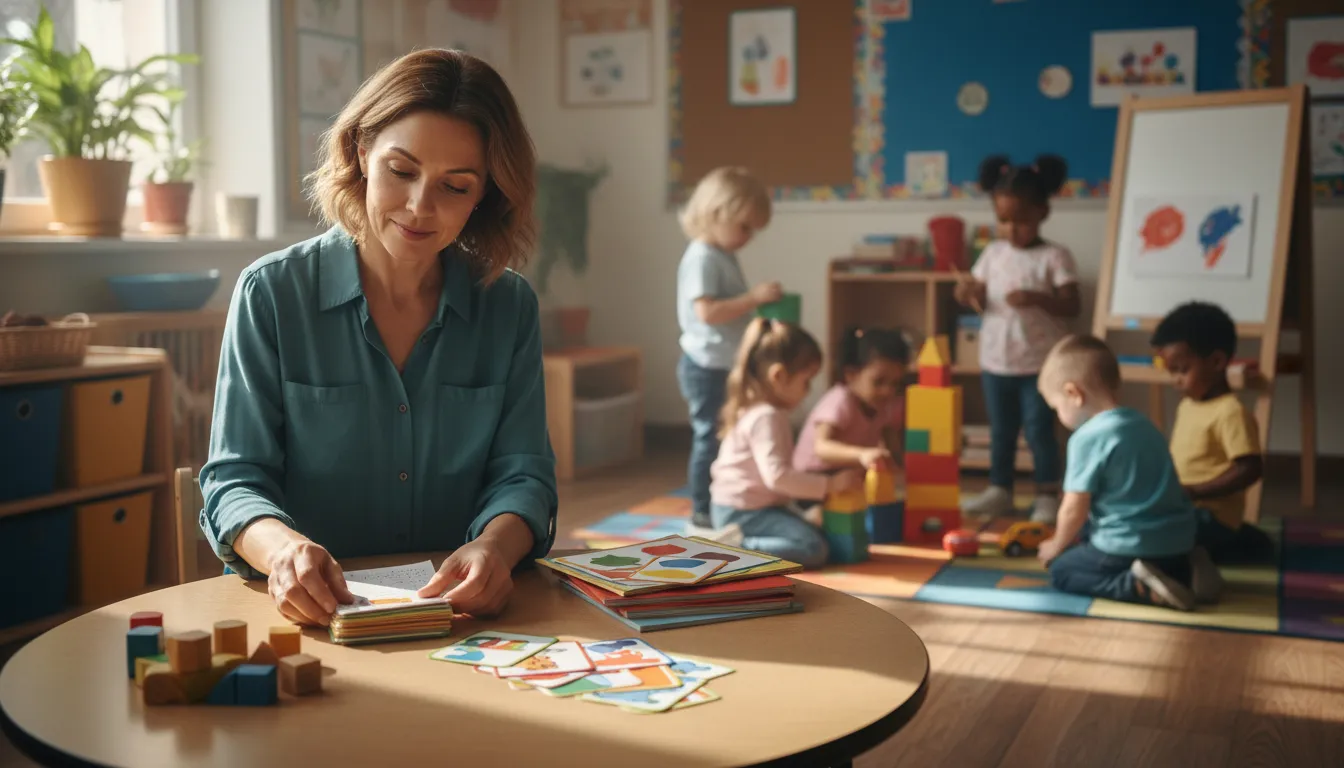
Strong preschool CDA observation prep builds steady habits, not a polished show. Your PD Specialist needs to see how you work with children during a real classroom day. Practice the choices behind your teaching, but leave room for children’s ideas, needs, and honest reactions.
Practice routines, not scripts
Rehearse the parts of your day that should feel consistent. Practice giving clear directions, setting up materials, moving between activities, and responding to common behavior. Do not tell children what to say or ask them to perform a planned response. A script can pull your attention away from what children are showing you.
Instead, mentally practice a few possible responses before the visit. Ask yourself what you would do if a child refused to join, needed more help, or finished early. This kind of flexible practice helps you stay calm without making the lesson feel staged. National CDA Training’s scenario-based approach supports the same goal: building responses that make sense in real classroom moments.
Choose a familiar, flexible activity
Use an activity you and the children already know. It should support your learning goal while allowing children to make choices, ask questions, and take the work in new directions. Review your materials and room setup in advance. Then plan simple ways to adjust the task for different skill levels, interests, or attention spans.
During the activity, watch what children do instead of rushing through your plan. Objective observation is a skill that helps teachers record children’s behavior without adding guesses or judgment. The University of Missouri offers a course on observing and recording children’s behavior, which explains this core practice. Your notes can help you decide whether to offer a prompt, change a material, or step back.
Plan to recover and reflect
Disruptions do not mean the observation has gone badly. A child may become upset, a material may spill, or the class schedule may shift. Pause, address safety and emotional needs, then decide whether to adapt or move on. Your calm recovery can show more professional judgment than a lesson that follows a perfect script.
After any change, name the reason for your choice in clear terms. Consider what worked, what the children needed, and what you would change next time. That habit also prepares you for the reflection part of the visit. Use National CDA Training’s 120-hour online CDA training overview to connect daily practice with the standards you will discuss.
A useful final rehearsal is to explain your choices to a mentor or trusted colleague. Keep the focus on children’s needs, not on defending every detail. If you can explain why you adapted, you are showing the reflective judgment that natural classroom work requires.
Build confident classroom responses with National CDA Training’s preschool CDA program
Frequently Asked Questions
How to do observations in preschool?
Observe preschoolers by recording exactly what you see and hear, without guessing about feelings, motives, or abilities. Note the date, setting, activity, actions, and spoken words. Then review patterns across several observations before planning support. For preschool CDA observation prep, practice objective recording while still maintaining active supervision, safe routines, and responsive interactions.
What are some observation tools for preschoolers?
Common preschool observation tools include anecdotal notes, running records, checklists, time samples, event samples, and children’s work samples. Photos or videos may also help when program privacy rules allow them. Choose a tool that matches the behavior or skill being studied. The University of Missouri Extension stresses recording children’s behavior objectively.
How hard is the CDA exam?
The CDA exam’s difficulty depends on your training, classroom experience, and comfort applying early childhood principles to realistic situations. It is separate from the verification visit, which includes a classroom observation and professional reflection. Prepare by reviewing the CDA subject areas, practicing scenario questions, and explaining why specific teaching responses support children’s safety, learning, and development.
What is the CDA prep guide?
A CDA prep guide is a step-by-step resource for organizing credential requirements, reviewing competencies, building the professional portfolio, and preparing for the exam and verification visit. Use materials that match the preschool setting and current Council requirements. During the visit, the specialist will review the portfolio and supporting documents, observe classroom practice, and reflect with the candidate.
Ready to Prepare for Your Preschool CDA Visit?
Waiting until your verification visit is close can leave little time to replace rushed habits with calm, intentional classroom choices. Starting now gives you room to practice common scenarios, reflect on your responses, and build routines that feel natural during observation. With steady preparation, you can enter the classroom ready to show how you support children, guide learning, and handle everyday challenges.
Ready to make each practice session count? Start scenario-based preschool CDA training to prepare for the choices an evaluator may see. Request the training path that fits your goals, then begin practicing while there is still time to improve. Contact National CDA Training if you need help choosing the right next step for your preschool CDA journey.