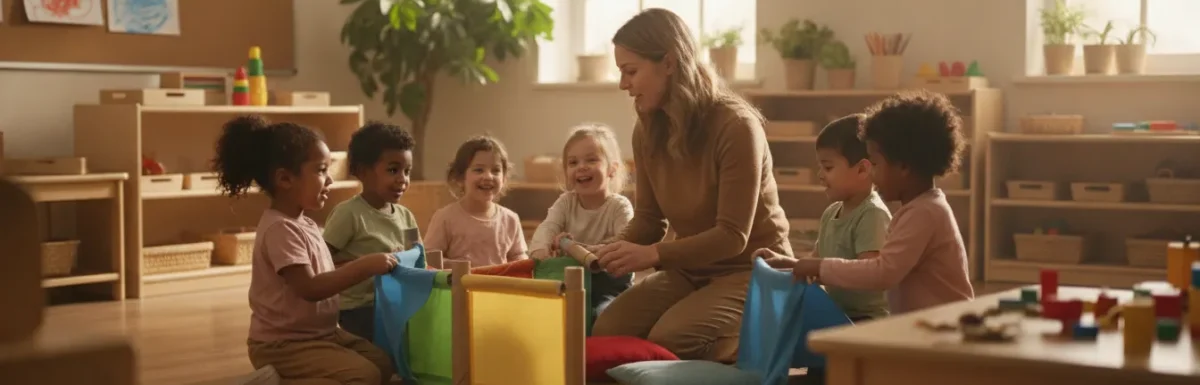
Working with preschoolers calls for more than a single certificate. Employers may value education, classroom experience, safety knowledge, and professional judgment, while state agencies and public-school systems may apply separate rules. That distinction matters whether you are entering early childhood education, working as an assistant teacher, or planning your next credential.
Ready to build a stronger preschool teaching foundation? Explore individual CDA training.
Preschool teacher qualifications depend on the setting, employer, and state. A CDA can strengthen practical preparation and support a credential pathway, but it does not automatically replace a state license, degree, background check, or other local requirement.
The most useful way to evaluate your options is to separate what a job posting asks for from what your state requires. Then identify which training can help you build the skills and documentation you still need. Start with the qualifications employers commonly look for in preschool classrooms.
What qualifications do employers commonly look for?
Employers often evaluate a combination of preparation, experience, classroom judgment, and professional reliability when hiring preschool educators. These are common hiring considerations, not universal legal requirements. The expectations can differ by setting, role, employer, and state, so a job posting should be read alongside guidance from the relevant licensing agency or school district.
Education may be one part of the picture. An employer might look for a high school diploma or equivalent, early childhood coursework, a Child Development Associate (CDA) credential, or a related degree, depending on the position. A credential can show focused preparation, but it does not automatically replace a state license, background check, degree, or other requirement. If you are exploring the field, this guide on how to become a preschool teacher can provide broader career context.
Experience and classroom readiness
Prior work with young children can help employers assess whether a candidate understands the pace and responsibility of a preschool classroom. This experience may come from an assistant-teacher role, practicum, child care setting, classroom volunteering, or another supervised environment. Employers commonly want to see that applicants can support routines, engage children in age-appropriate learning, supervise actively, and respond calmly when behavior or classroom needs change.
Safety readiness is also important. Hiring teams may consider whether a candidate understands active supervision, sanitation, emergency procedures, mandated training, and the need to follow center policies. Specific screening, first-aid, CPR, health, and background-check requirements should be confirmed with the employer or applicable agency rather than assumed from a general article.
Communication and professional conduct
Preschool teaching involves continuous communication with children, families, coworkers, and administrators. Employers often look for educators who can give clear directions, listen carefully, document relevant observations, protect confidentiality, and share concerns respectfully. Reliability, punctuality, preparation, patience, and a willingness to accept feedback also matter because young children depend on consistent adult support.
- Relevant education or early childhood preparation.
- Experience working with or caring for young children.
- Practical classroom and supervision skills.
- Safety awareness and readiness to complete required checks or training.
- Clear communication, teamwork, and dependable professional conduct.
Use this list as a starting point for comparing your background with a specific opening. The employer and local authority remain the best sources for the requirements attached to that position.
Why preschool teacher requirements vary by state
There is no single nationwide checklist for working as a preschool teacher. The qualifications you need can depend on the state, the age group served, the type of program, the program’s funding, and the employer’s own hiring standards. That is why a credential that is useful in one setting may not, by itself, satisfy every requirement in another.
Licensed child care programs
State child care licensing agencies oversee many programs that care for young children outside the public school system. These agencies may establish requirements related to education, supervised experience, health and safety training, background checks, ongoing professional development, or staffing roles. The details and terminology differ, so avoid assuming that a rule described for one state applies elsewhere. ChildCare.gov’s child care licensing overview explains the state and territory role in setting minimum requirements. Use it as a starting point, then check the current guidance published by the child care licensing agency in the state where you plan to work.
Private preschools and other early learning settings
Private preschools may operate under state licensing requirements while also setting their own standards for hiring. An employer might prefer a particular early childhood credential, classroom experience, or evidence of professional preparation. Those preferences are not necessarily the same as a legal requirement. Read the job posting carefully and ask the program which qualifications are required before accepting a position or enrolling in training.
Public-school pre-K
Public-school pre-K positions can follow a different pathway from licensed child care. School districts, state education agencies, and funding rules may determine which roles require specific educator credentials or other qualifications. If the position is connected to a public school, verify expectations with the school district or the relevant state education authority. A child care credential should not be presented as an automatic substitute for a public-school requirement.
Employer policies still matter
Even when you understand the applicable state framework, an employer may ask for additional preparation or documentation. A CDA can support professional development and classroom readiness, but it does not automatically replace a state license, degree, background check, or employer requirement. For reliable CDA certification requirements, compare the credential pathway with the rules for your intended setting.
Verification warning: Requirements can change, and online summaries may be outdated or incomplete. Before relying on any list of preschool teacher qualifications, confirm the current rules with the state child care licensing agency, the school district when applicable, and the employer. This verification step helps you choose preparation that fits the role you actually want.
Can a CDA help meet preschool teacher qualifications?
Yes, a Child Development Associate (CDA) can be a valuable supporting qualification for people preparing to work with preschool children. It can document focused early childhood education, strengthen classroom knowledge, and help you prepare for the CDA credential process. However, it does not automatically replace a state license, degree, background check, or other requirement set by an employer or regulatory agency.
That distinction matters because preschool teacher qualifications are not identical everywhere. A child care center, public-school district, and state-licensed early learning program may evaluate applicants under different standards. Before enrolling, compare the CDA pathway with the requirements for the specific setting and role you want. Confirm current rules with the relevant state licensing agency, school district, employer, and the Council for Professional Recognition when applicable. The CDA Council’s official credentialing FAQ is the best source for current CDA eligibility and assessment details.
What a preschool CDA pathway can provide
A Preschool CDA specialization is designed for educators working with young children in a preschool setting. National CDA Training’s curriculum provides 120 clock hours across eight CDA content areas. That structured coursework can help organize knowledge that may otherwise be learned informally on the job, including developmentally appropriate practice, classroom responsibilities, and professional expectations.
The preparation also addresses several practical parts of pursuing the credential. National CDA Training provides support with portfolio development and preparation for the CDA test and verification visit. Those elements are important because completing coursework alone does not guarantee that a person will receive the credential. Eligibility, experience, assessment, documentation, and verification requirements still need to be met as applicable.
For educators who are already working, online access can make the process more manageable. National CDA Training offers access 24/7, allowing students to study around classroom and family responsibilities. Its scenario-based approach uses realistic classroom situations to connect concepts with decisions educators may face in practice.
To understand how this pathway may fit your goals, review the CDA for preschool teachers. Use that information as a starting point, then match it against the local preschool teacher qualifications that apply to your intended role. The best next step may be a CDA, additional education, documented experience, or a combination of these, depending on the setting and the rules that govern it.
Want a structured Preschool CDA pathway? Review CDA training for preschool teachers.
What does CDA training prepare you to do?
CDA training is designed to connect early childhood knowledge with the decisions educators make in real classrooms. Rather than treating preparation as memorizing terminology, a strong program helps you think through how young children develop, how learning environments support them, and how an educator responds with intention. That practical foundation can support your broader path toward preschool teacher qualifications, while still leaving state and employer requirements to the appropriate agencies.
Apply child development knowledge to daily classroom practice
Training helps you examine how children grow, communicate, play, and learn, then connect those principles to classroom practices. You may work through questions such as how to plan age-appropriate experiences, arrange a welcoming learning environment, encourage positive interactions, and observe children’s needs. Scenario-based learning uses realistic classroom situations to build mental practice and more confident responses. This matters because early childhood educators regularly make small, meaningful decisions about guidance, communication, routines, and engagement.
The preschool specialization keeps that preparation focused on the age group and setting you intend to serve. It can help an educator connect professional concepts to preschool routines and expectations instead of approaching early childhood education as one general category. The training is useful for assistant teachers, non-credentialed educators, career changers, and working professionals who want a structured way to build competence.
Reflect on your work and build evidence of preparation
CDA preparation also asks you to reflect on classroom experiences. Reflection can help you identify what happened, consider why a child or group responded in a particular way, and plan a more effective next step. That habit supports continuous improvement and gives your learning a practical context.
As part of the pathway, educators receive support with portfolio development and preparation for the CDA test and verification visit. A portfolio is more than a collection of paperwork. It organizes evidence of your work, planning, and understanding so you can review your progress and prepare for the next assessment step. The training curriculum provides 120 clock hours across eight CDA content areas, but completing coursework alone does not automatically award a credential or replace local requirements.
Study around your current responsibilities
With 24/7 online access, educators can study around work and family responsibilities rather than relying on a fixed classroom schedule. You can review lessons, revisit scenarios, and work through preparation materials when your schedule allows. Learn more about the 120-hour CDA training online option to understand how the format supports your preparation.
Training can strengthen practical readiness, but it does not promise a job or serve as a state license. Confirm current requirements with your employer, state child care licensing agency, school district, or other applicable authority before choosing your next step.
How to choose your next qualification step
When you are comparing preschool teacher qualifications, the best next step depends on the setting you want to enter, the role you want to hold, and the requirements that apply where you live. Use this checklist to replace assumptions with a practical plan.
- Identify the setting and role. Write down whether you are pursuing a position in a private preschool, child care center, Head Start program, public-school pre-K classroom, or another early childhood setting. Then note whether the position is for an assistant teacher, lead teacher, or another role. These details matter because an employer, school district, and state child care program may use different qualification standards.
- Read the job posting carefully. Separate requirements from preferences. Look for requested education, classroom experience, background checks, first aid or safety training, age-group experience, and any credential named by the employer. If the posting uses a broad phrase such as “early childhood credential,” ask the hiring contact what documents they accept before enrolling in a program.
- Check the current official guidance. Review the requirements published by your state child care licensing agency or, for a public-school position, the relevant school district or state education authority. Rules can change, and one state’s pathway should not be treated as a national standard. Confirm whether the position has separate requirements for education, experience, supervision, background screening, or ongoing professional development.
- Compare your education and experience with the target role. Make a simple list of what you already have and what the employer or agency still asks for. Include diplomas or degrees, child care experience, age-group experience, safety training, and any current credentials. This comparison can show whether you need a formal credential, more supervised experience, a specific training course, or clarification from the employer.
- Decide whether a CDA addresses a preparation gap. A Preschool CDA may be a practical supporting qualification for someone who needs structured early childhood preparation, portfolio support, and classroom-focused learning. Review the CDA certification requirements and compare them with your goal. Remember that CDA preparation does not automatically replace a state license, degree, background check, or employer-specific requirement.
- Document questions before you apply. Keep a short record of the agency page you reviewed, the job posting, your current qualifications, and any unanswered questions. Ask the employer or licensing office which pathway applies to your exact role, what must be completed before hiring, and what can be completed after you start. Written answers can help you choose training with a clear purpose and avoid paying for a qualification that does not match your intended setting.
A simple checklist for evaluating preschool teacher qualifications
Use this checklist to separate three parts of the qualification picture. Preschool teacher qualifications are shaped by the setting, the employer, and the rules that apply where you work. A strong preparation plan identifies each category instead of treating one credential as a universal answer.
| Category | What it may establish | What it cannot establish by itself |
|---|---|---|
| Common employer expectations | Shows that you may be ready for a particular role based on the employer’s preferred education, experience, classroom skills, professional conduct, and safety readiness. Review the job posting and ask the employer which qualifications are required for that position. | It does not prove that you meet state licensing rules or another employer’s standards. A preference listed in one job posting should not be treated as a nationwide requirement. |
| State or district requirements | Identifies the official conditions for a specific setting, such as a licensed child care program or public-school district. These may include education, experience, background checks, or other requirements established by the relevant agency. | One state’s or district’s rule cannot be applied to every preschool position. Always verify current requirements with the appropriate state child care licensing agency, school district, or employer. |
| CDA preparation | Builds relevant knowledge and practical skills through a Preschool CDA pathway. National CDA Training’s curriculum includes 120 clock hours across eight CDA content areas, plus support for portfolio development and preparation for the CDA test and verification visit. | Training does not automatically award the CDA credential or replace a state license, degree, background check, or local hiring requirement. Confirm eligibility and official credential requirements before relying on it for a specific job. |
The most useful next step is to write down the exact preschool setting you want. Check its current requirements, and then map your education, experience, and CDA preparation against that list. This keeps your plan practical while leaving room for state and employer differences.
Ready to compare your training options? Explore individual CDA training and confirm the requirements for your intended role.
Frequently Asked Questions
Do I need a degree to become a preschool teacher?
Not always. Some employers may accept a high school diploma, relevant experience, or a child development credential, while others prefer college coursework or a degree. Public-school and licensed child care settings may follow different standards. Review the job posting and confirm the current requirements with the employer and applicable state agency.
Is a CDA a license?
No. The Child Development Associate credential is a professional credential, not an automatic state teaching license. A CDA may strengthen your preparation and support your qualifications, but it does not replace a state license, background check, degree, or other local requirement. Check the CDA Council’s official FAQ and your state authority for the rules that apply to your pathway.
Can I start working in preschool without experience?
Possibly. Some programs hire entry-level assistant teachers or provide supervised opportunities for people changing careers, while other positions require prior classroom experience. Ask each employer what it expects for the specific role. If you are new to early childhood education, training can help you build foundational knowledge while you gain relevant experience.
How do I check my state requirements?
Start with your state child care licensing agency or official workforce portal, then compare those rules with the requirements of the employer or school district you are considering. Ask about education, experience, background checks, age-group qualifications, and renewal obligations. Requirements vary by state and setting, so do not rely on another state’s checklist as your answer.
Ready to review the preschool CDA pathway?
Understanding how employer expectations, state rules, and CDA preparation fit together can help you choose a qualification step that matches your intended preschool setting. Review the preschool CDA pathway to compare the training focus with the requirements you need to verify locally. Then contact the relevant employer or licensing agency with any remaining questions before you begin.