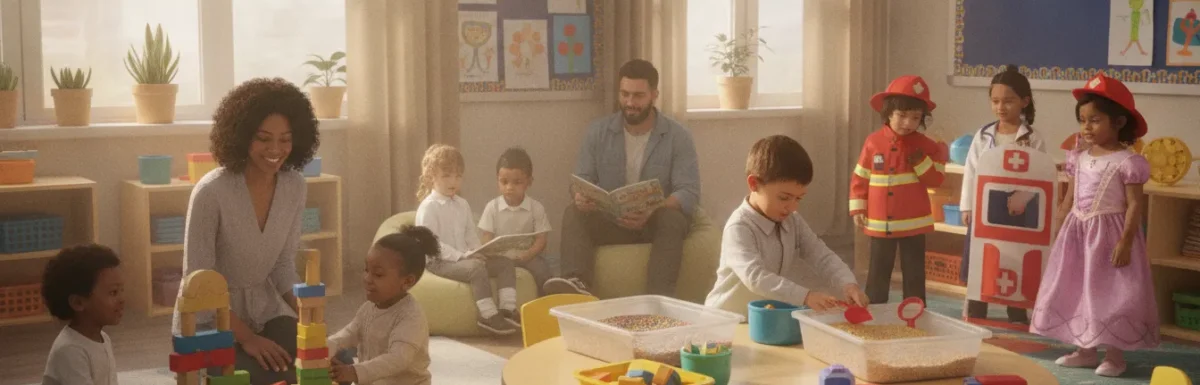
Preschoolers who learn through active play build brain skills faster than those in rigid classrooms. This teaching style turns daily play into strong learning moments that prepare kids for school and life.
Play based learning preschool is a teaching method that uses child-led play as the main way children learn and grow. This approach lets students follow their natural wish to learn while teachers help them through simple questions and planned play. Instead of sitting still at desks, children use blocks, dress-up clothes, and sand tables to build social and physical skills. Experts say these play-centered times help kids build clear thinking and problem-solving skills that last for years. Teachers who use this method see more interest from students and better growth in areas like talk and math. By looking at how kids play, teachers create a space where children feel safe to try new things and find new ideas.
Good teachers know that play is the work of childhood. To use these tools in your own classroom, you need to know the main rules that drive how kids grow. This guide starts by exploring What Is Play-Based Learning and Why Does It Matter in Preschool? We begin by defining
Play Based Learning Preschool: What Is Play-Based Learning and Why Does It Matter in Preschool?
Play-based learning is a teaching method that uses play as the main way children learn. It builds on the natural drive of a child to explore their world. Instead of just sitting and listening, kids learn by doing and finding things out for themselves. This style of teaching helps young students stay active and focused on their work. You can start your CDA journey today to learn more about how to use these methods in your own class.
The Five Key Parts of Play
True play-based learning has five main traits. First, it is self-chosen, which means the child picks what to do. Second, it is fun and brings joy to the learner. Third, it focuses on the process of doing, not just the final result. Fourth, it keeps the child actively engaged in the task. Finally, it must be meaningful to the child’s own life and goals. These traits help children learn best through active engagement and exploration in the classroom.
Moving Away From Direct Teaching
Many old-school classes use direct instruction. In that model, the teacher gives out facts while kids listen. Play-based learning flips this idea on its head. It sees the child as an active learner who builds their own knowledge. Research shows that play exists on a spectrum from free play to guided play. While free play is great, guided play often leads to better learning gains in areas like math and reading.
| Approach | Teacher Role | Child Role | Best For |
|---|---|---|---|
| Free Play | Observe and support | Self-directed exploration | Creativity and independence |
| Guided Play | Ask questions and scaffold | Play with light teacher input | Vocabulary and spatial skills |
| Direct Instruction | Lead and present facts | Listen and repeat | Specific skill drilling |
The Role of the Teacher
Is the teacher still needed during play? Yes, but their role changes from a boss to a guide. A teacher supports play by setting up the room with good tools and toys. They watch how kids play and ask questions that make them think deeper. This method is child-initiated but teacher-supported. By acting as a guide, you help kids reach new goals while they have fun. This balance is a core part of the learning centers used in top preschools today.
The Developmental Benefits of Play-Based Learning
Play-based learning in preschool provides a foundation for child development across every major domain. Research from the National Association for the Education of Young Children (NAEYC) shows that play supports cognitive, physical, social, and emotional growth. By engaging in purposeful play, children build the essential skills they need for school and life.
Start your CDA journey today with National CDA Training’s scenario-based curriculum.
Brain and Mental Growth
Play is a key tool for brain growth and mental discovery. When children choose their own games, they learn to think for themselves and solve tough problems. This way of teaching fits Goal 2 of the 6 CDA Competency Goals. That goal focuses on how kids learn to think. Through play, children naturally test new ideas and build a deep view of the world.
The Institute of Education Sciences (IES) notes that play helps children gain 21st-century skills. These include teamwork, critical thinking, and creativity. While free play is good, research shows that guided play leads to even better gains. For instance, kids show more growth in spatial skills and word use when teachers give light help during play.
Body Growth and Motor Skills
Play-based learning also helps with body growth and muscle control. Active play uses both large and small muscles as children move and build. Outdoor play and movement games help with balance, strength, and skill. These games help teachers meet CDA rules for body growth. By giving children open-ended tools, you let them practice new body skills at their own pace.
Fine motor skills get better when children use small items in their play. Building with blocks or working with clay makes the hands and fingers strong. These skills are a must for later tasks like writing and self-care. Because children find these games fun, they spend more time on them. This use of muscles leads to better control and skill over time.
Social and Emotional Health
The social perks of play are just as vital as the school ones. In a play-based room, children must learn to share, take turns, and solve fights. This work fits Goal 3 of the CDA competency goals. That goal focuses on social and emotional growth. Play provides a safe spot for children to learn how others feel and build strong bonds with friends.
Children also gain pride as they make their own choices in play. Seeing their ideas come to life helps them feel smart and sure. This sense of self-worth is key to a healthy mind. When teachers use kind help during play, they help children learn to manage their feelings. This support builds a base for long-term health and social success.
How Play Supports Physical and Intellectual Development
Play-based learning in preschool is the best way to help a child grow in every way. Through active play, kids build the skills they need for later school success. This work meets CDA Goal 2, which focuses on physical and mental growth. By giving kids the right tools and tasks, you can help them thrive. You can learn more about these goals in our CDA training curriculum which covers all key areas.
Start your CDA journey today: Call (269) 444-6128 to learn about our scenario-based training.
Building spatial and motor skills
Block play is a top tool in the preschool room that helps with physical and mental growth. As kids lift, stack, and balance blocks, they build fine motor skills. They also gain the hand-eye control needed for writing. Research from NAEYC shows that block play builds spatial skills. Kids must plan their work and solve problems when a tower falls. This helps them learn about math facts like weight, size, and shape through direct use.
Learning through sensory play
Sensory play uses things like sand, water, and soft toys that let kids explore with their hands. This type of play builds brain power by helping kids think like a scientist. When kids pour water into cups, they learn about volume and cause and effect. Based on facts from the CDC, these early tasks are vital for brain growth. Sensory bins also help small muscles get strong as kids use tools to scoop and sift.
Language and pretend play
Pretend play is a great way to boost talk skills and new words. When kids act out roles in a play kitchen, they use new words and long sentences. This social play helps them learn how others think while they build story skills. Teachers play a big role by asking open-ended questions. Instead of easy yes or no questions, ask “Tell me about what you are making.” This helps kids think more and use better words as they play.
Building Social and Emotional Skills Through Play
Play-based learning in preschool builds the base for social and emotional growth. Children learn to manage their feelings, share ideas, and work with others through play. These skills align with CDA Goal 3, which focuses on supporting the social and emotional growth of every child.
Play is the main way preschoolers learn to use social rules and build empathy. When children play with a goal, they practice taking turns and solving problems in a safe space. This helps them build emotional skills and the trust needed to form healthy bonds with peers and teachers.
Practicing Empathy in Dramatic Play
Dramatic play lets children try different roles and views. By pretending to be a doctor, a parent, or a clerk, they learn to see how others feel. This type of play helps children build empathy as they react to the needs and feelings of their friends.
Teachers can help this growth by giving many props and themes in the play center. Research from NAEYC shows that purposeful play helps children see the world from another person’s view. These steps are key to reaching the nine learning experiences needed for a strong professional portfolio.
Cooperation and Group Activities
Group play teaches children how to work as a team toward a goal. Tasks like building a tower or playing a group game need sharing and help. Through these tasks, children learn to listen to others and follow group rules.
Managing behavior in these groups is a key skill for any teacher. Using good ways to guide them helps children learn to solve problems without getting upset. These skills are vital for creating a kind space where all children feel safe to learn and grow.
Self-Directed Play and Confidence
When children choose their own play, they build a sense of self-worth. It gives them the power to make choices and see their own ideas come to life. This freedom builds a sense of being on their own and helps children feel proud of their work.
A teacher’s role is to offer choices that test children while giving them enough help to do well. This balance builds the trust children need to try new things. By watching and leading play, you help them gain the skills to manage their own path.
Practical Play-Based Learning Activities for Your Classroom
Start your CDA journey today by enrolling in our CDA credential program to learn how to lead play-based classrooms.
Implementing play based learning preschool strategies requires a thoughtful setup of your classroom space. You can guide student growth by organizing your room into specific learning centers. Effective areas include blocks, creative arts, dramatic play, literacy, and math centers. You should also provide space for science discovery, sensory play, and writing to support all 6 CDA Competency Goals in your daily routine.
Organizing Your Learning Centers
Each center should offer open-ended materials that spark curiosity and invite exploration. In the block area, give children wooden blocks, plastic bricks, and small figures to build complex structures. The dramatic play center can become a grocery store or a doctor’s office with simple props like empty food boxes or old stethoscopes. These setups allow children to lead their own learning while you observe and support their progress.
A well-planned nine learning experiences portfolio includes activities for every center. For example, a science center might feature magnifying glasses and natural items like pinecones or sea shells. Sensory tables filled with sand, water, or dry beans help children explore textures while building fine motor skills. These practical areas turn your classroom into a rich environment for active discovery and social growth.
Using Open-Ended Questions
Your role as a teacher is to move between free play and guided play to boost student learning. While children play, ask questions that encourage them to think deeper about their work. Instead of asking yes or no questions. Try using prompts like. “Tell me about the structure you are building.” This simple move helps a child reflect on their process and builds their vocabulary skills through natural talk.
According to the National Association for the Education of Young Children, the best outcomes for children happen when you balance free play with guided play. You can join a child’s play to suggest a new idea or help them solve a problem. For example, if a child is struggling to balance a tall tower. You might ask. “What could we use to make the base stronger?” This type of support keeps the child in charge while you add a learning boost.
Modifying Activities for Age Groups
Play-based activities must fit the specific age and skill level of your students. While preschoolers can handle complex building tasks, younger toddlers may need larger, softer blocks for safety and ease of use. You must adapt your materials to ensure every child can participate safely and successfully. These changes help you meet the unique needs of each student while maintaining a high standard of care.
When planning your classroom, remember that your goals remain the same even as materials change. Whether you are working with infants or older preschoolers, the focus stays on active engagement and joy. Providing the right tools for each age group ensures that every child can explore their world in a way that feels safe and fun. This approach builds a strong base for lifelong learning and helps you excel in your professional role.
How Scenario-Based Training Prepares You for Play-Based Classrooms
Scenario-based training helps you handle real preschool moments before they happen. By practicing with life-like classroom events, you build the skills needed to lead a play based learning preschool room. This method turns your study time into a safe space to test new ideas and find the best ways to help children grow.
Start your CDA journey today with our scenario-based training courses.
Building Natural Classroom Responses
Play-based rooms can change fast as children explore and create. National CDA Training uses a unique method that lets you practice these shifts in a virtual space. This is the only CDA program that uses scenario-based training to prepare you for work. You will face real-world tasks and make actual choices during your 120 clock hours of study. This mental practice builds fast, clear responses so you know exactly how to guide play without stopping the fun.
Students who use this method say they feel much more relaxed when they are with children. This approach is proven by science to be more effective than just reading a book or listening to a talk. You learn by doing, which makes your skills stick. When you are calm and sure of your steps, you can focus on building deep learning through play. Most of our students finish their CDA in three months or less with these tools.
Improving Student Outcomes Through Practice
Better training leads to better results for the children in your care. Educators with a CDA often earn 10 to 15 percent more than those without one. But the real win is how much more confident you feel when children start a new activity. You can support social and emotional growth because you have already practiced those exact moments in your training. This leads to calmer rooms and happier kids who love to learn through play.
This training style works because it uses the same techniques as pro sports and medical schools. You get to see a situation and then act on it. This builds a strong bond between what you learn and what you do. By the time you get to your real classroom, you have already solved dozens of common problems. You can find more details on how to use these skills in our 6 CDA Competency Goals guide. These methods help you stay in control while letting children lead their own play.
Enroll in our CDA credential program to start your training today.
Frequently Asked Questions
Is Montessori or play-based better for children?
Both Montessori and play-based learning focus on child-led learning, but they use different ways. Montessori programs use child-led work with specific tools in a set space. In contrast, play-based learning is more open and started by the child. Many good early childhood programs blend these styles. According to the Brightwheel blog, the best choice often depends on the needs of the child and the goals of the preschool program.
What is the teacher’s role in play-based learning?
In a play-based classroom, the teacher acts as a guide rather than a lecturer. Instead of directing every move, teachers watch children to see what they like. They provide the right tools and ask open-ended questions to help the child learn. This method, known as scaffolding, helps children think more about their play. By supporting child-led play, teachers help students build a strong base for future learning. This keeps the classroom fun and helps kids stay active in their own growth.
How does play-based learning help with academic skills?
Some people think play and learning are separate, but research shows they work together. Play-based activities help children build skills in areas like math and reading. For example, building with blocks helps kids learn how to solve problems. According to the NAEYC, guided play leads to better learning in words than free play alone. These activities also teach skills like working with others. These skills are a key part of success in school and later life.
How does the CDA credential cover play-based learning?
The Child Development Associate (CDA) training covers play-based learning through several goals. For instance, Goal 2 focuses on physical and mental growth. Goal 3 supports social and emotional skills. National CDA Training uses a special scenario-based training method to help teachers practice these skills. This approach lets teachers try out real classroom tasks in a safe way. It ensures that teachers are ready to use play-based ways that meet high standards for early childhood learning.
Ready to Bring Play-Based Learning to Your Classroom?
Waiting to get your CDA can keep you in the same job and stop you from making more in the field of teaching as others move ahead. If you do not act now, you might miss the chance to use new skills that help your kids learn through fun play and good work. Starting your path today gives you the tools to lead your class with ease while helping every child in your care grow well. You can reach your work goals much faster and feel better in your role when you choose to start your training right away without delay. This move helps you build a better future for yourself and for the children you teach.
Ready to move forward today? Call (269) 444-6128 to start your CDA journey today.