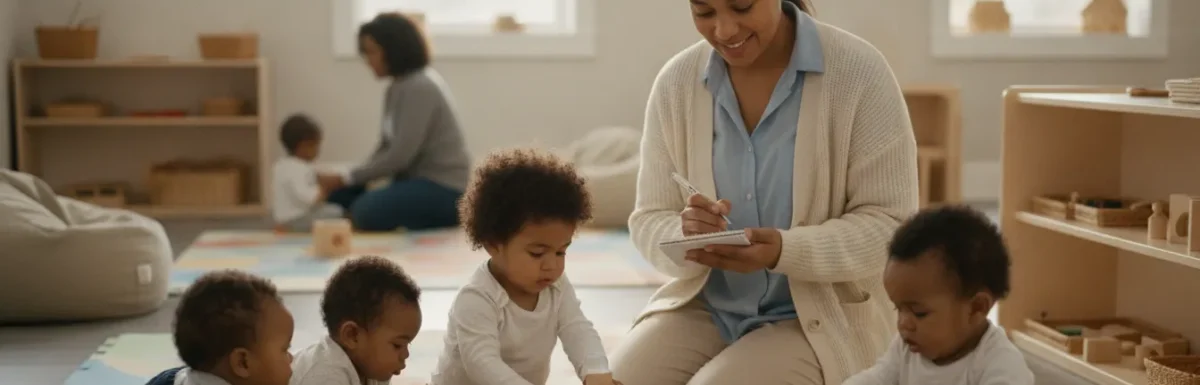
Strong competency statements prove how your daily care decisions support infants and toddlers. They do not repeat polished sample language; they reveal what you notice, why you act, and how children respond.
Build the knowledge behind your original statements with 120-hour CDA training online.
Infant toddler CDA competency statement examples clarify the structure of reflective writing without supplying copy-ready answers. A strong statement names a real care routine, explains the educator’s choice, describes the child’s observable response, connects the choice to professional knowledge, and identifies a practical improvement. Candidates should protect privacy and write from their own experience.
Your task is not to sound like a sample; it is to make your professional judgment easy to see. We will first examine What infant toddler CDA competency statement examples should show, then use that standard to shape original reflections around your own routines. Here is how.
What infant toddler CDA competency statement examples should show
Useful infant toddler CDA competency statement examples show how reflection works without giving candidates words to copy. They reveal the parts of a strong response: a real event, a clear choice, the child’s response, and the lesson learned.
Evidence from a real moment
A generic claim names a strength but does not prove it. For example, “I support infant development” leaves the reader asking what happened and why the practice mattered. Evidence answers those questions with one focused classroom moment.
Strong evidence explains who was involved without naming a child. It also covers what happened, when and where it happened, and how the child responded. Candidates can review these skills while completing their CDA certification requirements guide.
- Generic claim: “I help toddlers solve problems during play.”
- Mini-example prompt: Describe a time two toddlers wanted the same toy. What did you say, what choice did you offer, and what happened next?
- Reflection prompt: Explain what the children’s responses taught you about your approach.
The reason behind the practice
A clear statement does more than list actions. It explains the professional reason for each choice and connects that reason to a competency goal. The link should be easy for a reviewer to follow.
For instance, a candidate might describe sitting near an infant, watching the infant’s cues, and pausing before offering help. The reflection should explain why that response fit the child and what the candidate would repeat or change.
- Action prompt: What did you notice, say, or do?
- Reason prompt: Why did that choice fit the child’s cues, needs, or stage?
- Result prompt: What response showed whether the approach helped?
Original reflection with privacy
Candidates should write from their own practice because the statement is meant to show their judgment. A borrowed story cannot explain their choices or growth. An ethical sample teaches the process, then leaves the details and wording to the candidate.
Privacy matters as well. Use a general label such as “an infant in my care” instead of a name or identifying detail. Federal Head Start privacy guidance also stresses care when programs collect, use, and share information about children and families.
Before drafting, candidates can ask: What did I notice? Why did I respond that way? What changed for the child? What will I do next time? Those answers turn a broad claim into an honest account of practice.
How to turn a classroom routine into a strong statement
A routine worth reflecting on
Start with one routine you know well, such as diapering, bottle feeding, arrival, or floor play. A familiar routine gives you specific actions and child responses to describe. Choose an experience that shows how your choices supported a child’s safety, learning, or emotional needs.
Keep the focus narrow. One clear moment often reveals more about your practice than a full day of general tasks. If you are completing reasons to earn your CDA, connect the routine to ideas you have studied and used with children.
A five-part drafting process
Use this process to move from a remembered event to an original reflective statement. Write brief notes first, then shape those notes into connected paragraphs.
- Select one routine. Name a real event that you handled often or that taught you something useful. Protect each child’s privacy by using a general label, such as “the infant” or “the toddler.”
- Record your actions. Explain what you did in the order it happened. Include the words, materials, cues, and safety steps that shaped the routine.
- Explain your rationale. State why you made each key choice. Link your decision to the child’s age, needs, interests, and the goal you hoped to support.
- Describe the child’s response. Note what you saw or heard without guessing at feelings. Useful details include gaze, gestures, sounds, movement, words, or a change in participation.
- Name one improvement. Explain what you would keep, adjust, or try next time. A useful reflection shows that you observe your work and make thoughtful changes.
This process keeps the statement grounded in evidence from your own classroom. It also helps you avoid copying infant toddler CDA competency statement examples. Samples can show a useful structure, but your actions and reasoning should remain your own.
From notes to a reflective statement
After drafting, check whether each action has a clear reason and each claim has an observed detail. Replace broad lines like “the activity went well” with what the child did. For example, note that the toddler pointed to the cup, used a word, or joined the cleanup routine.
A simple sentence frame can help you connect the parts. Try: “I did this because I wanted to support this skill.” Follow it with the child’s observed response. Then explain what that response taught you about the routine.
Then read the statement as a reviewer would. Can the reader picture the routine, understand your choices, and see how the child responded? The National CDA Training approach uses classroom scenarios to help educators practice this kind of decision-making.
Add a practical next step. You might change the room setup, offer more wait time, or prepare another material that fits the child’s interest. That reflection turns a simple account of events into a clear statement about your professional practice.
Care-routine examples you can make your own
Strong infant toddler CDA competency statement examples begin with real moments, not polished claims. Think about one child, one routine, and one choice you made. Then explain what happened and why your response fit that child.
These prompts are guides, not copy-ready statements. Replace each prompt with details from your own work, and protect every child’s privacy. Our six CDA competency goals can help you practice this type of classroom reflection.
From a broad claim to clear evidence
A weak note often names a good practice without showing it. Clear evidence tells the reader who was involved, what you did, and when it happened. It also describes the child’s response and the reason behind your next step.
Use the table to spot details that can make each routine feel true to your work. Do not copy the wording into your statement. Instead, use each row as a prompt while you recall a real classroom moment.
| Routine | Weak generic note | Evidence to add |
|---|---|---|
| Arrival | I help children feel welcome. | A greeting choice, family update, child’s cue, and your response |
| Diapering | I keep diapering safe. | Your preparation, calm talk, privacy steps, and the child’s response |
| Meals | I support healthy eating. | Food choice, child’s signal, words you used, and how you avoided pressure |
| Sleep | I follow each sleep routine. | Known sleep cues, soothing step, room conditions, and later adjustment |
| Play | I encourage learning through play. | Materials offered, child’s action, your question, and what happened next |
| Transitions | I make transitions smooth. | Advance cue, visual or song, child’s reaction, and support you changed |
Details that show responsive care
For arrival, begin with the child’s cue. A toddler may hold a caregiver’s hand or move toward a favorite toy. Explain how you greeted the family, read the cue, and adjusted your welcome.
For diapering, focus on both care and connection. Note what you prepared before starting and how you spoke with the child. Describe how the child’s movements or sounds shaped your pace, while leaving out names and private details.
Meals and sleep also call for close observation. You might describe how you noticed a hunger cue or a tired signal. Then connect that cue to a choice you made, the child’s response, and what you would repeat or change.
Reflection across play and transitions
Play gives you space to show how observation guides teaching. Name the materials and what the child tried. Then explain how your words, pause, or added item supported the child’s next action without taking over.
Transitions work the same way. Describe the warning or familiar cue you used before a change. If a child resisted, explain how you responded and what that reaction taught you about future transitions.
End each routine example with a brief reflection, not a claim that everything went well. State what the moment showed you and what you would do next time. National CDA Training uses scenario-based learning to help educators rehearse these practical choices before writing about their own work.
How do you connect practice to the competency goals?
Strong infant toddler CDA competency statement examples do more than name an activity. They show how a planned practice supported a competency goal in a real moment. Use observable details so the reader can follow your choices and the child’s response.
Evidence that makes the connection clear
Start by naming who took part, without using a child’s full name. Then explain what you did, when and where it happened, and why you chose that practice. These details turn a broad claim into evidence from your daily work.
- Who: Name the age group or use a private label, such as “an eight-month-old infant.”
- What: Describe your actions, materials, words, or changes to the space.
- When and where: Set the scene, such as morning floor play or an outdoor transition.
- Why: Link your choice to the skill, need, or competency goal you meant to support.
- Child response: Record what the child did, said, reached for, repeated, or avoided.
- Reflection: Explain what worked and what you would keep, change, or try next.
Keep the response concrete. “The child smiled” says less than “the child smiled, reached toward the scarf, and pulled it twice.” The federal Head Start guidance on child observation also treats observation as a key part of responsive infant and toddler care.
Infant practice example
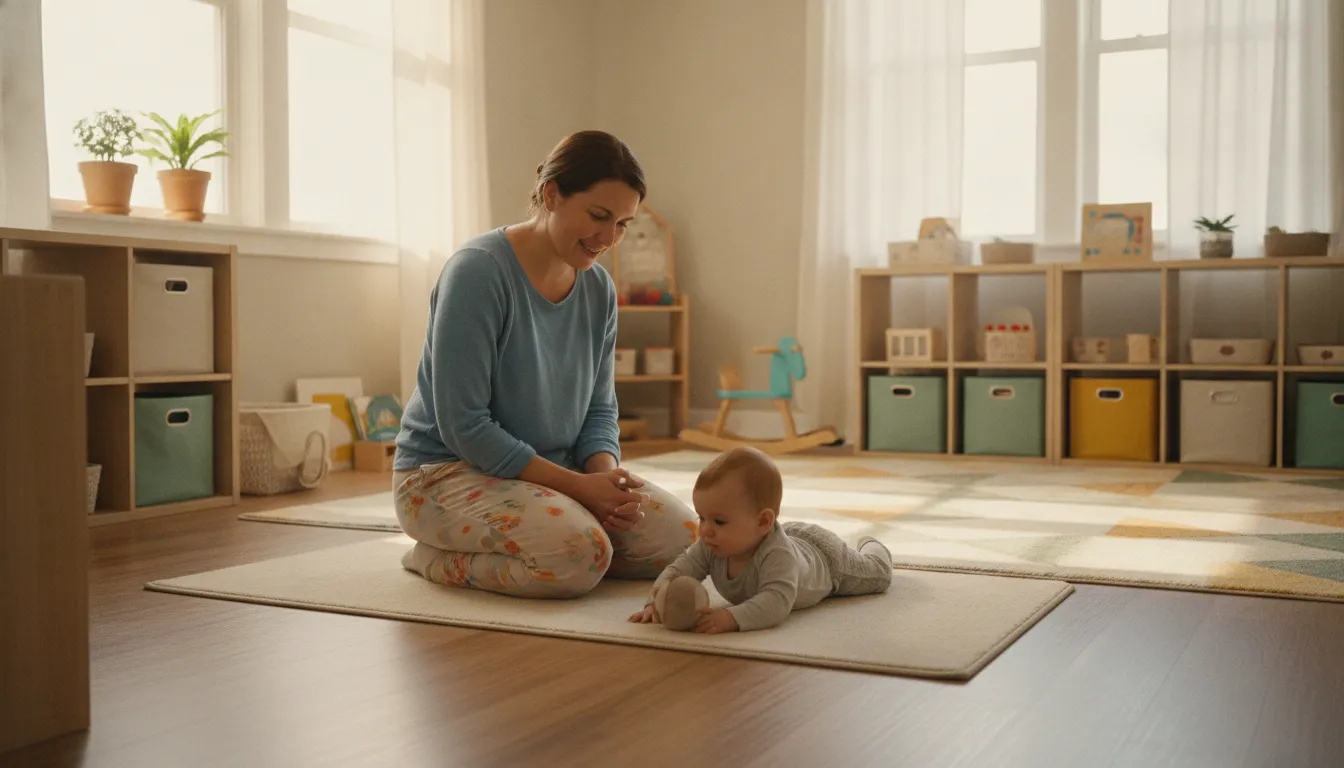
During morning floor play, I placed a soft scarf within reach of a nine-month-old infant. I chose this setup to support safe exploration and growing control of hand movements. The infant reached, grasped the scarf, dropped it, and reached again.
I stayed close, named the action, and allowed time for another attempt. The repeated reach showed interest and helped me see that the challenge was a good fit. Next time, I would add a second texture and watch which material the infant explores first.
Toddler practice example
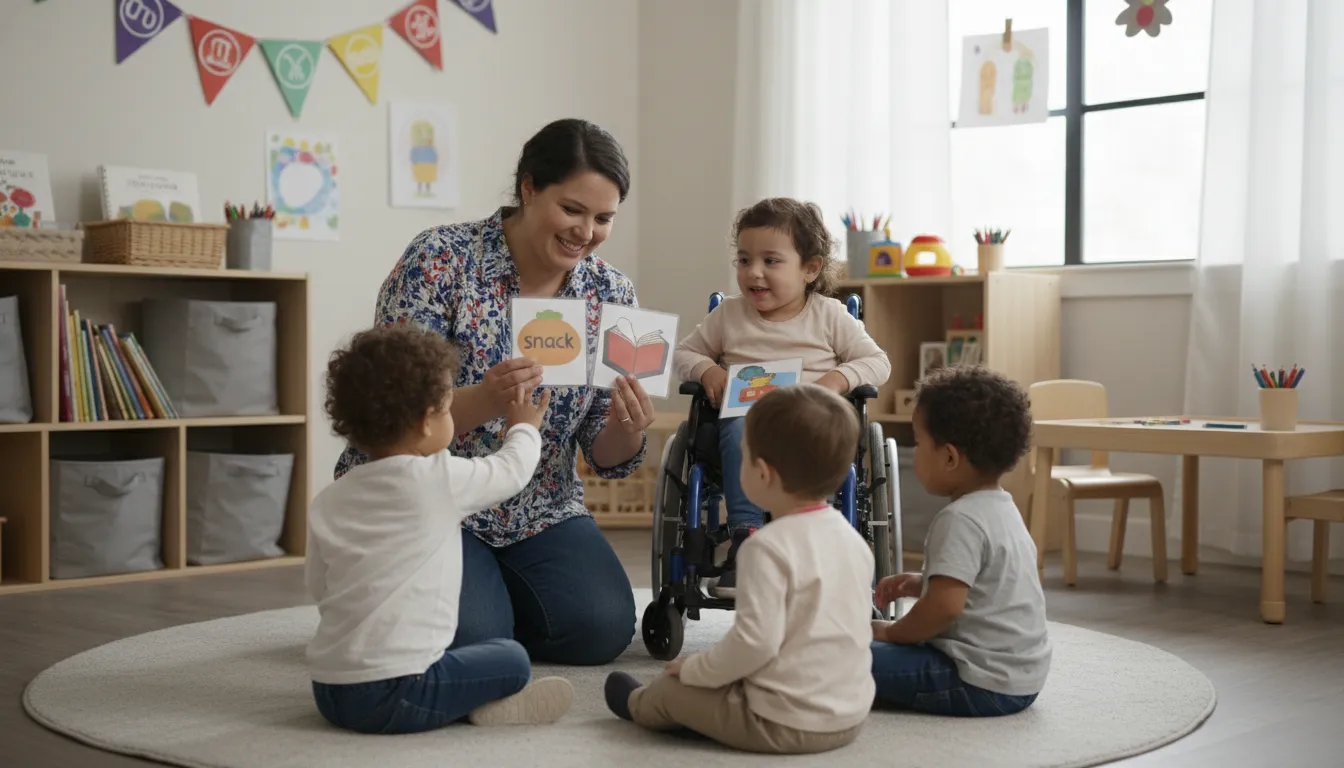
Before outdoor play, I invited two toddlers to choose picture cards showing a coat or hat. I used the cards to support choice-making and simple communication during a familiar routine. One toddler pointed to the coat card, said “coat,” and brought it to me.
This response showed that the child connected the picture, word, and next step in the routine. I would keep the cards near the door and add more choices as the children use them with ease. This kind of reflection fits well with six CDA competency goals that connects course ideas to classroom decisions.
In your final statement, name the goal after presenting the evidence. Then explain how the practice and child response show progress toward that goal. That order keeps the link clear while making the statement original to your own work.
Review the six CDA competency goals before matching your evidence to a goal.
Common competency statement mistakes and how to fix them
Copied samples and vague claims
Infant toddler CDA competency statement examples can show you how a statement is organized. They should never replace your own classroom story or professional voice. Copying a sample hides what you know and makes honest reflection impossible.
Another common mistake is making broad claims without proof. Instead of writing, “I support healthy development,” describe one choice you made, the child’s response, and what you learned. Use who, what, when, where, why, and your professional reason. These details turn a claim into clear evidence.
- Weak: “I always create a safe and caring room.”
- Stronger: “I placed soft blocks within reach, watched how infants used them, and moved one block when it became a trip risk.”
Your statement should sound like you, not a model answer. Scenario-based guidance for becoming a daycare teacher can help you practice explaining the choices behind your work.
Activities without teaching intent
Listing an activity is not the same as explaining intentional teaching. “We painted today” tells the reader what happened, but not why it mattered. Add the skill you hoped to support, how you adjusted the activity, and what the children showed you.
Infants and toddlers also need different examples. An infant example may focus on close observation, responsive care, and safe sensory play. A toddler example may show simple choices, growing language, movement, or support during peer conflict.
Avoid treating every child in an age group as the same. Explain how you noticed one child’s cues and changed your response. This small detail shows that your plan came from observation rather than a preset activity.
Weak reflection and privacy risks
A statement becomes reflective when it explains what you would keep, change, or try next. Do not stop after saying an activity went well. Name the evidence that shaped your view, then explain how it will guide your next choice.
Protect privacy while adding useful detail. Use a first initial or a general label, such as “a toddler in my group.” Leave out full names. Birth dates, family details, diagnoses, and any facts that could reveal the child.
When your setting keeps education records, review its policies and relevant federal student privacy guidance. Privacy does not weaken a statement. It keeps the focus on your teaching choices, the child’s response, and your growth as an early childhood educator.
- Before submitting, replace identifying details with neutral terms.
- Check that each example explains both your action and your reason.
- End each example with a clear lesson or next step.
How can you revise your statement before submission?
Set your draft aside for a short time, then read it as if you were the verifier. Your final statement should sound like you and show what you do with infants and toddlers. Infant toddler CDA competency statement examples can clarify structure, but they should never supply your wording or classroom story.
Check for original, observable evidence
First, mark each sentence that describes an action someone could see or hear. Replace broad claims, such as “I support development,” with a clear example from your work. State what you did, when you did it, and how the child responded.
Use real evidence without turning the statement into a daily log. The federal Head Start resource on child observation explains how observation can guide care that responds to each child. Your evidence should also connect an observed need with the choice you made.
- Is every example based on your own practice?
- Can a reader picture your action and the child’s response?
- Did you explain why the action supported the competency goal?
Make every example infant-toddler specific
Next, look for details that fit infants and toddlers, not children in general. Name the routine, material, cue, or interaction that shaped your choice. For example, explain how you followed a baby’s signals or helped a toddler move through a transition.
Check that your rationale matches the age and stage in your example. A strong statement links care, learning, safety, and relationships to the choice you made. If you need more grounding before revising, review the steps toward CDA certification topics that support practical classroom decisions.
Protect privacy during this pass. Use a first name, initial, or general label only when it is needed for clarity. Remove family details, health information, or other facts that do not help explain your professional choice.
Read for clarity and verification
Read the statement aloud once. Shorten long sentences, remove repeated points, and replace vague words with plain ones. Then ask a trusted peer to explain your main example back to you. If the meaning changes, revise the part that caused confusion.
- Does each paragraph have one clear purpose?
- Do your evidence, rationale, and reflection connect?
- Are spelling, grammar, and formatting consistent?
- Can you discuss each choice without relying on the draft?
Finish by preparing for questions during verification. You should be ready to explain why you chose an approach, what happened, and what you would change next time. That final reflection shows professional judgment and keeps the statement rooted in your actual practice.
See how earning a CDA can support your growth as an early childhood educator.
Frequently Asked Questions
How many infant-toddler CDA competency statements do I need?
Infant-toddler CDA candidates write reflective statements for six competency goals. Each statement should explain how the candidate supports children through intentional care and teaching. Use a specific routine, describe what happened, explain the professional reason for the response, and reflect on the result. The statement should show personal practice rather than repeat course language or a sample answer.
How can I use infant-toddler CDA competency statement examples without copying them?
Use an infant-toddler CDA competency statement example only to study its organization, level of detail, and reflective tone. Then close the example and write from your own classroom experience. Change more than names or wording. Your statement should describe a routine you handled, the child’s response, your professional reason, and what you learned or would adjust.
What classroom routines make strong evidence for a CDA competency statement?
Strong evidence often comes from everyday infant and toddler care, including arrival, feeding, diapering, handwashing, play, transitions, and rest. Choose a routine where your decisions supported safety, relationships, development, or family communication. Explain who was involved, what you did, when and where it happened, why you chose that response, and how the child responded.
How do I protect a child’s privacy in a CDA competency statement?
Protect child privacy by using a first initial, a made-up name, or a general label such as “a 20-month-old child.” Do not include full names. Birth dates, addresses, health details, or facts that could identify a child or family. Include only the context needed to explain your professional choices and the child’s response during the routine.
Can one classroom routine support more than one CDA competency goal?
Yes. A routine such as diapering can show safe practices, responsive relationships, communication, and support for development. However, each competency statement should focus on the goal named in that section. Select details that prove that goal, explain your reasoning, and avoid recycling the same paragraph across several statements. Different reflections can draw from one routine when each shows distinct competence.
Ready to Start Writing Original CDA Statements?
Waiting to begin can leave you rushing through important written reflections and struggling to show how your daily care routines support infants and toddlers. Starting now gives you time to notice real routines, record useful details, and shape each example in your own words with confidence. A clear training plan helps you connect each routine to professional reasoning before deadlines make careful reflection harder and less manageable.
Ready to move forward? Start online CDA credential training today to organize your next steps and begin building original statements from real classroom care. Contact the training team as questions arise, and keep your examples focused on your own actions, each child’s response, and your reflection.