
CDA Professional Development Specialist requirements define who can evaluate a CDA candidate during the Verification Visit. A qualified PD Specialist brings verified early childhood knowledge, relevant classroom experience, adult mentoring ability, and Council training to an independent assessment that includes portfolio review, observation, reflective dialogue, and score submission.
Start your 120-hour online CDA training and prepare for every step of the credential process.
CDA Professional Development Specialist requirements include an accepted education pathway, experience working with young children, at least one year mentoring adults, and completion of Council-approved PD Specialist training. Approved specialists conduct the Verification Visit, review the Professional Portfolio, observe classroom practice, lead reflective dialogue, and submit scores to the Council.
The requirements protect the consistency and independence of the CDA assessment. They also help candidates identify a qualified specialist and understand exactly what that person will do before, during, and after the visit.
What are the CDA Professional Development Specialist requirements?
A prospective PD Specialist must satisfy the Council for Professional Recognition’s education, early childhood experience, adult mentoring, and training criteria. The role is not simply an observation assignment. It requires enough subject knowledge and professional judgment to evaluate practice fairly while helping a candidate reflect on that practice.
Education and early childhood experience
The Council accepts more than one education pathway. An applicant may qualify through a relevant college degree or a current CDA credential, provided the applicant also meets the required experience criteria. The expanded pathway allows experienced CDA credential holders to pursue this advanced role while preserving a consistent assessment standard.
- Document the education pathway: Submit the records requested for a qualifying degree or current CDA credential.
- Show relevant classroom knowledge: Demonstrate experience working with young children in an early childhood setting.
- Match the endorsement setting: Be prepared to evaluate candidates in settings and age groups the specialist understands.
Candidates who are still completing their own credential can review the CDA requirements for preschool teachers and the broader CDA credential requirements. A PD Specialist evaluates whether that knowledge appears in day-to-day practice.
Adult mentoring and professional judgment
An applicant needs at least one year of experience mentoring, coaching, or supporting adults. Relevant work may include serving as a lead teacher, supervisor, trainer, or coach. This requirement matters because reflective dialogue calls for neutral questions, attentive listening, and constructive feedback rather than simple pass-or-fail commentary.
Mentoring experience also supports accurate use of the CDA Competency Standards. Specialists must distinguish evidence they observe from personal preferences about classroom style.
Application, training, and approval
Applicants submit records through YourCouncil and should prepare the requested education, credential, experience, and training documents as PDFs. The Council may take up to 45 business days to review an application. After approval, the specialist completes the required online training before conducting a first Verification Visit.
- Prepare exact records: Confirm that names, dates, credentials, and supporting documents agree before upload.
- Allow review time: Do not schedule candidate work until approval and required training are complete.
- Use YourCouncil: Track assignments, scheduling status, and score submissions in the Council portal.
The Council’s updated eligibility requirements and PD Specialist application guidance are the authoritative sources for current details.
Approval also carries an ongoing responsibility to follow the Council’s procedures exactly. A specialist should keep account information current, protect candidate records, use only authorized assessment tools, and complete required updates. If a potential assignment falls outside the specialist’s experience or creates a conflict of interest, the correct response is to decline it rather than stretch the rules.
For applicants, that distinction is important: being an experienced early childhood educator does not automatically authorize someone to conduct Verification Visits. Council approval and specialist training turn relevant experience into an eligible assessment role. Until every requirement is complete, an applicant may mentor educators but may not represent that work as an official CDA Verification Visit.
What does a CDA PD Specialist do?
A PD Specialist manages and conducts the Verification Visit, then submits evidence-based scores to the Council. The specialist confirms scheduling readiness, reviews the candidate’s Professional Portfolio, observes normal classroom practice, leads reflective dialogue, and records results. The Council, not the specialist, makes the final credential decision.
Before the visit
The specialist uses YourCouncil to confirm that a candidate is ready to schedule and to manage the assignment. Once the candidate receives Ready to Schedule status, the parties agree on an eligible date, location, and classroom period. Clear communication prevents avoidable delays.
- Confirm readiness: Verify that the candidate is authorized to schedule.
- Confirm the setting: Ensure children will be present and the candidate will serve as lead teacher.
- Protect independence: Identify conflicts that would prevent a neutral evaluation.
During the visit
The specialist follows the Council’s Review, Observe, and Reflect model. The review examines the Professional Portfolio. The observation records evidence from the candidate’s normal work with children. The reflective dialogue gives the candidate an opportunity to explain decisions, connect practice to child development, and identify areas for growth.
The specialist uses the Comprehensive Scoring Instrument and applicable competency standards instead of improvising criteria. For a closer look at the experience, review the CDA observation process.
After the visit
After completing all required parts, the specialist submits scores in YourCouncil. The specialist does not promise an outcome or independently award the CDA. The Council combines the submitted assessment information with the rest of the candidate’s credential file and makes the final decision.
Prepare for your Verification Visit with the CDA observation course book.
How does the CDA Verification Visit work?
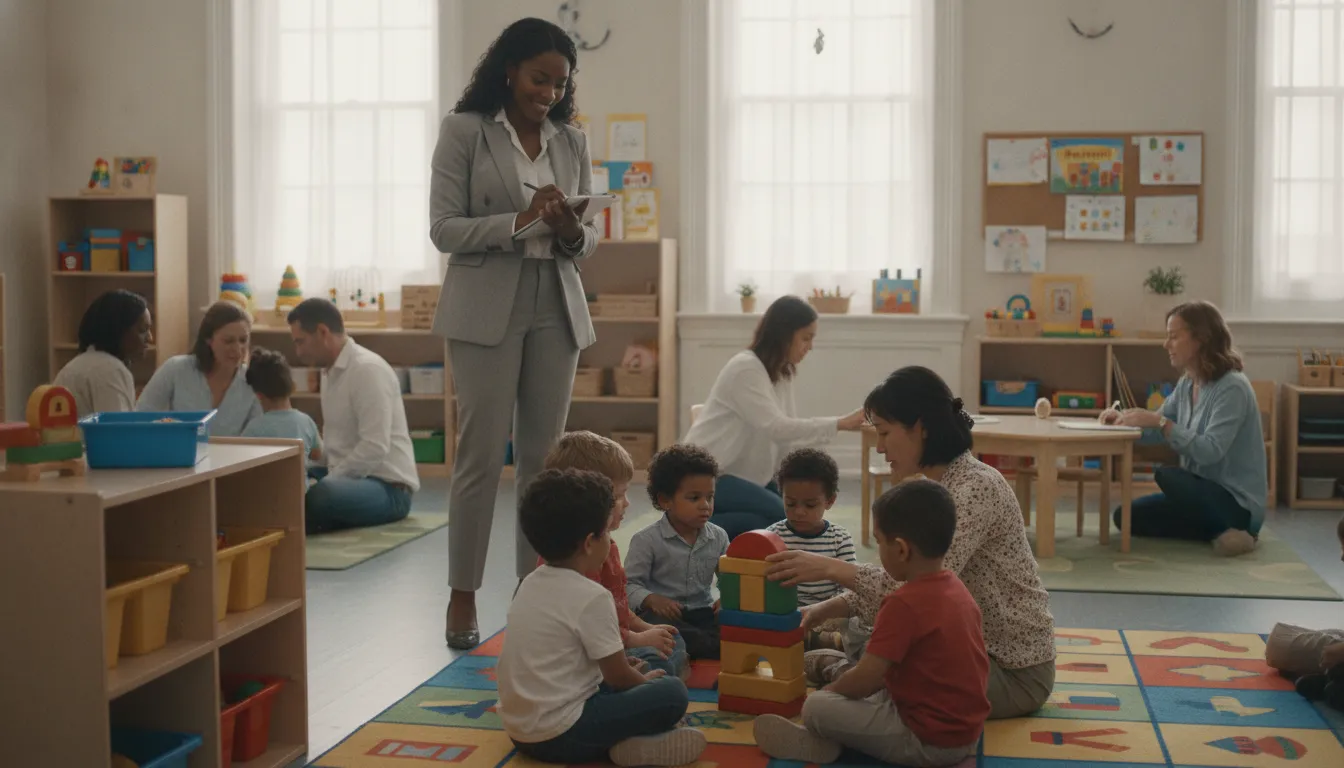
The Verification Visit is a structured assessment, generally planned as an approximately four-hour appointment. It includes review of the Professional Portfolio, observation of the candidate as lead teacher, and reflective dialogue. Candidates should follow their normal classroom routine so the specialist can assess authentic practice against consistent standards.
Scheduling the session
A candidate schedules only after completing the required preparation and receiving Ready to Schedule notice through the Council process. The candidate finds an eligible specialist, confirms professional independence, and agrees on a normal day when children will be present. Parties should also confirm fees, availability, and logistics directly.
Review, Observe, and Reflect
- Review: The specialist examines the Professional Portfolio, Resource Collections, family questionnaires, competency statements, and related materials.
- Observe: The specialist watches the candidate lead normal classroom activity and records evidence using the Comprehensive Scoring Instrument.
- Reflect: The specialist asks focused questions so the candidate can explain choices, assess performance, and connect practice to the competency standards.
- Submit: The specialist enters scores for the Council’s final credential review.
During observation, the specialist remains in the background and does not direct the lesson. Candidates should focus on children, safety, relationships, learning activities, and the established daily routine. The CDA observation course book can help candidates understand how their everyday practice will be evaluated.
Professional Portfolio review
The portfolio should be complete, current, and easy to navigate. It gives the specialist evidence that cannot be captured through a single observation. An organized portfolio also leaves more time for a meaningful reflective conversation instead of a search for missing materials.
Portfolio review and classroom observation serve different purposes. The portfolio demonstrates planning, resources, family engagement, professional philosophy, and completed preparation over time. Observation shows how the candidate applies knowledge in real interactions. Reflective dialogue then connects those two evidence sources by asking the candidate to explain decisions and consider alternatives.
This combined approach prevents one strong lesson or one polished binder from carrying the entire assessment. Candidates preparing for the visit should use the CDA observation course book to understand how the parts connect, while continuing to follow all current Council instructions for their setting.

How should candidates prepare for the PD Specialist visit?
Candidates should prepare the portfolio, classroom, and reflective explanations without staging an artificial performance. The strongest preparation is to understand the standards, organize required evidence, correct safety issues, and practice explaining why particular teaching choices support children’s development and learning.
Organize the Professional Portfolio
Check all six Resource Collections, competency statements, family questionnaires, and proof of training. Confirm that every required item is present, clearly labeled, and easy to find. Missing or disorganized materials can slow the review and make it harder to show the full scope of your work.
- Audit every section: Use the current requirements as a checklist rather than relying on memory.
- Verify details: Check names, dates, training hours, and required signatures.
- Make navigation obvious: Use a consistent order and labels so the specialist can review efficiently.
Prepare the classroom, not a performance
Choose a normal operating day and complete a practical safety check. Materials should be clean, age-appropriate, accessible, and in good condition. Have the day’s lesson plan available, but do not replace familiar routines with an elaborate activity created only for the visit.
During the CDA observation process, show how you communicate respectfully, guide behavior, maintain safety, and adapt to children’s needs. Authentic interactions provide stronger evidence than a rehearsed script.
Practice reflective explanations
Prepare to explain the purpose behind your choices. For example, connect room arrangement to supervision, an activity to a developmental goal, or a response to a child’s individual need. Reflection is not about claiming perfection. It is about identifying evidence, explaining judgment, and describing realistic improvements.
- Use specific examples: Describe what happened, what you did, and why.
- Connect to development: Explain how the choice supports children’s safety, learning, or relationships.
- Discuss growth honestly: Identify what you would maintain and what you would adjust.
Useful practice questions include: What did children learn from that activity? How did you adapt for different needs? What evidence showed that the approach worked? What would you change next time? Answers should point to specific children, decisions, and outcomes while protecting privacy. General claims such as “the activity went well” provide less useful evidence than a concise explanation tied to observed behavior.
On the visit day, keep required materials accessible and maintain normal supervision responsibilities. The specialist’s presence does not change staff ratios, safety policies, or the candidate’s duty to respond to children. If the routine changes unexpectedly, explain the adjustment during reflective dialogue rather than trying to force the original plan.
Who is responsible for each part of the CDA process?
The candidate, PD Specialist, and Council have distinct responsibilities. The candidate completes training and assembles evidence. The specialist independently evaluates practice and submits scores. The Council manages the credentialing system, reviews the complete file, and issues the final decision.
| Role | Main responsibility | Key task |
|---|---|---|
| Candidate | Complete preparation | Finish 120 hours of training, prepare the portfolio, and demonstrate practice. |
| PD Specialist | Conduct an independent assessment | Review, observe, reflect, score, and submit results. |
| Council for Professional Recognition | Manage credentialing | Review the full file and make the final CDA decision. |
Candidates can complete their required education through 120-hour CDA training online. Training providers support preparation, but they do not replace the Council or the independent PD Specialist. Keeping those roles separate protects assessment integrity.
Responsibility for deadlines is also shared but distinct. Candidates track their credential steps and submit their materials. Specialists manage their accepted assignments and submit assessment results. The Council communicates official status and decisions. Candidates should direct training questions to their provider, visit logistics to the selected specialist, and credential status questions to the Council. This avoids conflicting answers and helps each party solve the right problem.
How do candidates find and schedule a PD Specialist?
Candidates use the Council’s Find-A-PDS tool to locate an eligible specialist, then confirm setting expertise, professional independence, availability, fees, and travel details. Scheduling occurs after the candidate receives Ready to Schedule status. Starting the search early makes it easier to find a suitable specialist without delaying the credential timeline.
Choose an eligible, independent specialist
Look for a specialist familiar with the candidate’s endorsement setting and age group. The specialist must be neutral, so a close friend, family member, or direct supervisor is not an appropriate choice. Confirm any relationship questions before scheduling rather than risking an invalid visit.
Confirm practical details
Ask about availability, fees, service area, and required communication. The Council’s PD Specialist FAQs explain common process details. Choose a normal classroom day, avoid field trips or special events, and reserve a quiet space for reflective dialogue.
The candidate should be lead teaching in the correct setting during the visit. Before confirming the date, recheck the CDA credential requirements, portfolio readiness, and site logistics.
Keep written confirmation of the agreed date, arrival details, fee, and contact method. A brief final check several days before the visit can confirm that the setting remains eligible, children will be present, and no conflict has emerged. Candidates who want more structured preparation can revisit the CDA observation process before that check.
Choose your online CDA course and build the knowledge needed for a confident Verification Visit.
Frequently Asked Questions
What are the eligibility requirements to become a CDA Professional Development Specialist?
Applicants need an accepted education pathway, relevant experience with young children, at least one year mentoring adults, and required Council training. A relevant college degree or current CDA credential may satisfy the education pathway when paired with the applicable experience. Review the Council’s current eligibility guidance before applying.
How do I apply to become a CDA Professional Development Specialist?
Apply through YourCouncil and submit the requested records, generally as PDF documents. Verify that education, credential, early childhood experience, and mentoring evidence are complete. After approval, complete the required online specialist training before accepting Verification Visit assignments. Use the Council’s application instructions for current steps.
How long does it take for the CDA Council to review a PD Specialist application?
The review may take up to 45 business days. Submit complete, accurate records to avoid preventable questions or delays, and do not commit to conducting a candidate’s visit until approval and specialist training are complete.
What are the main duties of a CDA Professional Development Specialist?
A specialist confirms readiness, conducts the Verification Visit, reviews the Professional Portfolio, observes normal classroom practice, leads reflective dialogue, records evidence, and submits scores. The specialist provides an independent assessment; the Council makes the final credential decision.
Ready to meet your CDA Professional Development Specialist?
Preparation begins well before the visit date. Complete your training, organize every portfolio section, understand the CDA Competency Standards, and practice explaining your teaching decisions. For course support, call 269-444-6128 or review National CDA Training’s online options.