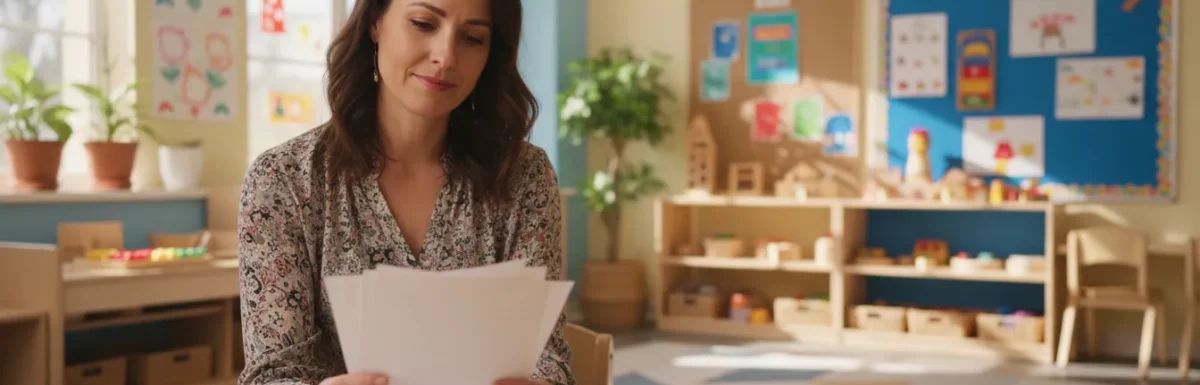
Family feedback belongs in a CDA portfolio only when families can share it without pressure. A respectful process protects their privacy while giving candidates useful insight into how their work supports children.
A CDA family questionnaire is a structured form that invites families to share private feedback about a candidate’s work with children. Candidates should explain its purpose, offer an accessible and private return method, avoid coaching answers, and make clear that participation is voluntary. They should store responses securely, share them only with people involved in the CDA process, and remove identifying details from every portfolio summary. Candidates can then look for common themes, connect family insight to their daily practice, and choose specific improvements that support stronger family partnerships. This careful approach helps candidates use honest feedback as evidence of reflection while respecting every family’s choice, privacy, and relationship with the program.
The next question is simple: What is a CDA family questionnaire? A clear answer explains the form’s purpose and limits before you invite honest responses or handle private details. With that foundation, you can turn family voices into useful reflection. The path begins with:
What is a CDA family questionnaire?
A CDA family questionnaire is a feedback form that families complete about a candidate’s work with young children. It gives families a clear way to share what they have seen in the program. Their answers help show how the candidate communicates, responds to needs, and builds respectful partnerships.
The form belongs within the candidate’s CDA Professional Portfolio work. It adds a family point of view to the examples, statements, and other materials the candidate gathers. A guide to how to document family feedback can help candidates connect this input to the wider portfolio.
A family view of daily practice
Families see parts of an educator’s practice that may not appear in a classroom observation. They notice whether updates are clear and questions receive thoughtful answers. They also notice whether the educator respects their knowledge of their child. The questionnaire brings those day-to-day experiences into the credential process.
This feedback also reflects the value of two-way family relationships. The federal Head Start program describes family engagement as a shared and interactive process. In the CDA process, candidates can treat questionnaire responses as useful input rather than a score to defend.
A piece of the Professional Portfolio
The questionnaire supports the Professional Portfolio, but it does not replace the candidate’s own reflection. A strong portfolio connects family input with specific choices in daily practice. For example, a comment about helpful updates may point to a communication strength worth keeping.
Candidates should use the current official instructions for their CDA setting when giving out, collecting, and organizing forms. Candidates should confirm requirements and placement details instead of treating older examples as final directions. Following the current guide also helps keep the portfolio organized.
Feedback for professional growth
The most useful responses are not always the most positive ones. A concern may reveal that a routine, message, or family contact method needs to change. Candidates can look for themes across responses, then choose practical steps that support stronger family partnerships.
Reflection turns completed forms into evidence of growth. Candidates can compare feedback with their own view, note what surprised them, and explain what they plan to do next. Examples of gathering family input can help candidates write about feedback without copying another educator’s response.
Why does family feedback matter in your portfolio?
The CDA family questionnaire matters because it records how families experience your daily practice. It can show that you listen, share useful information, and treat each family as a partner. In your portfolio, that evidence says more than a checked box; it shows how your work supports children through strong family ties.
Evidence of respectful partnership
Respectful partnership starts when families have a safe, clear way to share their views. Their feedback can reveal whether your communication feels welcoming, useful, and open to questions. It may also show how well you respect each family’s language, culture, routines, and goals for their child.
The federal Head Start program describes family engagement as a collaborative, strengths-based process built through positive, goal-focused relationships. This view helps explain why family feedback belongs in a professional portfolio. The questionnaire provides one way to show that family voices shape your work.
A clearer view of your practice
Families see parts of your work that a single observation may miss. They notice how you greet them, respond to concerns, share progress, and support transitions. A thoughtful CDA family questionnaire brings those everyday moments into your record.
A useful response often points to a specific interaction, such as a helpful update or a missed chance to listen. Specific feedback gives you something you can review and act on. General praise still has value, but it may offer less guidance for growth.
When you review responses, look for patterns rather than focusing on one comment. Consider what the feedback shows about:
- areas families consistently value;
- places where messages need to be clearer;
- cultural or family preferences that need more attention; and
- ideas that could improve routines, activities, or communication.
Keep both affirming and critical feedback. Together, they give a more honest picture of your practice. They also create a useful starting point for gathering family input as you build your portfolio.
Reflection that leads to action
Feedback becomes meaningful when it changes what you do next. You might adjust how you send reminders, invite family ideas, or explain a child’s progress. You might also keep a practice that families say helps them feel informed and included.
Do not treat cultural sensitivity as guessing what a family needs. Use feedback to learn how each family prefers to communicate and take part. This approach makes room for differences without turning them into assumptions.
Your portfolio should not present feedback as proof that every family agrees with you. Instead, explain what you learned, what you changed, and what you plan to keep improving. That response shows communication, cultural care, and a willingness to grow. It also shows that partnership is part of your daily work, not just a portfolio requirement.
How to distribute and collect questionnaires respectfully
A thoughtful collection plan protects family choice while helping you receive useful feedback. Treat each CDA family questionnaire as a private request, not a classroom assignment. Give families clear details, enough time, and a simple way to respond.
A respectful collection plan
Before sharing forms, confirm the current directions in your Competency Standards book. Decide when you will distribute questionnaires, when responses are due, and where completed forms will go. Build in extra time so families do not feel rushed.
- Plan before you ask. Prepare clean copies and choose a realistic due date. Arrange both paper and accessible digital options when your program permits them.
- Explain the purpose. Attach a short cover note that says why you are requesting feedback. Use plain language and explain how the responses support your professional growth.
- Make participation voluntary. Tell families that choosing not to respond will not affect their child’s care. Avoid asking for a reason if someone declines.
- Offer an accessible delivery method. Ask whether a family needs translated text, large print, or another reasonable format. Share the form through a method they already use.
- Send one polite reminder. Keep the message brief and include the due date. Thank families who already responded without naming them or revealing their answers.
- Collect forms privately. Use a sealed envelope, closed collection box, or secure digital method. Do not ask families to hand responses to you in front of others.
- Store responses securely. Keep paper forms in a closed folder and protect digital files with a password. Follow your program’s rules for access, retention, and disposal.
Clear choices for every family
Families may have different schedules, languages, reading needs, and levels of comfort with technology. Offer choices without making assumptions about what a family needs. A short, flexible process shows respect and can make the request easier to complete.
Ask families which format helps them understand and respond to the request. The U.S. Department of Justice offers guidance on effective communication for people with disabilities. Check your program’s policy before offering a new format or translation.
Your cover note should state the purpose, due date, return method, and contact option for questions. It should also say that participation is voluntary. For more context, review this guide to gathering family input as part of reflective portfolio work.
Private collection and secure storage
Do not review completed forms in a public space or discuss one family’s answers with another family. Limit access to people who need the forms for the CDA process. If your center has stricter privacy rules, follow those rules as well.
After collection, record that each response arrived without copying private details into an open checklist. Place the forms in the correct portfolio section based on your current instructions. This approach supports careful organization when you learn how to document family feedback.
If a response raises a concern, stay calm and avoid a defensive reply. Use the feedback to reflect on your practice. Then follow your program’s normal process for any issue that needs action.
How do you protect family confidentiality?
Set clear expectations
A CDA family questionnaire asks parents or guardians to share useful feedback about your work. Treat each response as private from the moment you receive it. Before sharing the form, explain who will read it, how you will use it, and where you will keep it.
Families should be free to answer, skip a question, or decline the questionnaire without pressure. Use the same calm process with every family. Neutral handling helps families share honest feedback without feeling that their relationship with the program depends on a certain response.
Limit names and details
Collect only the details you need for the questionnaire and its stated purpose. If a name is not needed, leave it out. When you write notes or a summary, describe patterns in the feedback instead of naming a child, parent, guardian, or staff member.
- Replace names with broad terms such as “a family” or “several respondents.”
- Leave out details that could point to one child or household.
- Keep direct quotes anonymous unless the family has clearly agreed to their use.
- Discuss responses only with people who have a valid reason to review them.
Small details can reveal more than a name. A child’s age, schedule, classroom, or family event may make a response easy to trace. Review every CDA family questionnaire summary for these clues before you share it with an instructor, advisor, or program leader.
Store and review responses safely
Keep paper forms in a locked place, not on an open desk or in an unlocked bag. Protect digital copies with a strong password and limit access. The NIST guide for protecting personally identifiable information supports a risk-based approach to handling personal data.
Choose a set time to review stored questionnaires and remove copies you no longer need. Do not save extra versions in email, shared drives, or personal devices. If your center has a privacy policy, follow its rules for storage, access, retention, and secure disposal.
Privacy rules can vary by program, location, and the type of information collected. Check current guidance from your center, training provider, and the official CDA credentialing body before you begin. Ask a supervisor when the right process is unclear, especially before sharing any family response outside the program.
How to use responses in your professional portfolio
A completed CDA family questionnaire is more than a form to file away. It can help you show how family input shapes your work with children. Read every response with curiosity, then look across the full group before drawing a conclusion.
Reviewing responses for patterns
Start by reading all responses once without taking notes. On the second read, mark ideas that appear more than once. Group similar comments under simple labels, such as communication, routines, learning activities, or family comfort.
Notice positive patterns as well as concerns. A repeated strength shows what families value and what you should keep doing. One critical comment may still matter, but it does not always represent the whole group.
- Count themes, not names.
- Separate clear feedback from guesses about what a family meant.
- Note comments that suggest a safe, practical change.
- Keep original forms private and secure.
The Head Start website offers family engagement resources that can help frame this review. Use such guidance to support reflection, not to replace the families’ own words.
Writing an anonymous summary
Your portfolio summary should describe broad themes without identifying any child or family. Do not include names, initials, contact details, or a quote that others could trace. Use neutral phrases such as “several families noted” or “one response suggested.”
Keep the summary short and balanced. State what families said was working, then name one or two areas worth improving. If responses differ, say so instead of forcing them into one view.
For example, families may value regular updates but prefer different ways to receive them. Your summary can note both points without listing who chose each option. This protects privacy while showing that you listened closely.
Turning feedback into an improvement plan
Next, reflect on your role without becoming defensive. Feedback describes a family’s experience, even when it does not match your intent. Ask what you can learn, what you can change, and what may need a respectful follow-up.
Choose one realistic improvement that responds to a clear pattern. Define the action, when you will start, and how you will check whether it helps. A small change that you can sustain is stronger than a broad promise.
- Pattern: Families want clearer weekly updates.
- Action: Send a brief update on the same day each week.
- Evidence: Save a blank sample update for the portfolio.
- Review: Ask families later whether the update is useful.
End your reflection by naming both a strength and an opportunity. Explain how the responses led to your chosen action. This makes the CDA family questionnaire useful evidence of reflective practice, rather than a task completed only for the portfolio.
A practical CDA family questionnaire checklist
Before you distribute the questionnaire
Start by getting the current official CDA family questionnaire for your credential setting. Check that every page is clear and that you know the due date. Then choose a collection window that gives families time to respond without delaying your portfolio work.
Prepare a short note that explains why you are asking for feedback and how you will use it. Use plain language and offer translations when possible. Explain how you will protect each response. This approach supports the trust and shared responsibility described in family engagement guidance.
- Confirm that the questionnaire matches your CDA setting and current credential process.
- Choose a return date and allow time for polite reminders.
- Prepare paper and digital options if both are allowed.
- Plan a private way for families to return completed forms.
Distribution and collection
Give the CDA family questionnaire to families through a method they already use and trust. Share the return date in the first message. Send one brief reminder before that date. Keep participation optional, and do not ask families to discuss answers in public.
Track only whether a questionnaire was returned, not how a family answered. Store completed forms in a secure place as soon as you receive them. If a family needs help reading the form, provide neutral support without guiding its answers.
- Record the date each questionnaire was shared and returned.
- Keep blank forms separate from completed forms.
- Thank families for their time without commenting on their feedback.
- Follow the official rules for the number of questionnaires you need.
Summary, reflection, and portfolio setup
After collection closes, review the questionnaires together and look for themes. Note repeated strengths, concerns, and ideas in a short summary. Do not include family names or details that could reveal who gave a response.
Use the themes to write a focused reflection on your work with children and families. Name one practice you will keep and one change you can make. Connect each point to a real part of your daily work, such as updates, routines, or family input.
Organize the required forms, summary, and reflection in the correct portfolio section. Label each item so it is easy to find during review. For help with the wider credential process, explore National CDA Training and its 120-hour CDA training options.
- Check every item against the current official portfolio directions.
- Remove names and other identifying details from your written summary.
- Keep source questionnaires secure and organize only the required materials.
- Review the final section for missing pages, unclear labels, or incomplete reflections.
Common mistakes and better approaches
Timing and family trust
Waiting until the deadline creates problems that a rushed reminder cannot fix. Families need time to read the CDA family questionnaire, think about their experience, and respond. Share it early, explain its purpose, and set a clear return date.
Pressure can also weaken the value of each response. Avoid asking families to give high ratings or complete the form while you watch. The Head Start family engagement framework treats families as partners, which supports a respectful and open approach.
Forms and private details
Do not rewrite questions, remove sections, or add prompts to an official form. Such changes can affect what the form measures and may make the result unusable. If a family needs help, explain the directions without steering its answers.
Protect privacy when you review and summarize feedback. Describe shared themes, but leave out names, child details, and clues that could reveal who wrote a comment. Store completed forms with other private professional records, not in an open classroom area.
| Common mistake | Why it causes trouble | Better approach |
|---|---|---|
| Waiting too long | Families have little time to respond | Share early and set a clear date |
| Pressuring families | Answers may not reflect their views | Invite honest, private feedback |
| Changing the official form | The form may no longer meet its purpose | Use the form as provided |
| Including identifying details | A summary may expose a family | Report themes without personal clues |
| Focusing on one harsh comment | One response can hide the wider picture | Compare it with all responses |
| Skipping reflection | Useful patterns do not lead to change | Choose one action and review it later |
Patterns before reactions
A harsh comment can be hard to set aside. Read it calmly, look for a useful point, and compare it with the full set of feedback. One comment deserves attention, but it should not outweigh a pattern seen across several responses.
Reflection turns feedback into professional growth. Group similar comments, note what is working, and choose one change that you can observe in daily practice. Later, check whether that change helped and decide what to try next.
Write a brief reflection after reviewing all returned forms. Separate direct observations from your own guess about what families meant. This habit makes your next action easier to explain and keeps one strong reaction from shaping the whole review.
This approach keeps the CDA family questionnaire focused on learning rather than judgment. It also helps you explain your reflection with clear themes and practical next steps. Keep the original responses private while using their shared lessons to guide your work.
Frequently Asked Questions
Can families complete a CDA family questionnaire anonymously?
Families may be able to respond without names, but candidates should follow the current instructions for their CDA setting and their program’s privacy policy. Explain whether responses are anonymous or confidential before distributing the form. Never promise anonymity if handwriting, classroom details, or the return method could reveal a family’s identity. When writing a portfolio summary, remove names and other identifying details.
What should a CDA candidate do if few families return the questionnaire?
Give families enough time, provide clear return instructions, and send one polite reminder without pressuring anyone. Offer accessible paper or digital options when program rules allow them. Participation should remain voluntary, even when the response rate is low. Document the respectful steps you took, then ask your instructor or advisor how current CDA requirements apply to the responses received.
Can a CDA family questionnaire be translated for a family?
A translated or accessible version may help a family understand the request, but candidates should not change an official form without guidance. Ask the program or training provider which approved formats and translation support are available. The U.S. Department of Justice guidance on effective communication also explains why communication methods should fit a person’s needs.
How should a CDA candidate respond to a serious concern in family feedback?
Stay calm, protect the family’s privacy, and do not argue about the response. If the concern involves a child’s safety, discrimination, or another urgent issue, follow the program’s reporting policy immediately. For other concerns, review the comment with the full set of feedback and identify a practical next step. Ask a supervisor or advisor when the correct response is unclear.
Ready to Build a Stronger CDA Portfolio?
Waiting to plan your family feedback process can leave you rushing to gather, review, and organize responses as your portfolio deadline gets closer. Starting now gives you time to choose respectful questions, explain the purpose clearly, protect family privacy, and consider each response with care. You can then identify useful themes and prepare organized portfolio materials, instead of trying to make sense of every comment at the last minute.
Ready to move forward with a clear plan and steady support for the work ahead? Request CDA training details to start your CDA training and get portfolio support as you develop a respectful, organized approach to family feedback. Take the first step today so you have more time to plan your process, reflect on responses, and finish each portfolio piece carefully.