
Helping a toddler learn to walk or speak requires far more than basic babysitting skills. Earning a professional credential shows your ability to guide these key years of early brain growth.
Knowing how to get a cda for infants and toddlers is the first step toward advancing your early childhood career. According to the Council for Professional Recognition, candidates need 120 clock hours of formal early childhood education. This training must cover the specific needs of children from birth to 36 months. Next, you must document 480 hours of professional work experience working directly with young children in a center-based setting. To complete the credential, you will build a detailed professional portfolio, host an official verification visit, and pass the national exam. These structured steps are verified by the Council for Professional Recognition to ensure high-quality care in early childhood classrooms. Achieving this certification shows that you possess the skills required to support our youngest learners.
Contact us to talk with a CDA training specialist about the Infant/Toddler track.
If you are ready to earn this valuable credential, you may wonder how the process works and who should apply. To guide you through each requirement, the sections below walk you through every step, starting with why this credential matters and who should pursue it.
What Is an Infant/Toddler CDA, and Who Needs One?
Core definition of the infant/toddler setting
The Infant/Toddler CDA setting is one of four distinct professional credential tracks offered by the Council for Professional Recognition. This path is for teachers who work with children from birth to 36 months. Teachers in this setting must understand how young children grow.
They learn to support brain growth, language skills, and safe play. The program helps you build a solid care plan for these young groups. It is a center-based option. This means you work in a school or daycare center.
It does not cover home-based care or preschool classes. By focusing on infants, you gain the skills to help babies feel safe and learn. You will learn to set up a safe room and speak with parents about their baby’s day. Each day brings new learning moments for young minds.
Daycare teachers and center-based educators
Who needs this credential? Most often, daycare teachers and early childhood aides seek this path to grow. Many states require this credential for lead teachers in baby rooms. Having this credential proves that you know how to care for infants.
It shows directors and families that you are a true professional in your field. If you want to raise your center’s star rating, this training helps. State quality systems often award points to centers with trained staff. Thus, getting your credential is good for both you and your center.
You might need this credential if you work in one of these roles:
- Infant daycare teacher
- Toddler classroom assistant
- Childcare center director
- Early childhood specialist
Many schools also offer higher pay to staff who hold this credential. It is a smart step to boost your earning power. If you plan to stay in early childhood care, this is a great tool.
Key specialization differences
It is helpful to compare the Infant/Toddler vs Preschool CDA tracks before you start. While both programs teach basic child growth, they focus on different age groups. Preschool training covers children aged three to five years. In contrast, the infant and toddler track covers babies up to three years old.
Their physical and social needs are not the same. Babies need basic care, simple play, and help with motor skills. Older children focus more on group games, letters, and numbers. Choosing the right path ensures you learn the exact methods your classroom needs.
Our online classes use a scenario-based system. This means you learn through real classroom situations. You will practice how to handle daily challenges with infants. This makes your learning practical and easy to apply.
| Detail | Infant/Toddler CDA | Preschool CDA |
|---|---|---|
| Age range covered | Birth to 36 months | Ages 3 to 5 years |
| Training focus | Basic care, motor skills, early language, secure attachment | Group play, early literacy, numbers, social skills |
| Common role | Infant or toddler room teacher | Preschool lead teacher |
| Care emphasis | Feeding, diapering, safe routines, soothing | Lesson plans, circle time, school readiness |
How to Get a CDA for Infants and Toddlers, Step by Step
Eligibility and training needs
Before you start the application process, you must meet some basic rules. You need a high school diploma, a GED, or to be a high school student in a technical program. You must also complete 120 clock hours of formal early childhood education. This training must cover the growth and development of children from birth to 36 months. You also need to spend at least 10 training hours on each of the eight CDA subject areas. Having this strong base helps you know the needs of very young children. It makes sure you know how to build safe, healthy spaces for babies.
The step-by-step pathway
Earning your Infant and Toddler Child Development Associate (CDA) credential is a clear, structured path. The Council for Professional Recognition sets clear rules to make sure you are ready to teach young children. Earning this credential is a key way to boost your career, as shown by studies on professional growth in early education. It proves that you have the skills to work with infants and toddlers. This path helps you grow from a daily caregiver to a trained early childhood teacher. Here are the five key steps you need to follow to earn your credential:
- Complete your education: You must finish 120 clock hours of training that cover birth-to-36-months growth. These hours should cover physical, social, and emotional development.
- Gain classroom experience: You need 480 hours of work with children under three. This must include time with young infants, mobile infants, and toddlers.
- Prepare your portfolio: You will compile a professional portfolio to show your skills. It must include family questionnaires, a resource list, and six competency statements.
- Schedule your verification visit: A Professional Development Specialist will come to your school. They will observe you working with children and review your portfolio.
- Pass the exam: You will take the official test at an approved Pearson VUE center. This test checks your knowledge of child development and safety rules.
The verification and exam phase
Once your paperwork and portfolio are ready, you will submit your application online or by mail. After the council clears your file, the final steps begin. Your verification visit lets a specialist see your skills in real time. They will watch how you talk with babies, guide mobile infants, and keep toddlers safe. The specialist will also review your professional portfolio and talk with you about your career goals. You will also take a written test to finish the process. This exam checks your knowledge of daily classroom scenarios. The questions focus on how to keep children safe and healthy. By finishing these steps, you show that you have the skills to help our youngest learners grow and thrive. Earning this credential is a proud moment that sets you up for long-term success in the childcare field.
The Coursework: 120 Hours Across Eight Subject Areas
To earn an Infant/Toddler CDA, you must complete 120 clock hours of formal education. This training must cover the growth and development of children from birth to 36 months. As the Council for Professional Recognition outlines, this coursework is a core step before you apply. It helps make sure that every student has a strong base in early childhood concepts.
Required CDA Subject Areas
The Council for Professional Recognition asks that your 120 hours cover eight set CDA subject areas. You must complete at least 10 training hours in each area. For the infant and toddler setting, this coursework focuses on the special needs of very young children.
For example, you will study how to set up safe, healthy spaces for babies. You will also learn about child development and physical growth. Other hours will cover positive guidance and emotional growth. This special focus helps teachers support infants as they reach key steps.
Some of these key subjects include:
- Planning safe, healthy spaces to keep babies secure.
- Helping physical and intellectual growth through play.
- Supporting social and emotional development.
- Building strong relationships with families.

Scenario-Based Online Training
When choosing the right CDA training program, the way you learn matters as much as what you learn. Many programs rely on dry lectures and rote learning. This makes it hard to use your skills in a busy room full of active toddlers.
Our program uses a special, scenario-based learning method. Instead of just reading facts, you face real classroom scenes in a virtual space. You make the actual decisions that you face in your daily work. This proven way builds strong paths in the brain. It helps you develop automatic and calm ways to react to classroom problems.
Connecting Coursework to Your Portfolio
Your coursework does not just end with a test. The 120 hours you finish also help you build your CDA professional portfolio. During each module, you will gather materials and write competency statements that show your skills.
This means you do not have to worry about putting your portfolio together at the very end of your training. Instead, you work on it week by week as you learn. By the time you finish your hours, your portfolio is nearly done and ready for review.
Your Work Experience: 480 Hours With Infants and Toddlers
Understanding the 480-Hour Work Requirement
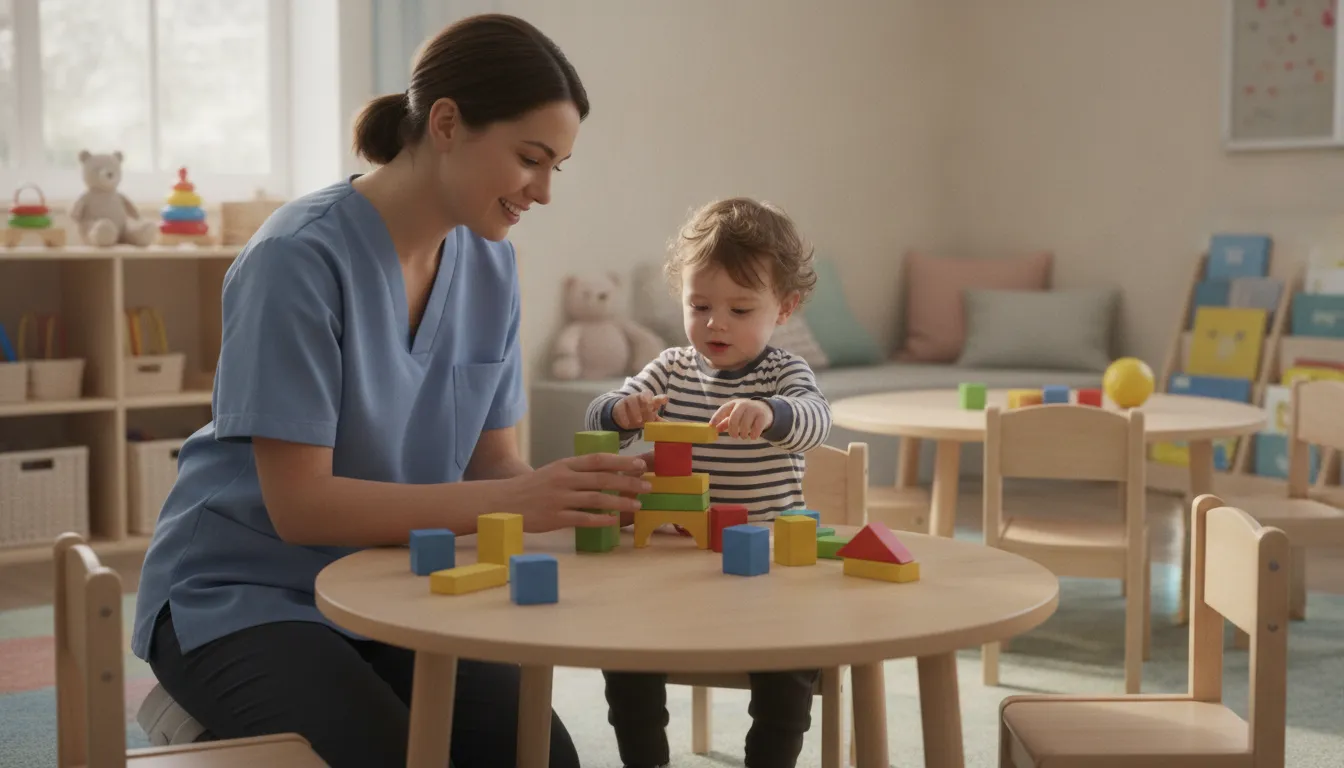
To earn your CDA, you need to show that you have real classroom experience. You must track at least 480 hours of work experience with young children in a center-based setting. This work must be done within three years of sending in your application. This rule ensures that you have practiced the skills you learn in your classes. It gets you ready for the daily work of early teaching. Your hours must be spent doing the actual work of an infant or toddler teacher. This means you are planning lessons, feeding babies, and talking with parents. Reading books is helpful, but you also need to practice with actual children in a room. This hands-on time helps you build confidence in your daily work. If you are getting ready to apply, the Council for Professional Recognition offers a helpful guide. It shows how this professional work experience requirement fits into your path.
Working Across Three Sub-Age Groups
Working with infants and toddlers is unique because babies grow and change so fast. The Council says you must spend your 480 hours with three distinct age groups. First, you must work with young infants from birth to eight months old. At this stage, your focus is on basic care and building trust. You will feed them, rock them, and help them feel safe. Second, you need hours with mobile infants who are nine to 17 months old. These babies are starting to crawl, stand, and explore. You must set up a safe space for them to move. Finally, you must work with toddlers from 18 to 36 months old. They are learning to talk, walk, and play with others. You will help them learn new words and share toys. This complete training shows you how to help children at each early step of growth.
How to Document and Verify Your Hours
You will need to keep a clear record of your hours. Your boss or program director must sign off on your time. These records show that you spent your hours planning games, keeping kids safe, and managing the room. You should use a simple timesheet or log to track your daily hours. Be sure to write down the dates, times, and age groups you worked with each day. Having these details ready will make your application process much faster. If you want classes that make this work easy, choosing the best CDA training program will help. Keep in mind that babysitting or caring for your own kids does not count. You must do this work in an official child care center.
Build the Portfolio and Write Your Competency Statements
The professional portfolio is a key part of the credential process. Building this portfolio shows that you have the skills to work with very young children. In fact, to learn how to get a cda for infants and toddlers, you must compile this file within six months of your application. This professional portfolio gathers your school proof, resources, and written goals. It serves as your main tool to show your skills to your evaluator.
What Goes in Your Portfolio
Your binder must contain specific items that relate directly to babies and toddlers. First, you need to collect parent feedback forms to show how you work with families. You must also gather resources like baby menus, weekly plans, and a safety plan. You will add a list of children’s books that are good for young minds. Finally, you will write a philosophy statement that outlines your beliefs about teaching. All these items must focus on children from birth to three years old.
The Six Reflective Competency Statements
The core of your writing consists of six Reflective Competency Statements, labeled CS I through CS VI. In these essays, you describe how you meet the safety and learning needs of babies. For example, you will write about safety, health, and how you set up the room. You will also write about physical growth, language skills, and social progress. You must explain how you support creative play and help babies learn to share. Your essays will also cover family involvement and professional growth. Each statement must show your daily work with infants and toddlers.
When writing these essays, focus on the growth needs of very young children. Caring for an infant who cannot talk is very different from teaching an older child. Your essays should explain how you respond to baby cues and build trust with families. Describe how you encourage tummy time, guide first steps, and support early language skills. You should describe how you handle daily routines like feeding, diapering, and nap times. Clear reflections show the evaluator that you know how to keep babies safe and happy.
The Scenario-Based Training Edge
Writing six long essays can feel like a hard chore if your class only uses rote learning. Choosing the right training program makes a big difference. Our online training uses real-world class scenes to teach baby care. This hands-on path gives you the useful skills you need to write your essays with ease. You do not just memorize facts; you learn how to handle real classroom problems. This training helps you feel ready when the evaluator comes to watch your class.
The Verification Visit and the CDA Exam
Once you finish your coursework and build your portfolio, you are ready for the final review. This is the last phase of learning how to get a CDA for infants and toddlers. Two main steps stand between you and your credential. First, you will complete a verification visit with a specialist. Second, you will take a written exam to prove your skills. Both steps help show that you can give high-quality care to young children.
The professional development specialist visit
The verification visit is a formal check done in your workplace. A Professional Development Specialist (PDS) will visit your center to see you in action. The Council for Professional Recognition notes that this verification visit includes a direct observation of your work. For the infant and toddler track, this means the PDS will watch how you care for very young children. They will look at how you feed them, help them sleep, and keep them safe. They also want to see how you guide their play and help them learn.
The portfolio review and professional reflection
During the visit, the PDS will also look at your paperwork. They will review your professional portfolio to see your competency statements and resources. You must show that you understand ECE standards and can apply them. Study a guide on how to prepare for your CDA verification visit before the specialist arrives. This will help you keep your files in order and feel ready.
After the observation and portfolio review, you will sit down with the specialist. This meeting is a professional talk where you discuss your career goals. You will reflect on what you did well in the classroom. You will also talk about areas where you want to grow as a teacher. This talk is not a test, but a chance to share your passion for teaching infants and toddlers.
Taking the CDA exam at Pearson VUE
The final piece of your review is a written test. Earning your credential requires passing a standard exam at a Pearson VUE testing center. You will register for the exam once the council approves your request. The test will check your knowledge of early childhood practices and child development.
The test is on a computer and has multiple-choice questions. Most questions present real classroom scenarios. For instance, you might see a question about how to handle a crying infant or a toddler who bites. Your scenario-based training will help you choose the best action. Once you pass both the exam and the visit, the Council for Professional Recognition will grant your credential.
How Long Does the Infant/Toddler CDA Take, and What Does It Cost?
Planning your path to earn a child care credential is a smart career move. If you want to know how to get a cda for infants and toddlers, you should understand both the time and cost involved. The total timeline depends on how fast you complete your coursework and your hours in the classroom. Most working teachers can earn their credential in a few months if they stick to a steady schedule.
Hours and Classroom Experience
To qualify for your credential, you must meet two main requirements. First, you must complete 120 hours of formal education that covers the infant and toddler setting. This coursework must cover the eight official CDA subject areas. You must spend at least ten hours on each of these topics to build a strong foundation.
Second, you must document at least 480 hours of professional work experience. This experience must be with children from birth to 36 months in a group setting. You must gain these hours within three years of submitting your application. Many teachers find they can earn these hours while working their normal daycare jobs.
Official Application Fees
When you are ready to apply to the Council for Professional Recognition, you must pay an application fee. Earning your credential has direct costs that depend on how you submit your paperwork. The online application fee is $525. If you choose to send your application on paper, the cost is $600.
You should also plan for a few extra expenses. These may include the cost of a Professional Development Specialist to conduct your verification visit. Some training programs include help with your portfolio to make this step easier. Preparing your materials ahead of time will help you avoid late fees and extra mailing costs.
Self-Paced Training Options
The cost of your actual classes will vary based on the provider you choose. National CDA Training offers flexible options that fit the lives of busy teachers. Our self-paced courses let you study when you have free time, so you do not have to miss work. This flexibility helps you keep earning a living while you work toward your goals.
Choosing a high-quality program can also save you money in the long run. A good program prepares you for the final exam and helps you build your portfolio. When you feel ready, you are more likely to pass on your first try. This saves you from paying to retake the test or apply again.
Ready to begin? Explore National CDA Training courses or contact us to get started.
Frequently Asked Questions
What are the eligibility requirements for an Infant/Toddler CDA?
To get this credential, you must be at least 16 years old. You also need a high school diploma or a GED. You can apply if you are still in a high school career class. These basic rules make sure you are ready to start your work with young kids.
How many training hours are needed for the Infant/Toddler CDA?
According to the Council for Professional Recognition, you need 120 clock hours of training. This study must cover eight key subject areas. You must spend at least 10 hours on each subject. All of this training must focus on child growth from birth to age three.
What work experience is required for an Infant/Toddler CDA?
You need 480 hours of work experience with children from birth to age three. You must get these hours in a group care setting like a licensed center. All of your hours must be done within three years of sending in your final application. This work gives you the hands-on practice you need to guide young kids.
What does the Infant/Toddler CDA credential cover?
This credential covers the growth of children from birth to age three. It focuses on the unique needs of infants and toddlers. You will learn how to keep babies safe and healthy in a classroom. The study also helps you learn to talk and play with infants to help their brains grow.
Ready to Start Your Infant/Toddler CDA Training?
Putting off your training only delays your career growth and keeps you from earning more. Every day you wait is a missed chance to make a greater impact on young minds. Childcare programs are looking for credentialed teachers right now, and starting today means you can finish sooner. Our online courses are made for busy educators. You can learn at your own pace without missing work or family time. With our help, you will gain the skills to support early development and pass your verification visit with ease. Do not let another year pass by without reaching your goals in early childhood education.
Ready to take the next step? Contact us to talk with a CDA training specialist and get started today.