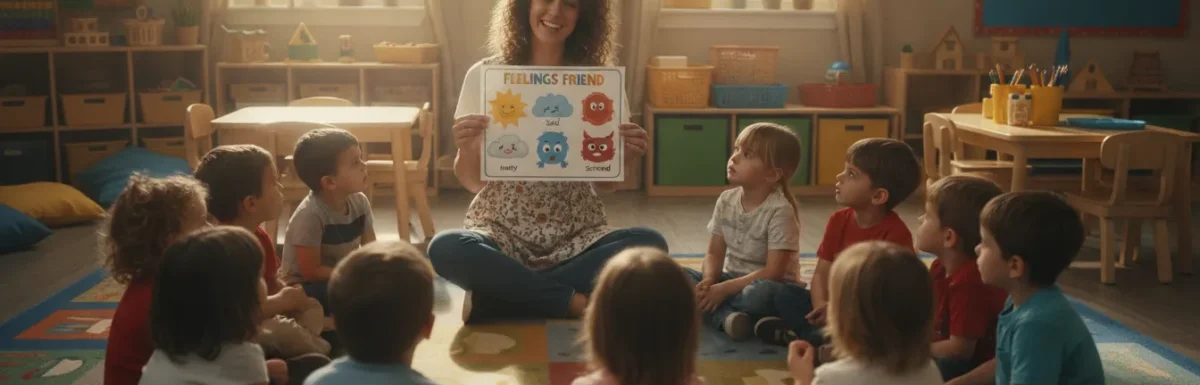
Young children learn how to manage their feelings through everyday interactions with friends and teachers. Choosing the right social emotional learning preschool activities ensures that children ages three to five are exposed to healthy emotional growth. These structured classroom experiences help young learners build self awareness, develop strong relationship skills, and find positive ways to express themselves. By teaching children how to name their feelings and solve small peer conflicts, educators lay a strong foundation for lifelong learning and cooperation.
Enroll in CDA training today to build the skills you need to lead SEL in your classroom.
Integrating intentional social emotional learning preschool activities is the most effective way for teachers to foster self-regulation, empathy, and relationship skills in early childhood classrooms. These structured play and learning experiences focus on teaching young children how to identify their feelings, navigate peer conflicts, and cooperate during group play. For educators pursuing professional development, learning to facilitate these vital interactions is a core part of the credentialing process. The Child Development Associate (CDA) credential requires comprehensive training that directly covers social-emotional development. By using classroom activities like emotion charts and guided problem-solving, educators support healthy social growth while meeting professional standards.
These skills do not develop by accident, they require intentional teaching. The next section explores why social-emotional learning matters so much in early childhood education and how structured activities build the foundation for classroom success.
Social Emotional Learning Preschool Activities: Why Is Social-Emotional Learning Important in Preschool?
Social-emotional growth helps young kids learn about themselves and the people around them. Early childhood is a key time to teach these skills to children ages three to five. When teachers use focused social emotional learning preschool activities, they ensure that young kids get the support they need for healthy emotional development.
Building Core Social Skills
In the early years, children must learn how to handle their own feelings and work well with others. Focused daily play helps kids build deep self-awareness and strong relationship skills. These tools teach young learners to share toys, express their needs, and care about the feelings of their classmates. These traits form a strong base for all future learning and personal growth.
The Classroom Management Connection
Classrooms run much better when children can name and control their feelings. Group activities that teach social-emotional skills are also a great tool for positive classroom management. When kids know how to use their words to ask for help or express frustration, teachers spend less time on behavior issues. This makes the learning space calm and safe for everyone.
Meeting Professional CDA Standards
For early childhood teachers, mastering these methods is part of their career growth. The Child Development Associate credential requires specific training in how kids grow socially and emotionally. Teachers must complete 120 hours of training that covers CDA subject area requirements, which place a heavy focus on social-emotional health. Knowing how to guide this growth helps educators meet national standards and build a better learning environment.
How Do Preschoolers Build Emotion Identification Skills?
Young children must learn to recognize and name their feelings before they can manage them. When teachers introduce social emotional learning preschool activities, they give children the tools to express themselves. A typical preschooler starts with basic terms like happy, mad, sad, and scared, but their vocabulary grows with practice, as noted by Centervention. Educators can use structured tools and games to help children build these vital skills every day.
Classroom Tools for Naming Feelings
Visual aids help make abstract feelings concrete for young minds. Teachers can display a feelings chart with photos of real human faces so children can see what each emotion looks like. Using real faces is a highly effective way to teach empathy and self-awareness in early childhood education. Along with charts, teachers can use printed emotion cards to show various facial expressions and discuss what might cause those feelings.
Another excellent hands-on tool is a feelings faces cube. According to research from the Vanderbilt Center on the Social and Emotional Foundations for Early Learning, children can roll this soft toy cube during circle time to name the emotion that lands on top. This simple, playful tool turns identifying feelings into an active game that children look forward to playing.
| SEL Tool | Skill Developed | Best For | Prep Time |
|---|---|---|---|
| Feelings Chart | Emotion recognition | Morning circle, check-ins | Minimal |
| Feelings Charades | Body language reading | Small group play | None |
| Emotion Cards | Vocabulary building | One-on-one instruction | Moderate |
| Feelings Cube | Emotion naming | Circle time, transitions | Minimal |
| Affirmation Bracelets | Self-awareness | Arts and crafts time | Moderate |
Interactive Games and Creative Play
Games allow children to practice reading body language and facial cues in a safe, social setting. In a game of feelings charades, a child acts out an emotion like anger or surprise without using words while their classmates try to guess the feeling. This activity, shared by Accelerate Learning, helps preschoolers connect physical body signals to internal emotional states.
Creative crafts also support emotional development. Children can make paper affirmation bracelets decorated with simple drawings or positive words. These bracelets, which are a popular choice on WeAreTeachers, serve as a physical reminder of their strengths. Wearing their art helps preschoolers build self-awareness and practice positive self-talk throughout the school day.
What Conflict Resolution Activities Support SEL?
When peer disputes break out in a preschool classroom, children often lack the tools to find a peaceful way forward. Teaching young learners to resolve their own fights builds independence and strengthens social emotional learning preschool activities. By learning simple conflict tools, children gain the skills they need to solve social issues with their classmates.
To solve social problems, children must learn how to look at a situation through a classmate’s eyes. They also need to know how to name what their friends are feeling. According to research from the Virginia Kindergarten Readiness Program, key skills like taking others’ perspectives and recognizing feelings are vital steps that help young learners handle classroom conflicts on their own.
How Teachers Can Model Problem Solving
Children learn best when they see and hear conflict tools used in real time. Instead of stepping in to fix every small fight, teachers can narrate the problem out loud. This process helps young learners see how a disagreement can be solved through clear communication.
When you name the problem and suggest tools, you show children how to navigate their feelings. A teacher might say, “You both want the same red truck. Which makes you both feel mad.” This guided talk models healthy skills and teaches children that everyday classroom conflicts can be resolved with a few simple steps.
Using the Solution Kit for Peer Disputes
Classroom activities are most effective when children can use physical objects to help guide their choices. The VKRP Solution Kit is a popular tool that gives children concrete options to choose from when they have a dispute. The kit lists simple, fair choices such as taking turns, sharing, or playing together.
- Spot the problem and name the feelings. Help children stop and think about how they and their peers feel before they try to fix the issue.
- Choose a card from the kit. Show children cards with pictures of options like sharing, trading, or waiting for a turn.
- Prompt children to pick a solution. Encourage both children to agree on one choice from the kit to settle their dispute.
- Give positive feedback. Praise the children for using their words and resolving their classroom conflict as a team.
Teachers can help by prompting children to find and accept a solution that works for both sides. When children take an active role in resolving their peer conflicts, they build strong social emotional learning preschool activities that will serve them for years to come.
Cooperative Play Activities for Relationship Building
Cooperative play helps young children learn how to work with peers and build social awareness. Through shared tasks, preschoolers practice key relationship skills like sharing, taking turns, and listening. When teachers use structured social emotional learning preschool activities, children learn to navigate group dynamics with confidence.
Using Scripted Stories and Book Lists
Teachers can guide social growth by sharing tales that focus on peer interactions. Structured, scripted stories for social situations help children understand what to expect during group play. These stories outline social rules and explain common cues in a clear way. Teachers can also use a targeted SEL book list to start talks about friendship. Reading these books aloud lets children see how story characters solve peer problems and share toys.
Morning Meetings and Friendship Bracelets
Daily routines offer great chances to practice team play. Starting the day with simple morning meeting questions encourages children to share thoughts and listen to their peers. This habit builds a strong sense of community from the start of the day. To build fine motor skills and group bonds, teachers can set up a friendship bracelet craft. Making these simple crafts together prompts children to talk, trade colors, and give kind gifts to their classmates.
How Can Teachers Integrate SEL Into Daily Routines?
Bringing social emotional learning preschool activities into the classroom does not need a separate block of time. Teachers can weave these habits into the daily schedule. Doing so turns normal routines into rich learning moments that teach children how to manage their thoughts and actions.
Start the Day with Morning Meetings
Morning circle time is a great spot to build self-awareness and social connections. Teachers can use quick morning meeting questions as simple, daily social-emotional learning activities. Asking children how they feel or how they can help a friend sets a warm tone. It lets each child practice speaking and active listening before the busy day begins.
Create Space for Emotional Regulation
Classrooms need a safe, quiet spot where children can go when their feelings get too big. A structured cool-down corner gives preschoolers a clear way to process intense emotions on their own. This space should have soft pillows, feelings charts, or calming toys. It is not a place for punishment, but a tool that helps children learn to calm their own bodies and minds.
Use Positive Feedback and Clear Management
Giving children positive attention and feedback is key to fostering healthy social-emotional behaviors. Instead of just stopping bad behavior, teachers should praise helpful choices. Using positive classroom management strategies supports a strong environment where kids feel safe. According to research on early childhood development from Vanderbilt University, these supportive methods help children learn self-control and cooperation throughout the day.
How Scenario-Based CDA Training Prepares Teachers for SEL
Helping children build social-emotional skills starts with a teacher who knows how to guide those moments. The most effective educators do not just memorize checklists, they learn to read a room, respond to a child in distress, and model calm problem-solving in real time. This is where scenario-based CDA training makes a profound difference. National CDA Training is the only provider that uses scenario-based learning for CDA preparation, and this methodology is scientifically proven to be more effective than traditional lecture-based approaches.
Why Scenario-Based Learning Works for SEL Instruction
Traditional training methods rely on memorizing facts and procedures. But when a preschooler has a meltdown during circle time or two children fight over a toy, there is no time to consult a manual. Educators need intuitive responses that come from mental practice. Scenario-based training creates realistic classroom situations in a virtual environment where learners practice making the exact decisions they will face in a real classroom. Through repetition, teachers develop automatic, appropriate responses to common social-emotional challenges. This approach builds the kind of deep understanding that transforms a good teacher into a great one.
The CDA Curriculum and Social-Emotional Development
The Child Development Associate credential requires 120 hours of training across eight content areas. One of the most important of these areas is supporting social and emotional development. Teachers learn behavior guidance strategies, emotional literacy development, and social skill building as part of their CDA subject area requirements. This coursework directly translates to the classroom activities described earlier in this article. Giving educators the theoretical foundation and practical tools they need to implement effective social emotional learning preschool activities.
Flexible Training for Working Educators
Most preschool teachers are busy working professionals who need training that fits their schedules. National CDA Training offers 24/7 online access through web and mobile apps, so educators can study when it works for them. The 120-hour CDA training program includes eight modules with scenario-based weeks and portfolio development weeks. Students also get access to coaching sessions and private communities where they can discuss real classroom situations with peers and mentors. This comprehensive support ensures that teachers do not just earn a credential, they gain the confidence to handle SEL challenges in their classrooms from day one.
Frequently Asked Questions
What are the most effective social emotional learning activities for preschoolers?
The most effective activities help children find and name feelings. You can use tools like emotion cards, feelings charts, or feelings faces cubes. According to research from Vanderbilt University, these simple visual aids teach young children how to spot and label basic emotions in themselves and others. Over time, this builds a strong path toward healthy self-awareness.
How can teachers support social emotional development in the classroom?
Teachers can support this growth by modeling good behavior and using structured tools. This includes using scripted stories to show social rules or giving positive feedback when children play well. Research from Vanderbilt University shows that scripted stories help young kids understand social cues and daily expectations, making the classroom a safer, more predictable place to learn.
Can social emotional learning preschool activities help with classroom management?
Yes, daily emotional activities directly improve classroom management. When children learn how to name their feelings and use a designated cool-down corner, they can manage big emotions before they lead to disruptions. According to the Virginia Kindergarten Readiness Program, teaching kids clear steps to solve peer conflicts empowers them to handle minor disagreements on their own.
Are there CDA-aligned social emotional activities for preschool?
Yes, many daily classroom activities align with Child Development Associate standards. The credentialing process covers social-emotional growth as a core subject area. According to National CDA Training, educators must complete 120 hours of professional training. This coursework teaches them how to facilitate healthy development, build relationship skills, and manage early childhood classrooms with confidence.
Ready to Enroll in CDA Training?
Working with young children takes more than just reading books. Delaying your training can slow down your career and keep you from meeting important state rules. Our simple online classes help you balance your busy work day with high quality study. By starting right now, you will gain the real, hands on skills you need to lead a happy classroom and earn your credential on your own time. Do not wait to take the next step to become a better teacher. We are here to support you at every step of your professional path. Our friendly team is ready to guide you toward success.
Ready to enroll in CDA training? Call (269) 444-6128 to get started today.