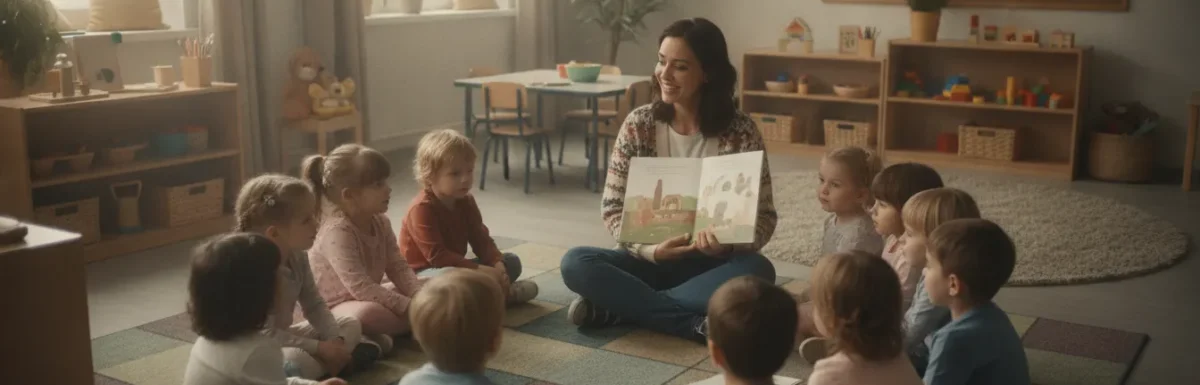
A well-ordered classroom serves as the ‘third teacher’ by guiding children toward positive choices. New teachers often struggle to balance classroom flow while meeting CDA Competency Goal 3 standards. Mastering these methods turns a stressful workday into a rewarding chance for growth.
Preschool classroom management is a proactive way to organize the physical room and daily routines to support young learners through positive guidance and set schedules. By focusing on connection over punishment, teachers foster a safe space where children explore while building the social skills required by CDA Competency Goal 3. According to AMU, these methods are vital for building strong teacher-child relationships that lead to better social outcomes and a harmonious school environment. When teachers master these tools, they reduce daily disruptions and create a structured room where children can thrive both emotionally and in their lessons. This balanced approach ensures that every child feels secure and ready to learn in a classroom that values social growth as much as learning gains.
Learning how to guide behavior well is a key part of your professional growth. You might wonder how these methods impact the daily flow of your center. Knowing Why Is Classroom Management Important in Preschool? is the first step toward creating a stable and nurturing space. We can begin by asking
Why Is Classroom Management Important in Preschool?
Preschool classroom management is the intentional organization of a classroom environment, routines. And guidance strategies that help young children feel safe, build social-emotional skills, and stay engaged in learning. It is essential because it creates the foundation for every other learning goal in early childhood education.
Good preschool classroom management creates a safe space where kids feel ready to learn. In this setting, kids do more than just follow rules. They build the skills they need to get along with others and solve small problems. This work is part of CDA Competency Goals, which help teachers support social and emotional growth.
Building Social and Emotional Skills
Preschool is a key time for kids to learn how to handle their feelings. A well-run room gives them the structure they need to practice these new skills. When teachers use clear routines, kids feel safe and know what to expect next. Research from Action for Children shows that social growth affects a child’s ability to learn just as much as their mental skills do.
Teachers who focus on these goals help kids develop “emotional literacy.” This means helping kids name their feelings and find ways to stay calm. By using positive guidance, you teach kids how to share, take turns, and talk through small fights. These lessons stay with them long after they leave your room.
Improving Learning Outcomes
A loud room can make it hard for young kids to focus. Good management cuts down on chaos so that learning can happen. When you set up the room well, you reduce the times you have to stop a lesson to fix a behavior issue. This lets you spend more time on fun tasks that help kids grow.
Many teachers use the “4 Cs” method to keep things on track. This approach uses curiosity, teamwork, choice, and clear steps for when rules are broken. Using these tools helps you see why a child might be acting out. Studies at Edutopia show that giving kids choices in their learning helps them take more interest in their work.
Meeting Professional Standards
Working toward a CDA credential requires a deep look at how you guide kids. CDA Competency Goal 3 focuses on how to support social and emotional growth. Our CDA training program teaches you how to turn these goals into daily habits. You learn to be a guide rather than just someone who gives out rules.
By following these standards, you show that you are a pro in early childhood. Good management means you are not just reacting to problems. You are planning for success before the kids even walk through the door. This proactive style makes the day better for both you and your students.
How Can You Set Up Your Preschool Classroom for Success?
Setting up a successful preschool classroom starts with intentional room layout, clear activity zones, and child-accessible materials. When teachers organize their space into active and quiet zones with visual supports. Children can navigate the day with less confusion and more independence, making preschool classroom management easier for everyone.
A well-planned room layout acts as a “third teacher” in your classroom. It helps guide children without you saying a word. When you arrange your space with care, you make preschool classroom management much easier. A good layout helps with smooth transitions and keeps a calm mood for all. This planning is a key part of building a space where kids feel safe to learn.
Clear Room Layouts
Creating a steady space is a core part of good room design. Children feel safe when they know where things belong. You should set up clear paths that lead kids to their next task. This simple step helps reduce confusion and stops unwanted running in the room. A clear room plan also supports predictable environments that help kids stay on task. When your room has a clear flow, you spend less time on rules and more time on teaching.
Active and Quiet Zones
It is best to separate your room into zones based on noise levels. Keep noisy areas like blocks or dramatic play away from quiet spots like the book corner. This split helps kids focus on what they are doing. It also lowers the total noise in the room. When kids have a clear place to be calm, they can manage their own feelings better. This layout supports CDA Competency Goal 3 by giving kids space to grow. By planning these spots, you give kids the choice of where they feel best.
| Area Type | Key Features | Purpose |
|---|---|---|
| Active Zones | Large floor space, open shelves | Group play and movement |
| Quiet Zones | Soft rugs, pillows, low light | Reading and resting |
| Art Zones | Easy-to-clean floors, sinks | Creative and messy work |
Tools for Self-Help
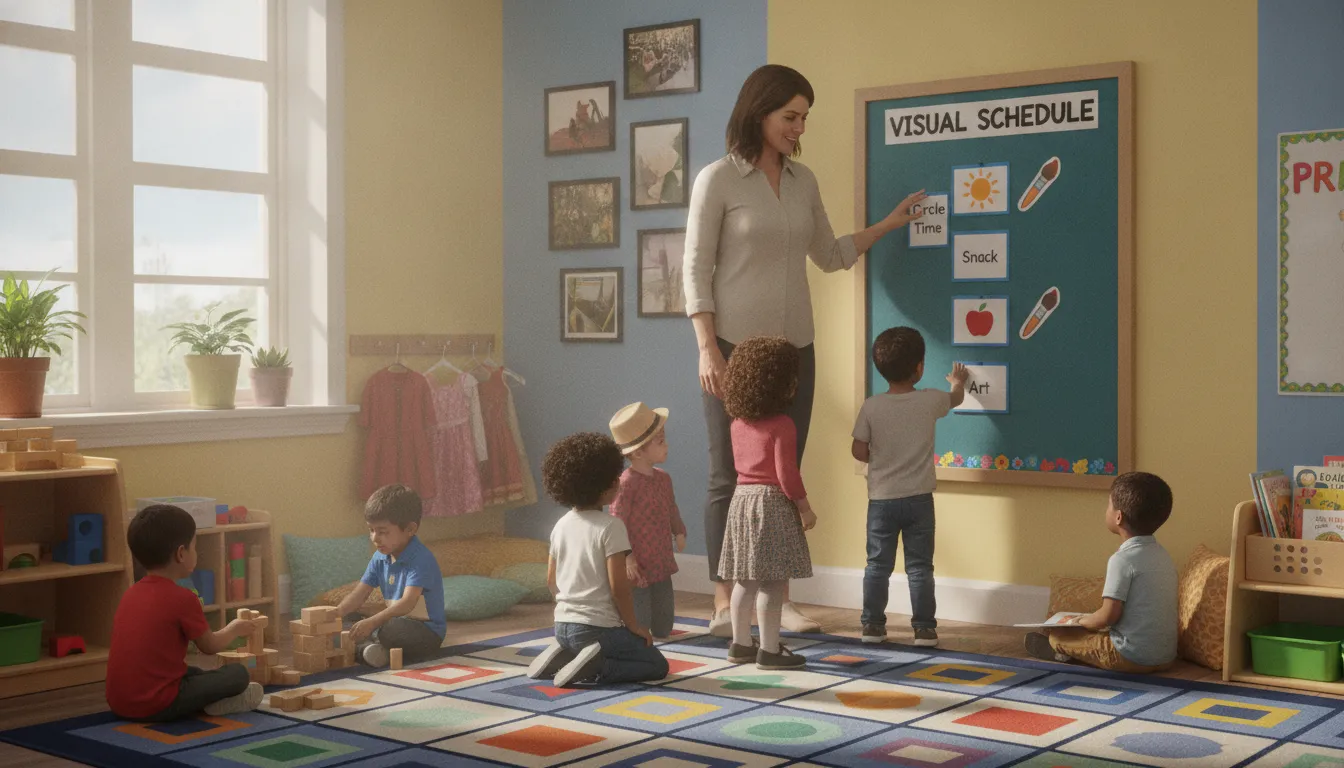
Help children do things for themselves by keeping tools within reach. Use low shelves so kids can get toys and books without your help. Label bins with both words and pictures. This helps kids clean up and find what they need on their own. When kids can reach their own tools, they feel more in control. It also frees you up to watch the whole group. Clear labels are a simple way to teach order and care for the room.
Visual Support Tools
Visual tools help young children understand the day. Use a visual schedule to show the flow of each task. These aids help lower stress for kids who are not yet reading. They know what is coming next, so they feel less worry about change. You might also think about what tools you do not need. For example, some experts warn that behavior charts can make kids feel they cannot meet your goals. Instead, use your room layout to prompt the good deeds you want to see.
What Routines and Transitions Work Best for Preschoolers?
The best preschool routines are predictable and consistent, while effective transitions use clear warnings, visual schedules, and fun cues like songs or hand signals. These strategies prevent behavioral issues by eliminating the downtime between activities where children often lose focus or feel uncertain about what comes next.
A predictable day helps young children feel safe and ready to learn. When preschoolers know what to expect, they can focus on play and social growth rather than worrying about what comes next. Strong routines and smooth moves between tasks are the backbone of a calm room.
The Power of Daily Consistency
Keeping a steady flow each day helps children build trust in their school home. When the schedule stays the same, kids learn to manage their own needs. This CDA Competency Goal for social and emotional growth is a key part of early teaching. Experts at Lillio note that being steady helps kids feel secure and acts as a tool to guide good behavior. You can use a visual chart to show each part of the day, from snack time to outdoor play.
Managing Smooth Transitions
The time between tasks is often when most problems start. Moving from one thing to the next requires clear steps to keep kids on track. You can turn these shifts into fun moments by using songs, games, or simple cues. Clear moves prevent gaps in the day where kids might feel lost or bored. Try these steps to keep your room moving well:
- Give clear warnings. Tell the class when a task is ending five minutes before the switch. Use a timer or a bell so they can see or hear that it is almost time to clean up.
- Use visual schedules. Post a chart with pictures that show the order of the day. Point to the next task so kids can see what is coming next in their routine.
- Offer positive guidance. Give short and clear paths for kids to follow. Using positive instructions like “walking feet” instead of “don’t run” tells them exactly what to do.
- Add transition cues. Use a specific song or a hand signal for each type of move. This lets the whole class know a shift is starting without you needing to shout or raise your voice.
- Plan for the wait. If some kids finish a task early, have a quick game or a song ready. Keeping them busy for those few minutes stops them from getting off task or loud.
Why These Steps Matter
Routines are more than just a list of tasks. They are the way you teach kids how to be part of a group. Using clear paths and steady rules helps you meet CDA certification requirements for lead teachers. When you lead with a plan, you spend less time on bad behavior and more time on fun learning. These tools help create a space where both you and the children can thrive all day long. This type of work builds a firm base for the CDA resources you will use in your school career.
Using Positive Reinforcement in Preschool Classroom Management
Positive reinforcement helps children connect good choices with rewards. This method builds a calm classroom where kids feel safe. Teachers use tools like praise, class jobs, and brain breaks to guide behavior. These strategies support social development and follow the CDA Competency Goals for early childhood educators.
The Power of Specific Praise
Teachers see better results when they focus on what children do right. Praise should be clear and fast. For example, you can say, “I see how you put the blocks back on the shelf.” It beats saying, “Good job.”
When you are specific, the child knows which act to repeat. Positive reinforcement builds a clear link between good choices and praise. This link makes children want to keep acting well.
It turns the focus away from bad choices and onto the wins of the day. According to Bryant & Stratton College, this builds a warm bond with every child.
Giving Children a Sense of Ownership
Class jobs are a great way to guide kids. When a child has a role, they feel like a key part of the team. They might be the snack helper or the light switcher.
These roles teach them how to be helpful. A child who feels useful is less likely to act out. This sense of pride makes them want to follow your lead.
It also helps them learn how to work with others. This approach is a core part of CDA Competency Goal 3. We teach these skills through a CDA training program that is easy to follow.
Supporting Self-Regulation and Focus
Our training uses scenario-based methods to help you plan for these moments. We do not just give you a list of rules to learn. We show you real moments.
This helps you build natural responses. You will know exactly what to say when a child is upset. This method is much better than rote learning.
It prepares you for the fast pace of a real preschool day. Most of our students finish their work in three months or less. This allows them to use what they learn right away.
Sometimes children get too much stress or feel angry. A calm-down space gives them a spot to rest. It is not a “time-out” or a way to shame the child.
It is a tool for self-regulation. You can add soft pillows or books to this area. This gives the child a safe place to breathe and get back to a calm state.
Brain breaks are also helpful. Short, fun tasks give their minds a rest from deep learning. These small changes make a big difference in how your room feels each day.
Think about a child named Leo who will not clean up. Instead of a punishment, you ask Leo to be the “Cleanup Captain.” You give him a badge or a special hat.
Leo feels proud and starts to lead his friends. You praise his hard work as he helps others. This shift in focus changes the mood of the whole room.
This is the heart of preschool classroom management. It turns a tough moment into a win for everyone. You learn how to handle these events through our hands-on course work.
How to Respond to Challenging Behaviors in Preschool
Responding to challenging behaviors in preschool requires a shift from punishment to understanding. Teachers should use compassionate curiosity to discover the root cause of a behavior. Offer children choices to restore their sense of control, and focus on teaching self-regulation skills rather than relying on public behavior charts.
When you face tough behaviors in the classroom, it can feel hard to stay calm. But most preschool classroom management issues are just a child trying to tell you something. You can move past stress by using a proactive plan to guide every student.
Understand the Need with Compassionate Curiosity
First, you must look at why a child is acting out. This is what experts call compassionate curiosity. You act like a nonjudgmental investigator to find the root cause of the behavior. Most children do not want to misbehave; they just lack the tools to express their needs.
By using CDA Competency Goals, you learn to support social and emotional health. Instead of just stopping a bad act, you find out if the child is hungry, tired, or overwhelmed. This deep trust helps you build a stronger bond with each child in your care.
Use the 4 Cs for Better Guidance
A smart way to handle these moments is the 4 Cs approach. This includes compassionate curiosity, collaboration, choice, and clear consequences. When you give a child a choice, they feel more in control of their day. This helps them take ownership of their learning and practice how to negotiate with others.
For example, if a child will not clean up, do not just say “no.” Try asking if they want to put away the blocks or the books first. This simple shift can stop a power struggle before it starts. Research shows that clear consequences work best when they are fair and tied to the act.
Moving Beyond Behavior Charts
Many new teachers use charts to track how kids act. But some experts, like Dr. Julie Causton, warn that these charts can be harmful. They may tell students that we think they cannot meet our goals. Publicly shaming a child can hurt their self-esteem and lead to more stress.
Instead, focus on teaching kids how to regulate their own feelings. This is a big part of CDA training programs for new teachers. When you teach a child how to take a deep breath or use a calm-down space, you give them a skill they can use for life. This positive guidance builds a happy classroom where every child can learn and grow.
Building Strong Teacher-Child Relationships for Preschool Classroom Management
Strong bonds between teachers and children are the core of preschool classroom management. When children feel safe and cared for, they are more likely to follow rules and engage in learning. This trust is built through many small moments of care. Our scenario-based training shows how these bonds help you lead a calm and happy room.
Establishing these bonds aligns with CDA Competency Goals, specifically Goal 3. This goal focuses on supporting the social and emotional growth of every child. Teachers must show they are steady and kind for children to feel secure. High-quality CDA training programs teach that this security leads to fewer behavior issues in the classroom.
Building trust with steady care
Children need to know that the adults in their lives are steady and kind. You can build trust by greeting each child by name every morning. It also helps to listen closely when they speak and to respond with calm words. Being steady means doing what you say you will do. This helps children feel safe at school. Facts show that children need to trust that adults are steady to feel at ease (actionforchildren.org).
Staying the same in how you talk to children helps them learn what to expect. If one child gets a hug after a fall, others should see that same care when they are hurt. This fairness creates a sense of safety for the whole group. When children feel safe, their brains are more ready to learn new skills and social rules.
Using positive guidance ways
Guidance should be helpful rather than punishing. Instead of telling a child what not to do, tell them what they should do. For example, say “use walking feet” instead of “stop running.” This clear and kind way of speaking helps children learn the right way to act. The National Association for the Education of Young Children says positive guidance is a key way to build strong bonds with children.
One way to use this in a real room is to join children in their play. When you sit on the floor and play with them, you show that their interests matter. This simple act builds a bridge of trust. It makes it easier for children to listen to you later because they know you care about them.
A room scenario for building bonds
Imagine a child named Leo who is having a hard time sharing a red truck. Instead of taking the truck away, you can kneel down to his eye level. You might say, “Leo, I see you love that red truck. Sam would like a turn when you are done. Can we find a timer to help us share?” This way values Leo’s feelings while teaching him a new social skill.
By using this scene, you help Leo feel heard while still setting a clear limit. This is a core part of social and emotional learning for young children (actionforchildren.org). These small wins build a base for a room where every child feels they belong. This sense of belonging is the best tool for stopping behavior problems before they start.
How Your CDA Credential Supports Classroom Management Success
Earning a Child Development Associate (CDA) credential gives you a clear plan for preschool classroom management. By focusing on Competency Goal 3, teachers learn to help with social and emotional growth. This training helps you build steady routines, use positive guidance, and create a calm space where young children can thrive.
Professional training is a key part of being a lead teacher. A CDA credential does more than meet state rules. It gives you a clear path to guide student behavior. The 120-hour course at National CDA Training focuses on real skills that work in every classroom.
Enroll in our CDA training program to start your career today.
Mastering CDA Competency Goal 3
Module 3 of the CDA course is the core of behavior guidance. This part focuses on CDA Competency Goal 3, which covers social and emotional growth. You will learn how to help children find and manage their feelings. This is a vital part of preschool classroom management because kids learn best when they feel safe.
According to American Public University, positive guidance is the key to building strong teacher-child bonds. This approach helps you set clear limits without being punitive. Goal 3 teaches you to build trust with every student in your room. These steps reduce chaos and let you focus on teaching instead of just fixing problems.
The Power of Scenario-Based Learning
Most training uses long talks or dry books. National CDA Training uses a scenario-based method instead. This way of learning gives you mental practice with real classroom issues before they happen. You won’t just learn rules by heart. You will build natural responses to common classroom problems.
This unique way of learning helps students finish the course in 3 months or less. It prepares you to handle high-stress moments with a calm mind. Many teachers report feeling more relaxed and ready for the day after they finish their work. When you know how to respond, you can keep the room positive for every child.
Get the skills you need for preschool classroom management by enrolling today.
Bridging Theory and Classroom Work
The CDA is not just about books. It requires 480 hours of real work in a classroom. This ensures that what you learn in Module 3 matches what you do with kids each day. This time on the floor helps you see how social and emotional growth affects a child’s ability to learn.
By mixing theory with real work, you become a better leader. You learn to find the cause of a behavior rather than just stopping the action. This deep insight is what sets a credentialed teacher apart from the rest. You will leave the program with a set of proven plans to use every morning.
Start your path to success with our online CDA training.
Frequently Asked Questions
Can you earn more money with a CDA credential?
Yes, many teachers see a pay increase after they get their credential. On average, CDA holders earn about 10 to 15 percent more than teachers without it. This shows that you have the skills to manage a classroom and support child growth. According to the National CDA Training guide, this investment helps you move into higher roles in your school. It is a great way to grow your career and your income at the same time.
How long does it take to finish preschool teacher training?
Most teachers can finish their training program in three months or less. You will need to complete 120 hours of classes and 480 hours of work experience with children. National CDA Training uses a CDA training program that focuses on real-life scenarios. This makes the learning fast and fun for busy teachers. Once you finish, you will be ready to apply for your credential and lead your own preschool room with confidence.
What is the total cost of getting a CDA credential?
The total cost for training and fees is about 850 dollars. This includes the price of your classes and the fee you pay to the Council. You can start with CDA certification requirements to see what you need to do first. While there is a cost to start, the increase in your pay often covers this within the first year. This small step helps you become a recognized professional in the early childhood field.
Is it possible to complete CDA training while working?
Yes, the program is built for teachers who work full-time. You can finish your 120 hours of study online at your own pace. You also gain your 480 hours of required work experience while you are in your current classroom. Based on CDA Competency Goals, this hands-on work helps you practice what you learn right away. This means you do not have to choose between your job and your education.
Ready to master preschool classroom management?
New teachers who wait to build these skills often face more stress and high burn out rates. If you do not act now, you might spend years trying to fix a classroom that feels out of control. This can hurt your joy in teaching and the way your students learn each day. Start your journey today to gain the tools you need to help your students thrive. By taking the right steps now, you can build a calm and happy space for your kids in just a few weeks. You will see a big change in how your class runs and feel proud of your work. Expert training helps you meet your CDA goals and gives you peace of mind as you lead.
Ready to book? Call (269) 444-6128 to enroll in CDA training online today.