Writing strong CDA competency statement 3 examples takes more than listing classroom rules. You must prove that you can guide behavior while nurturing a child’s sense of self.
This section of your portfolio shows how you build a foundation for lifelong emotional health.
CDA competency statement 3 examples must show your ability to support social and emotional growth through the use of positive guidance and clear classroom rules. You must describe how you help kids reach developmental milestones while keeping a safe place where they feel good learning social skills and ways to cope. According to the Centers for Disease Control and Prevention, childhood mental health includes reaching emotional goals and learning how to handle daily problems. Your examples should show how you use active listening and model kind behavior to build a sense of belonging and self worth for every child. By telling stories of how you guide behavior, you prove that you can create a kind space where all students can grow and do well.
Creating these examples can feel hard when you are trying to find the right words for your portfolio. You want your writing to meet high standards while staying true to your own teaching style. The framework below shows what CDA Competency Statement 3 should demonstrate and how to develop an original reflection.
What CDA Competency Statement 3 Should Demonstrate
Statement 3 should connect your beliefs about social-emotional development to observable teaching decisions. Strong reflections explain the situation, the guidance strategy you chose, why it fit the child, and what changed afterward.
CDA Competency Statement 3 is a key part of your competency statement 3 requirements. This section shows how you support the social and emotional growth of the children in your care. It also shows how you use positive guidance in your classroom. Your goal is to explain your own teaching style and how you help children build healthy habits.
Linking Your Beliefs to Daily Work
This statement should be between 200 and 500 words long. It is often split into three parts. These parts cover your overall views, the “Self” area, and the “Social” area. When you write this section, you must show that you know how to help children feel good about themselves. You should describe how you help them gain confidence and learn to do things on their own. This shows you care about their sense of self.
Your writing needs to show that you can create a warm and safe space for every child. You can talk about how you help children understand and name their feelings. This part of your portfolio is about more than just rules. It is about how you act as a mentor and guide for the children you teach every day. You should explain why a positive bond with each child is so needed for their success.
Helping Children Grow and Cope
Supporting mental health in young children is a vital task. It involves helping them reach emotional milestones and learn how to get along with others. In your statement, you should explain how you teach children to share and take turns. You should also show how you help them fix fights with their peers. These social skills are tools they will use for many years to come. Teaching these skills helps children build strong bonds with their friends.
You should also talk about how you use positive guidance to help children cope with hard times. Instead of just stopping bad acts, you should show how you teach better ways to behave. For example, you might describe how you help a child stay calm when they are upset. This shows that you value the well-being of the child above just having a quiet room. You can also mention how you praise good choices to help children make them more often.
Using Real Classroom Stories
The best way to write a strong statement is to use real stories from your work. While you may look at CDA competency statement 3 examples for help, you must use your own words. Your statement needs to be a true look at how you teach. It should show that you know the exact needs of the children in your class. The experts who check your work want to see your own voice and heart in the writing.
Describe a time when you helped a child join a group or learn a new social skill. Use “I” statements to explain what you did and why it worked. This makes your portfolio stand out to the person who will check it. Real stories prove that you have the skills to meet CDA standards in a real classroom setting. It also shows that you can think back on your work and learn from it over time.
How to Write Your Own Competency Statement III
Write your statement by moving from a genuine teaching belief to specific classroom evidence, then explain the effect on children. This approach keeps the reflection personal and prevents it from sounding like copied portfolio language.
Writing your own statement shows how you help kids grow. It is not just about rules. You need to show your heart and your work. Your words must tell a story of how you help each child feel safe and loved. This part of your portfolio should be 200 to 500 words long. You can find CDA competency statement 3 examples to help you start, but your final work must be your own. Every teacher has a unique style. The review board wants to see yours. Take your time to think about your daily wins with your students.
Find your core belief
Start with why you do what you do. Think about how children learn social skills. You might believe that positive bonds shape how a child grows. Write down your main goal for helping kids stay happy and calm. Use your own voice to say how you guide them through hard times. This belief sets the tone for your whole piece of writing. Think about the values you bring to the room every day. Your belief should be clear and easy for anyone to read.
When you write this part, focus on the “why” behind your teaching. Do you value care? Do you think a set plan helps kids feel safe? Put these thoughts into simple sentences. This section is the base of your statement. It shows the reader that you have a plan for how you lead. Your belief system guides every choice you make as a teacher. It is the heart of your daily work.
Pick two real stories
Find two times you helped a child with their feelings. One story should show how you help a child feel good about who they are. This is the “self” part of your work. The other should show how you help them play well with others. This is the “social” part. Do not use plain ideas. Use real stories from your own room. Tell what the child did and how you helped them. When writing your competency statements, these real moments make your work stand out. They prove that you are a caring teacher.
Describe the room and the child’s act. Did they have trouble sharing a toy? Did they feel sad when a parent left? Explain the exact steps you took to help them find a way out. Do not use long words or hard terms. Just tell the story as it happened. Your goal is to show the reader your skills in work. These stories are the proof of your hard work. They turn your beliefs into facts that show you can lead a class well.
Explain the wins
Now, tell why your help worked. Show how the child changed or learned a new skill. Children reach milestones in how they act and move. Your work helps them hit those goals. Explain how your kind words changed the way a child acts. This part shows you know how to lead a class well. It proves you are a teacher who knows how kids grow. Keep your words simple and clear so the reader can see your skill. A strong statement links your acts to the child’s wins.
Think about the long term impact of your help. Did the child start to use their words more? Did they show more pride during group play? These small wins are big deals in how a child grows. Your statement should show these shifts. It shows you know the goals of the CDA program. It also shows you can think about your own teaching to get better. This self-review is a key part of being a great pro.
- Write your main idea about how kids grow and feel good in your room.
- Find two real times you helped a child with a social or feeling need.
- Write a draft that links your big idea to those two real stories.
- Check that you show how your work helped the child reach a goal or skill.
- Read your work to make sure it is 200 to 500 words and easy to read.
- Edit your draft to remove any long words that might be hard to know.
Do not copy work from other people or from the web. You may look at other samples for ideas, but your stories must be new. The board wants to see your growth as a teacher. Using your own words shows you really know how to help kids. Copying is a bad choice that can hurt your path to a CDA. Stick to your own truth and your own wins in the classroom. Your unique voice is your best tool in this process.
CDA Competency Statement 3 Examples by Setting
The best example depends on the children and setting you actually serve. Use the models below to study the reflection pattern, but replace every detail with your own decisions, observations, and voice.
Your writing must show how you support a child’s growth. The social and emotional health of a child starts with your daily care. Each school setting has its own set of needs. A baby needs to feel safe, but a four-year-old needs help with friends. These examples show how to tell your own story.
Infant and toddler setting
In this setting, you should focus on trust and bonds. You show that the world is a safe place for a new baby. A good fragment for your statement might look like this: “I build trust by being quick to help when a baby cries. I use a soft voice and a calm touch during diaper changes. This helps them feel safe and loved.”
This example works because it shows you know how to build a sense of self. Babies learn who they are through the way you treat them. You can make this yours by talking about your own daily habits. Think about how you greet a toddler in the morning or how you calm them before a nap.
Using CDA competency statement 3 examples as a guide will help you find the right words. It is also vital to show how you help toddlers learn about their feelings. You might write about how you name an emotion when a child is sad. This shows the CDA reviewer that you are a teacher who cares. You are not just watching them; you are helping them grow.
Preschool classroom setting
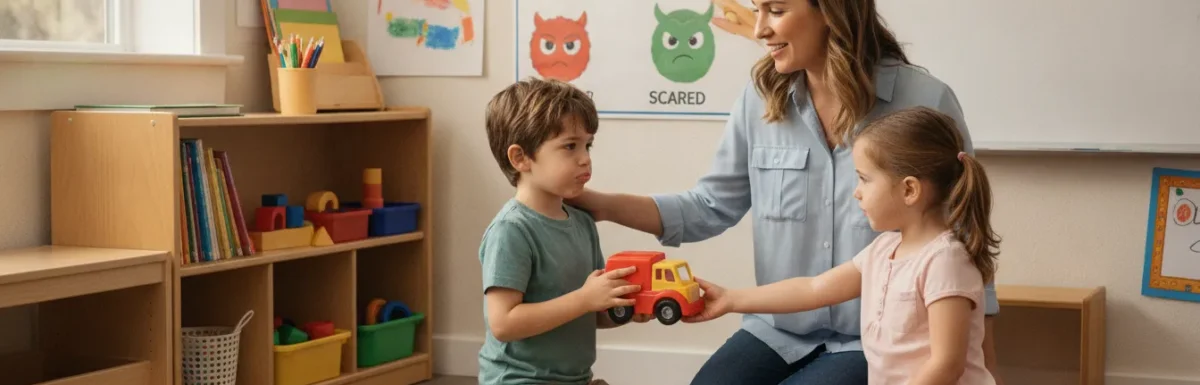
Preschoolers are learning how to play and work together. They need clear tools to solve their own problems. A fragment could be: “When two children want the same toy, I help them use their words. I teach them to say how they feel instead of grabbing from a friend. We use a ‘peace corner’ to calm down when big feelings happen.”
This part of your statement shows how you use positive guidance. It covers the “Social” area where kids learn to share and take turns. To make this your own, write about a time you helped kids fix a real fight. Describe the exact words you told them to say. This shows that you use kind ways to lead the class every day.
You can make your writing stand out by using these tips:
- Talk about a specific game the kids played.
- Explain how you help a shy child join a group.
- Share how you cheer for kids who do kind acts.
This helps the reviewer see that you value kind acts in your room. It shows you have a plan for a happy class.
Family child care homes
Family child care is special because kids of all ages play in one spot. You can show how older kids learn to help the younger ones. Try a fragment like: “I create a home-like space where older kids learn to be kind to the babies. We practice taking turns during our family-style lunch. I make sure each child feels like they belong in our group.”
This works well because it shows you can handle a mixed-age group. It shows how you build a small group in your home. You can change this by adding a detail about your own house setup. Talk about a specific game that your older and younger children play together.
A focus on the family bond is also a big plus for this setting. You might write about how you talk with parents about their child’s day. This shows you care about the child’s life at home and at school. It proves you see the whole child, not just the student.
Practices That Show Social and Emotional Support
Strong Statement 3 evidence usually shows responsive relationships, emotional coaching, positive guidance, and a sense of belonging. Select practices that you use consistently and can support with a specific observation.

Support Emotional Literacy
Social and emotional skills are the base for how children learn and grow. When you help a child name their feelings, you give them a way to handle big emotions. This practice is part of CDA Competency Statement 3. This statement asks you to show how you support a child’s inner self. You can do this by using calm words when a child is upset. Instead of saying “stop crying,” you might say, “It looks like you feel sad that your friend took your toy.”
When you are writing your competency statements, think about daily moments. For example, a child might feel proud after building a tall tower. You can label that feeling to help them know what success looks like. This helps them build a strong sense of self-worth. This work is a core part of being a great teacher.
Use Positive Guidance Every Day
Positive guidance is about teaching, not punishing. It helps children learn healthy social skills and how to cope when there are problems. According to the CDC, these social skills are a key part of child mental health. By setting clear and fair rules, you create a safe space. In this space, children feel they can take risks. They learn that they can trust you and the other kids in the room.
When you use positive guidance, you focus on what a child should do. You do not focus on what they should not do. You might say, “Please use walking feet,” instead of “Stop running.” This clear language helps children follow the rules and feel good about their choices. It also shows that you respect them. This type of respect builds the positive bonds that shape a child’s well-being for life.
Create a Space of Belonging
Every child needs to feel like they belong in your classroom. This sense of belonging helps them work with others and share their toys. You can foster this by having photos of each child’s family on the wall. You can also play games that require kids to work as a team. These games show that each child is a valued part of the group.
In your professional portfolio, you should provide CDA competency statement 3 examples that show these practices. Explain how you help children make friends and solve fights on their own. When children feel they belong, they are more likely to share, help, and show kindness to others. This makes the classroom a happy place for everyone.
| Classroom Practice | Educator Language | Reflection Evidence |
|---|---|---|
| Labeling emotions | “You seem frustrated because that puzzle piece is stuck.” | Children use feeling words to describe their day. |
| Moving focus | “Let’s find a safe spot to throw the soft ball.” | Children move to safe play areas without a fight. |
| Problem solving | “How can we share these blocks so you both can build?” | Children offer toys to friends without being asked. |
| Building self-worth | “I saw how hard you worked on that drawing.” | Children show their work to others with pride. |
How Do You Turn Classroom Practice Into Reflection?
Turn practice into reflection by describing one specific moment, naming your response, explaining your reason, and identifying evidence of the child’s growth. This four-part structure shows professional judgment rather than simply reporting events.
Reflection is more than just a list of what you did today. It is a way to prove that you are a thoughtful teacher. For your CDA portfolio, you must take a real classroom event and explain why it was vital. This process turns your daily work into the proof needed for your career growth. It shows that you think about your actions and how they help the children in your care.
Find a specific moment
Start by picking a time when a child needed help with a social task or a big feeling. This fits the themes found in CDA competency statement 3 examples. For example, think of a time when a toddler was upset because a peer took their block. Or, look for a time when a child felt shy during group play. These small events show how you handle real-life stress in the classroom.
Use the four-part plan
To write a clear reflection, use a four-part plan. First, set the scene. Tell the story of what happened without judging anyone. Second, explain your planned response. Why did you choose that move? For instance, did you use a soft voice to calm a child? Third, show the impact. How did the child feel or act after you helped? This proves your work had a clear result. Finally, share what you learned. What would you do the same or in a new way next time?
When writing your competency statements, use “I” words to show your skills. Instead of saying “The class became calm,” say “I read a story to help the class settle down.” This puts you at the center of the win. It proves that your teaching style is based on your training and not just luck. You want to show that you are a pro who makes good choices.
Focus on emotional growth
Your writing should show that you know how to build a healthy room. Strong social and emotional skills help children learn how to cope with big feelings. When you reflect on your work, connect your actions to these goals. Show how your kind words or steady rules help a child feel safe enough to learn. This link is vital for showing that you meet the high standards of the CDA Council.
Writing this way makes your portfolio stand out. It proves that you are a teacher who learns from each time you work with a child. By following this method, you turn a busy day into a story of your own skill and care. It makes the job of the person who reads it easy because your talent is on the page.
Common Competency Statement 3 Mistakes to Avoid
Avoid copied templates, vague claims, behavior-control-only examples, and reflections that never explain the effect on children. Reviewers need to see your authentic choices and your understanding of why they support development.
Writing your competency statement is a major step in your CDA journey. But many people struggle to get it right. It is easy to fall into traps that make your work look weak or generic. To help you succeed, we have listed the most common errors seen in CDA competency statement 3 examples and how you can fix them.
Using copied templates
The biggest mistake is copying a sample or template from the web. Reviewers want to see your own voice. They need to know how you work with children every day. If you use someone else’s words, you miss the chance to show your unique skills. Instead, use examples as a guide for structure. Then, write about your real classroom moments. This makes your statement personal and honest.
Giving vague claims
Many writers make broad claims without proof. They say things like “I am a kind teacher” or “I love my students.” While these are nice, they do not show skill. You must show how you support growth. For example, explain how you help a child reach developmental milestones like learning to share. Be specific about the tools you use. Describe the words you say when a child feels sad or mad. Specific details prove you know your job.
Focusing only on behavior control
Competency statement 3 is about social and emotional support. It is not just about keeping a classroom quiet. A common error is focusing too much on rules and time-outs. Good mental health in childhood starts with healthy social skills. You should talk about how you build trust. Show how you teach kids to solve their own problems. Do not just list how you stop bad behavior. Instead, show how you guide children toward positive choices and self-control.
Missing the impact on children
Some teachers only write about what they do. They forget to write about the child’s reaction. A strong statement shows the link between your actions and the child’s growth. Did the child learn to wait their turn? Did they start to name their feelings? When you show this impact, you prove that your teaching works. This is what reviewers look for when writing your competency statements. It shows you understand how your choices shape a child’s day.
Use our CDA portfolio examples guide to organize your authentic reflection before you submit it.
How Can You Review Your Draft Before Submission?
Review your draft for a clear personal belief, specific classroom evidence, a reason for each strategy, and an observable effect on children. Then read it aloud to catch vague wording and confirm that it sounds like you.
Checking your work is a key step before you send it in. It helps you find small slips and makes sure you meet all rules. A good check makes your text clear and strong for your job goals. You want to show that you are a pro who cares for your kids.
Look for clear proof of your work
Your draft must show what you do in the room each day. Look for CDA competency statement 3 examples in your work. You should talk about how kids grow and play with others. Do you show how you help kids feel good? You might write about how you help them make friends or share toys.
Focus on the “Self” and “Social” parts of your job. You should tell how you help kids learn to handle their feelings. You could tell about a time you helped a child feel safe after a fall. This kind of proof shows that you know how to support their needs. It makes your draft stand out to those who read it.
Using real stories helps the reader see your work. Do not just say you are a good teacher. Instead, tell about a time you helped a child learn a new skill. This makes your words strong and true. Our CDA training course details offer ways to build these room skills.
Link your acts to how kids grow
It is not enough to just list what you do. You must also show how your acts help the kids. For example, tell how a safe space helps a child learn to deal with stress. Kids reach milestones in how they play, learn, and act. Your words should show that you know these steps well.
Good bonds and safe rooms shape how a child grows. When you use kind words, you help them learn to get along with others. This link between your choice and their growth is key for your draft. It shows that you have a deep grasp of how young minds work.
Get ready for your professional portfolio
Your writing is a big part of your professional portfolio. It should be from 200 to 500 words long to meet the rule. Keep your sentences short and your words plain so the reader can follow. A clear draft shows that you are ready for the next step in your path.
Check your work for any spelling or grammar slips. A clean file looks more like the work of an expert. You can ask a friend to read it too. They might see things that you missed. This helps you turn in the best work you can do.
While training helps you get ready, it does not promise a pass. You must put in the work to check your facts and your spelling. Take the time to read your draft out loud to hear how it sounds. This final check is the best way to feel sure before you send it.
Frequently Asked Questions
These answers address common questions about drafting an original CDA Competency Statement 3. Always follow the current instructions in your official CDA materials and use examples only as models for reflection.
What is the word limit for CDA Competency Statement 3?
Your CDA Competency Statement 3 should be between 200 and 500 words long. This length is mostly about two typed pages. Keeping your writing within this range helps you stay clear and to the point while still sharing enough detail. As stated by ChildCareEd, this word count helps you explain your methods well without being too long. Make sure each part aims at an exact bit of your classroom work.
How should I structure my CDA Competency Statement 3?
You should split your statement into three main parts. The first part covers your main views on child growth and guidance. The second part focuses on the Self functional area. Here, you explain how you help children gain trust in themselves. The third part covers the Social functional area. This part is about how you help children play and work with others. This structure is a standard part of the CDA professional portfolio.
What topics should I include in the Self functional area?
In the Self part of your statement, you should talk about how you help children feel good about themselves. This includes helping them learn to do things on their own and stay safe. You can write about how you help them name and handle their feelings. As stated by the CDC, learning these skills is a key part of child mental health. Use clear stories from your classroom to show your work.
What topics should I include in the Social functional area?
For the Social part, focus on how you help children play and work well with each other. You can explain how you teach kids to share toys and take turns. It is also good to talk about how you help them solve small fights in a kind way. As noted by the CDC, reaching social milestones is vital for young kids. Show how you guide them to build strong and happy bonds with their peers.
Ready to start your online CDA training today?
Waiting to start your CDA training means you miss out on higher pay and new job options. Every day you wait is a day you could have spent moving toward your goal. If you start your training now, you can finish the whole program in less than three months. This fast path helps you get your credential so you can grow in your field as soon as possible and renew your CDA to maintain your professional standing. Do not let this chance to change your career pass you by. You have the skills to do well and we are here to help you get there. Taking action today will put you on the road to success much faster than waiting until next month. Your future as a lead teacher depends on the choices you make right now. You can reach your goals if you take the first step today.
Start your online CDA training and build your professional portfolio with structured support.