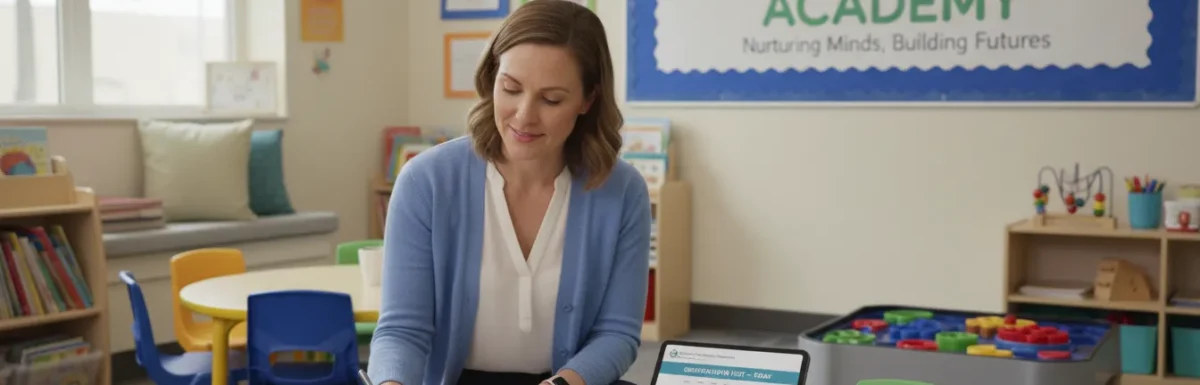
Your CDA verification visit is not a surprise test waiting to catch mistakes. It is a structured chance to show how you care for children, apply your training, and reflect on your growth.
The CDA verification visit is a required part of the credentialing process, led by a CDA Professional Development Specialist. According to the CDA Council, the specialist reviews your documentation, observes your work with children, conducts a reflective dialogue, and submits your scores electronically. During the visit, expect Review-Observe-Reflect: an organized portfolio review, an observation during your regular work with children, and a conversation about your teaching practices. The goal is not a staged performance; it is an honest view of your daily practice. Before the visit, prepare your portfolio, review your CDA Competency Standards, gather your notes and questions, and make practical arrangements with your program. Afterward, the specialist submits your scores to the Council, which uses the visit results as part of the credentialing decision.
Knowing the order of events can replace uncertainty with a clear plan. We will start with the question every candidate should answer before preparing documents or scheduling time away from routine duties: What is a CDA verification visit? Here’s how.
What is a CDA verification visit?
A CDA verification visit is a required part of the Child Development Associate credentialing process. It gives a Professional Development Specialist, or PD Specialist, a clear way to assess your work as an early childhood educator. The visit combines a portfolio review, an observation with children, and a reflective dialogue.
Its role in the CDA assessment
The CDA Credential is a national credential issued by the Council for Professional Recognition. The visit is one part of the full assessment, not a separate course or a classroom test. The Council reviews results from both the CDA Exam and the verification visit when it makes a credentialing decision.
A Council-approved PD Specialist completes the visit with you. The specialist looks at your documents, watches you work with children, and talks with you about your practice. This process gives you room to show how you support children during a regular program day.
The Review-Observe-Reflect model
The specialist follows the Review-Observe-Reflect model, also called the R.O.R. Model. Each part helps assess your skills as an early childhood educator. The structure keeps the visit focused on evidence from your documents, your daily work, and your own professional reflection.
- Review: The specialist reviews your Professional Portfolio and related documents.
- Observe: The specialist watches you work with young children in your chosen setting.
- Reflect: The specialist holds a dialogue with you about your practice and professional goals.
What the visit means for educators
The observation happens during a regular program day at an agreed time. This allows the specialist to see you as the primary caregiver with a group of young children. For a home visitor setting, the specialist observes a family visit instead.
Your portfolio matters because it helps the specialist understand the work behind your classroom practice. It also gives you a starting point for the reflective dialogue. To learn how the official standards book supports the observation, use this guide to prepare for your CDA verification visit.
What happens before the CDA verification visit?
A smooth CDA verification visit starts before anyone enters your classroom. Your goal is simple: finish the paperwork, choose the right visit time, and place each item where you can find it. Then you can focus on teaching as you normally do.
Application and scheduling
Start with the credential steps that make scheduling possible. Penn State Extension’s CDA credential guide says candidates may apply online or by mail, with online filing preferred. It also lists the verification visit with an identified Professional Development Specialist as part of the process.
- Finish your application steps. Check your application status and keep your contact details current. Watch for the notice that lets you move forward with scheduling.
- Choose and contact your PD Specialist. Confirm the visit date, arrival details, and the best way to reach each other. Ask what the specialist wants available before the visit begins.
- Coordinate with your center director. Share the date early. Select a regular classroom block when the specialist can see your usual teaching routines and your work with children.
- Prepare your portfolio. Put your Professional Portfolio, family questionnaires, and training records in a clear order. Place your picture ID with the materials so it is easy to find.
- Review the classroom schedule. Note arrival, meals, transitions, group time, outdoor time, and rest periods as needed. Let the schedule stay familiar for the children.
- Settle your mindset. Review your plan, pray if that grounds you, and take a breath. The visit is a chance to show the care you already bring to your classroom.
Your ready-to-use folder
Keep one visit folder for your portfolio items, records, ID, schedule, contact details, and questions. This small step reduces last-minute searching. It also helps you walk into the day with a calm plan.
Your portfolio deserves time and care. The guide above says the Professional Portfolio is a credential requirement and should be complete within six months of the application. You can also use our guide to prepare for your CDA verification visit while you organize the materials.
Training that supports the visit
If you are still building your coursework and portfolio, begin with the right support. National CDA Training offers individual CDA training with online access for busy early childhood educators. Strong preparation helps you keep the visit in perspective: be organized, be present, and teach with the same care you show each day.
How the professional portfolio is reviewed
The portfolio review is one part of the CDA verification visit. It gives the PD Specialist a clear view of the work you prepared before the visit. This review sits beside the observation and the reflection of goals, as outlined in the credential process. Think of the portfolio as a map of your growth, not a stack of papers to fear.
A clear, organized file
Start with simple organization. Your PD Specialist needs to move through the file without hunting for loose pages or guessing where an item belongs. Arrange each section in the order used by your CDA setting and label it well. A binder, tabs, and a final page-by-page check can make the review easier to follow.
Your file should bring together the documents required for your setting. These may include your competency statements, family questionnaires, resource items, and proof of training. Use the current Competency Standards book for your setting as your checklist. The setting matters because the Council provides books for Preschool, Infant/Toddler, Family Child Care, and Home Visitor candidates.
- Place each item in its matching section.
- Check that forms are complete and easy to read.
- Keep family questionnaires together and protect private details.
- Match training records with the course work you completed.
- Review every tab before the scheduled visit.
Your statements and supporting documents
Your competency statements should show how you think about your work with children and families. The PD Specialist is not looking for fancy wording. Clear examples are more helpful. Explain the choices you make in your classroom or care setting, and connect each statement to the right competency area.
Supporting papers help show the preparation behind those statements. Family questionnaires add family input, while training records show the course work you completed. Resource items should be filed where they belong. If managing the details feels hard, the CDA Portfolio Assistant can help you organize the file before the review.
Alignment with the competency standards
The review is about more than whether a page is present. The CDA credential is based on core competency standards developed by the Council for Professional Recognition. Those standards guide early care professionals as they work toward becoming qualified teachers of young children. Read your standards book again before the visit, and check that your portfolio follows the correct setting.
Look at the portfolio as a whole. Do the statements, resources, questionnaires, and training documents make sense together? Can you find each section quickly? When the file is complete and orderly, you can spend less energy searching for papers. You can focus more on the thoughtful conversation that follows the review.
What happens during the classroom observation?
The observe portion of the CDA verification visit happens while you work with children. The PD Specialist watches your teaching in context, rather than asking you to stage a special lesson. The Council explains that the observation takes place during a regular program day. The timing should give the Specialist a clear view of you as the primary caregiver.
Your usual classroom practice
You do not need to perform for the Specialist. Follow your normal schedule and stay focused on the children in your care. A familiar routine gives you room to show the habits you use each day. It also helps the Specialist see how you respond when the classroom does not follow a script.
The CDA Credential is based on core competency standards that guide early care professionals toward sound teaching practice. Penn State Extension provides a helpful overview of those CDA competency standards. Review them before the visit, then let your daily work show what you know.
Everyday interactions that matter
During the observation, keep your attention on the same classroom basics that matter on any other day. The goal is not a polished show. It is steady, thoughtful care that fits your setting and the children you serve.
- Safety and supervision: Stay aware of the room, transitions, and each child’s needs.
- Relationships: Respond with warmth, patience, and respect.
- Routines: Guide meals, play, cleanup, and transitions with calm direction.
- Communication: Listen, ask clear questions, and use language children can understand.
- Age-appropriate practice: Choose guidance and activities that fit the children in your setting.
If you want a focused review before your visit, use the guide to prepare for your CDA verification visit. It can help you connect the standards to the choices you make in the classroom.
When the day does not go as planned
A child may need extra support. A transition may take longer than expected. Do not let a small change pull you away from the children. Stay present, make a sound choice, and continue with the routine.
The Specialist is watching you work with children as part of the larger visit. Keep your focus where it belongs: on safe care, clear communication, and responsive teaching.
What should you expect during the reflective dialogue?
A professional conversation
The Reflect portion of your CDA verification visit is a professional conversation, not a speech contest. The PD Specialist uses reflection as part of the visit after reviewing your portfolio and observing your work. Penn State Extension describes the visit as including a reflection of goals. Your task is to explain your thinking in clear, honest terms.
Be ready to talk about why you made certain teaching choices. You may discuss how you set up an activity, guide behavior, or support a child’s needs. The goal is not to present a perfect classroom. It is to show that your daily choices are thoughtful and tied to children’s learning and care.
Teaching choices and growth areas
A strong response starts with a real example. Name the classroom situation, explain what you did, and share why you chose that step. Then describe what worked and what you might adjust next time. This simple pattern helps you stay grounded when nerves make it hard to think.
You should also be ready to discuss your strengths and areas for growth. A growth area is not a failure. It shows that you can look at your practice with care and keep learning. Choose an honest example, then explain the next step you plan to take.
- Describe one teaching choice that helped a child take part in an activity.
- Explain how you would respond if a classroom plan did not work as expected.
- Name a skill you have built and one skill you want to strengthen.
- Connect a classroom example to a CDA competency standard.
Preparation without a script
The CDA competency standards give you a useful frame for reflection. Penn State Extension explains that the credential is based on a core set of competency standards. The Council for Professional Recognition developed these standards. Review the standards for your setting and think of examples from your own classroom.
Do not memorize polished answers. A script can make it harder to respond when the conversation moves in a new direction. Instead, practice explaining a few classroom scenarios in your own words. You can use the official book to prepare for your CDA verification visit and organize your examples before the day arrives.
During the dialogue, pause before answering if you need a moment. Keep your response focused on the children, your choice, and what you learned. If you would change something, say so and explain why. Reflective practice is about showing sound judgment and a willingness to grow.
CDA verification visit preparation checklist
A calm CDA verification visit starts with a simple plan. The week before, gather your materials and confirm the classroom routine. The day before, place each item where you can reach it. On the day, focus on the children and teach as you normally do.
Your week-before plan
Start with your Professional Portfolio. A PD Specialist reviews the portfolio, observes your work with children, and joins you for a reflective dialogue. Penn State Extension outlines these parts of the CDA credential process. Use a folder or binder with clear tabs so you can find each item without rushing.
Check your portfolio against your current instructions. Make sure your completed family questionnaires are included and easy to find. Review your notes, contacts, and questions. If your binder needs more structure, the CDA Portfolio Assistant can help you organize the documents.
Talk with your director about the visit date, your room, and the child schedule. Confirm that the planned time reflects a normal program day. Plan for regular transitions, meals, rest, and learning activities. Avoid adding a special lesson just to impress your visitor.
A three-part checklist
Use this table as your final review. Keep the setup simple. Your goal is not a perfect display. Your goal is a safe, familiar classroom where your usual teaching can be seen clearly.
Walk through the room before you leave for the day. Restock the materials you use in your normal routine. Check learning areas and safety basics. Place your portfolio, requested ID, and visit details together so the morning stays calm.
| Checklist item | When to check | What to do |
|---|---|---|
| Professional Portfolio | Week before | Review sections, tabs, and required documents. |
| Family questionnaires | Week before | Confirm they are complete and filed as instructed. |
| Director and child schedule | Week before | Confirm the date, room, routine, and transitions. |
| Classroom setup | Day before | Check supplies, learning areas, and safety basics. |
| ID and visit details | Day before | Place your requested ID and contact details together. |
| Mindset | Day of | Follow the normal routine and stay present with children. |
Your day-of mindset
Before children arrive, check your binder, requested ID, and visit details once more. Keep your director aware of the plan. Make sure your materials are ready, then step back into your normal role with the children.
The observation is not a performance. It is a chance to show the care, judgment, and teaching habits you use each day. If you want a focused refresher, use the guide to prepare for your CDA verification visit. During the reflective talk, answer with clear examples from your classroom.
If a small surprise happens, stay steady. A schedule change or an upset child does not erase your preparation. Respond with care, follow your classroom practices, and keep the children’s needs at the center of your work.
What happens after the CDA verification visit?
Your scores enter the Council process
When the CDA verification visit ends, the PD Specialist has one last task. The specialist electronically submits your scores to the Council through its scoring tool. You do not need to send those visit scores yourself. The visit is part of the full credentialing process, not a stand-alone pass or fail moment.
The Council reviews results from both the CDA Exam and the Verification Visit before it makes a credentialing decision. This review step is described in Penn State Extension’s CDA credential guide. A calm, honest reflection during your visit matters. Still, no single conversation should be treated as a promise of a specific outcome.
Your next steps while you wait
After the visit, keep your CDA records together and watch for messages tied to your application. Check the email address you used during the process. Save your notes, portfolio copy, and any Council messages in one folder. This keeps the next step simple if you need to find a date, contact, or document.
You may also want to write down what you learned from the observation and reflective dialogue. Note the classroom routines that felt strong. Add one or two teaching goals you want to keep working on. The visit is not only an item to complete. It can also help you name your next area of growth as an early childhood educator.
A steady way to manage the waiting period
Waiting can feel uncomfortable, especially after you have put time into training, your portfolio, and classroom practice. Try not to replay every part of the visit. Instead, make a short follow-up checklist: monitor your email, keep your documents handy, and continue your normal teaching routine.
Good preparation can make this stage less stressful. When your documents are organized and your expectations are clear, you can focus on the steps within your control. If you want a refresher for the wider process, review these additional CDA verification resources. They can help you keep each part of your credential journey in view without guessing about the final decision.
Frequently Asked Questions
When can I schedule my CDA verification visit?
Your Professional Development Specialist can arrange the CDA verification visit after you are confirmed as Ready to Schedule. According to the CDA Council, the observation occurs on a regular program day at a mutually agreed time. Choose a window when the specialist can observe you working as the primary caregiver.
What documents do I need for my CDA verification visit?
Have your completed Professional Portfolio ready for the Professional Development Specialist to review. Penn State Extension also recommends organizing CDA information, contacts, notes, and questions in a folder. Before the visit, ask your specialist to confirm any other required items on the pre-visit checklist.
What is the R.O.R. model in a CDA verification visit?
R.O.R. stands for Review-Observe-Reflect. The Professional Development Specialist reviews your documentation, observes your work with children, and leads a reflective conversation. The CDA Council explains that each task contributes to the assessment of your competency. The reflective portion is a chance to discuss your practice and professional goals.
Does a CDA verification visit cost anything?
Your Professional Development Specialist may not charge you a fee for the CDA verification visit. The CDA Council pays the specialist an honorarium for this service. This does not mean the full CDA process is free. Application and related costs may still apply, and state scholarships may be available.
What happens after the CDA verification visit?
After the CDA verification visit, the Professional Development Specialist electronically submits your scores to the Council through its scoring tool. Penn State Extension explains that the CDA Council reviews results from both the CDA Exam and the Verification Visit. The Council then determines whether to issue the credential.
Ready to prepare for your CDA verification visit?
Waiting until the last minute can leave you sorting materials while you should be building confidence for the visit. Starting now gives you time to organize each step, practice talking about your work, and address questions before the appointment. With a clear plan, you can approach the process calmly and focus on showing the care you bring to your classroom.
Ready to take the next step? Contact National CDA Training to start individual CDA training today. Begin early so you can prepare at a steady pace, review your materials, and move toward your CDA verification visit with a practical plan.