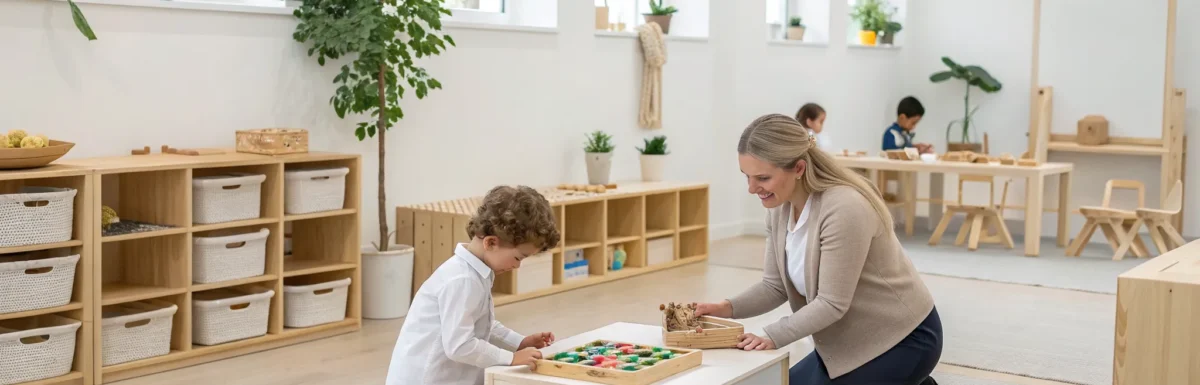
CDA Competency Goal II is to advance children’s physical and intellectual competence. It asks educators to plan developmentally appropriate experiences across four functional areas: physical, cognitive, communication, and creative development. For the cognitive area, show how your activities build curiosity, reasoning, problem solving, and foundations in subjects such as math and science.
This guide focuses on the cognitive portion of Goal II. It explains practical activities, portfolio evidence, and a process for writing an original CDA Competency Statement II based on your own classroom experience.
Key Takeaways
- Focus on how children think, not just what they know: Your main goal is to build foundational mental skills like problem-solving, memory, and critical thinking, which are the tools children use for a lifetime of learning.
- Turn everyday moments into learning opportunities: You don’t need complicated lesson plans to support cognitive growth; use simple, play-based activities and thoughtful questions during daily routines to spark curiosity and discovery.
- Use observation to build a strong portfolio: Meaningful documentation for your CDA portfolio captures the learning process in action, showing how children solve problems and make connections as a direct result of your teaching strategies.
What Is CDA Competency Goal 2?
CDA Competency Goal 2 asks educators to advance children’s physical and intellectual competence through intentional, developmentally appropriate experiences. The complete goal connects several parts of whole-child development, while this article takes a closer look at cognitive learning and the ways teachers can make children’s thinking visible.
The Four Functional Areas in Goal II
Goal II includes four functional areas: physical, cognitive, communication, and creative development. These areas often work together. For example, children may practice physical coordination, communicate ideas, make creative choices, and solve problems during one thoughtfully planned activity. For a broader view, explore all six CDA competency goals.
How the Cognitive Functional Area Supports Intellectual Development
The cognitive area focuses on experiences that encourage curiosity, reasoning, problem solving, and early foundations in math, science, technology, social studies, and other content areas. The educator’s role is to choose appropriate materials, ask questions that extend thinking, observe children’s responses, and adjust the experience when needed.
Breaking Down CDA Competency Goal 2: Cognitive Development
When we talk about helping children grow, we often focus on social skills or physical milestones. But what’s happening inside their busy minds is just as important. Competency Goal 2 is all about supporting cognitive development, which is the foundation for how children learn, think, and interact with their world. Understanding this goal helps you create a classroom where curiosity thrives and every child can build the mental tools they need for a lifetime of learning. Let’s explore what the cognitive domain covers and why it’s so essential for the little learners in your care.
What Is the Cognitive Domain?
Have you ever watched a toddler figure out how to stack blocks or a preschooler ask “why” for the tenth time? That’s their cognitive domain at work. This area of development covers all the mental processes involved in gaining knowledge and understanding. It’s how children think, reason, solve problems, and develop language. The official CDA Competency Statement puts it simply: “Cognitive development includes the ability to think, reason, and understand the world.” As an educator, grasping this concept is key. It allows you to see beyond a child’s actions and appreciate the incredible thinking and learning that’s happening every single moment.
Why Cognitive Skills Are Crucial for Young Learners
Cognitive skills are the building blocks for academic and life success. They influence a child’s ability to pay attention, remember information, and communicate their thoughts and needs. Strong cognitive foundations make it easier for children to learn to read, understand math concepts, and solve everyday problems. Research shows that a quality preschool education is vital for growth in cognitive, physical, and communication skills. More importantly, we know that a child’s early emotional, social, and physical development directly affects the adult they will become. By focusing on cognitive growth now, you are making a lasting investment in their future.
Cognitive Milestones by Age
Understanding the typical path of cognitive development gives you a roadmap for supporting the children in your classroom. The CDA emphasizes knowing the “typical developmental expectations for children from birth through age 5,” while also recognizing that every child is unique. It’s crucial to account for individual variations, including children with special needs and diverse cultural backgrounds. This knowledge isn’t about labeling kids or rushing them through a checklist. Instead, it helps you design activities that are perfectly matched to their abilities, offering just the right amount of challenge to keep them engaged and learning without feeling overwhelmed. You can find a helpful overview in the CDA Competency Standards At-a-Glance.
Key Areas of Cognitive Growth in Children
Cognitive development is a big topic, but you can support it by focusing on a few key areas. Think of these as the building blocks that help children become curious, confident learners. When you intentionally plan activities that touch on problem-solving, memory, language, and early STEM concepts, you create a rich environment where young minds can thrive. These skills don’t develop in isolation; they weave together to help children make sense of their world. As an educator, your role is to guide and nurture this growth every day.
Our CDA training courses are designed to give you practical strategies for each of these areas, helping you turn theory into effective classroom practice. Understanding these core components will not only prepare you for your CDA but will also make you a more impactful teacher.
Fostering Problem-Solving and Critical Thinking
Problem-solving for a young child might look like figuring out how to stack blocks so they don’t fall or how to share a toy with a friend. Your job is to be their guide, not their answer key. You can do this through scaffolding, which means offering just enough support to help them succeed. For example, you can model your own thinking out loud: “Hmm, this tower keeps falling. I wonder what would happen if I put the bigger block on the bottom?” As children get the hang of it, you can gradually offer less help, allowing them to build confidence and independence in their own thinking skills.
Building Memory and Attention Spans
A child’s ability to pay attention and remember information is fundamental to all learning. These skills help them follow multi-step directions, recall stories, and engage in daily routines. You can strengthen memory and attention through simple games like “I Spy,” singing songs with repetitive verses, or asking children to recall an event from earlier in the day. Creating predictable routines also helps, as children learn what to expect and can better focus on the task at hand. Supporting this development helps children process their experiences and build a foundation for more complex learning later on.
Encouraging Language and Communication
Being able to communicate effectively is one of the most important skills a child can learn. It’s about more than just knowing words; it’s about understanding others and being able to express their own thoughts and feelings. Reading books together is a fantastic way to introduce new vocabulary and concepts. You can also support language development by talking with children throughout the day, asking open-ended questions, and actively listening to their responses. Every conversation is an opportunity to model communication and build their confidence as speakers. Documenting these interactions is a key part of building your CDA Portfolio.
Introducing Early Math and Science Concepts
Math and science for young learners isn’t about formulas or flashcards. It’s about hands-on exploration and discovery. You can introduce early math concepts by counting objects during cleanup, sorting toys by color, or dividing snacks equally among friends. Science happens when you explore the texture of leaves on the playground, mix colors during art time, or observe what happens when you add water to sand. These simple, play-based activities encourage children to observe, predict, and question the world around them, laying the groundwork for a lifelong love of learning and inquiry.
Create Learning Experiences That Spark Cognitive Growth
As an early childhood educator, you are the architect of your classroom’s learning environment. Your role isn’t just to present information but to create experiences that invite children to think, question, and discover. Supporting cognitive development is about being intentional. It means seeing the learning potential in every moment, whether you’re building with blocks, reading a story, or exploring the playground. Every activity you plan can be a building block for critical thinking, problem-solving, and memory.
The good news is that you don’t need a massive budget or complicated lesson plans to make a huge impact. The most effective strategies are often the simplest and are woven directly into your daily routines. It’s about asking thoughtful questions, providing interesting materials, and giving children the space to explore their own ideas. This hands-on, integrated approach is at the heart of the CDA credential. It recognizes that true learning happens when children are actively engaged. Our individual CDA training is built around this principle, using real-world scenarios to help you practice creating these powerful learning moments.
Use Play-Based Learning
Play is the most important work a child does, and it’s the foundation of cognitive growth. When children play, they aren’t just having fun; they are experimenting with ideas, solving complex problems, and making sense of their world. A child stacking blocks is learning about gravity and balance. A group of children in the dramatic play area are negotiating roles and creating narratives. Play-based learning allows children to learn in a way that is natural and joyful. Your role is to create an environment rich with open-ended materials that encourage this exploration and to gently guide their discovery without taking over.
Plan Interactive Activities
The best learning activities are those that get children actively involved. Instead of passively listening, they should be doing, creating, and collaborating. Think about activities that require them to think critically and use their imagination. This could be a group art project where they have to decide how to combine materials, a simple science experiment, or a sorting game with different types of objects. Planning fun, interactive lessons keeps children engaged and helps them build connections in their brains. These hands-on experiences are what make learning stick and give children a sense of ownership over their education.
Connect Through Storytelling and Literacy
Reading to children is wonderful, but reading with them is where the cognitive magic happens. Storytelling is a powerful tool for building vocabulary, strengthening memory, and developing communication skills. Turn storytime into a conversation. Pause to ask open-ended questions like, “What do you think will happen next?” or “How do you think that character is feeling?” Encourage children to retell the story in their own words or act it out. These practices help them understand narrative structure, make predictions, and connect events in a logical sequence, all while fostering a lifelong love of reading.
Provide Opportunities for Math
Math is all around us, and you can help children see it by integrating math concepts into everyday routines. This approach makes math feel relevant and fun, not intimidating. You can count plates while setting the table for snack time, sort toys by color or size during cleanup, or talk about which tower of blocks is taller. Cooking activities are also fantastic for introducing concepts like measuring and sequencing. By weaving these simple yet effective activities into your day, you help children build a strong foundation for logical thinking and problem-solving, which you can document in Mary Wardlaw’s CDA Portfolio Workbook.
Inspire Scientific Curiosity
Children are natural scientists, full of questions and a desire to understand how things work. Your job is to nurture that innate curiosity. Encourage them to ask “why” and “what if.” Create opportunities for them to observe, predict, and experiment. This could be as simple as planting a seed and watching it grow, exploring different textures on a nature walk, or mixing paint colors to see what happens. The goal isn’t to find the “right” answer but to celebrate the process of exploration. By encouraging children to think aloud and test their theories, you foster a sense of wonder that is essential for scientific thinking.
CDA Competency Goal 2 Activity Examples
Strong Goal II examples show what the educator did, which skill the activity supported, and what the educator observed. Use these ideas as planning prompts, then document what truthfully happens with the children in your care.
Problem-Solving and Reasoning Activities
- Block-building challenge: Invite children to build a bridge that can hold a toy. Ask what they might change if it falls. This supports planning and cause-and-effect reasoning; portfolio evidence might include an observation note describing how a child tested a wider base.
- Age-appropriate puzzles: Offer a puzzle and provide just enough guidance to keep the child engaged. This supports persistence, spatial reasoning, and problem solving; evidence might describe the strategy the child used to place a difficult piece.
Math, Science, and Discovery Activities
- Sorting and counting: Ask children to sort safe classroom objects by color, size, or shape, then count each group. This supports classification and early number sense; evidence might record how a child explained a sorting rule.
- Simple experiment: Invite children to predict which safe objects will sink or float, test their ideas, and discuss the results. This supports prediction and scientific inquiry; evidence might capture a child revising a prediction after observing a result.
Communication, Creative, and Physical Activities
- Story prediction and retelling: Pause during a familiar story to ask what could happen next, then invite children to retell the sequence. This supports communication, memory, and reasoning; evidence might note the clues a child used for a prediction.
- Process art, music, and movement: Provide open-ended art materials or invite children to create movements for different sounds. This supports creative choice-making and physical coordination; evidence might describe how a child changed a movement to match a new rhythm.
For more ways to connect activities with documentation, review these CDA portfolio learning experiences.
Classroom Strategies to Support Cognitive Development
Putting theory into practice is what transforms a good classroom into a great one. As an early childhood educator, you can intentionally use specific strategies to support the cognitive growth of every child in your care. It’s about creating a space where curiosity is the norm and thinking is an adventure. These daily practices don’t have to be complicated; in fact, the most effective strategies are often simple shifts in how you arrange your room, talk with children, and present new activities. By being mindful of these approaches, you can build a strong foundation for problem-solving, critical thinking, and a lifelong love of learning.
Design a Cognitively-Rich Environment
Your classroom environment is a powerful teaching tool. A well-designed space invites children to explore, experiment, and make new connections on their own. Think about setting up distinct learning centers with a variety of materials that encourage different types of thinking, like a block area for spatial reasoning, a science table for observation, and a cozy reading nook for language development. When you create lesson plans and arrange your room, aim for a balance of predictability and novelty. A consistent routine helps children feel secure, while new materials and activities spark their curiosity and challenge them to think in new ways. You can find more ideas on our CDA resources page.
Ask Questions That Make Children Think
The questions you ask can either end a conversation or open up a world of possibilities. Instead of asking questions with simple yes-or-no answers, try using open-ended questions that encourage deeper thinking. Prompts like, “What do you think might happen next?” or “Tell me more about what you built,” invite children to share their reasoning and ideas. This practice helps them develop metacognitive skills, which is simply the ability to think about their own thinking. By guiding them to reflect, you teach students to assess their own learning and become more active participants in their education. It’s a simple switch that builds critical thinking and communication skills every day.
Offer Age-Appropriate Challenges
To truly grow, children need challenges that are just right, not too easy and not too hard. This is where the concept of scaffolding comes in. Think of yourself as a guide, providing just enough support to help a child accomplish a task they couldn’t quite do on their own. You might model how to complete the first few pieces of a puzzle or talk through the steps of building a tower before letting them take the lead. As they become more confident and capable, you gradually reduce your support. These scaffolding strategies build a child’s confidence, encourage persistence, and help them tackle increasingly complex problems independently.
Incorporate Hands-On Materials
Young children are natural kinesthetic learners; they learn best by doing, touching, and moving. Filling your classroom with a variety of hands-on materials gives them endless opportunities to build cognitive skills through play. Items like building blocks, art supplies, puzzles, and musical instruments aren’t just for fun. They are tools for exploring cause and effect, practicing problem-solving, and sparking creativity. Providing materials that get children’s attention and ignite their imagination is key. Our individual CDA training courses are full of scenario-based examples that show you how to use these materials to create powerful learning experiences that support every area of development.
Assess Your Impact on Cognitive Growth
Understanding your effectiveness as an educator goes far beyond just planning fun activities. It’s about knowing, with confidence, that you are making a real difference in how children think, learn, and solve problems. Assessing your impact on cognitive growth isn’t about administering tests or grading preschoolers. Instead, it’s a continuous, thoughtful process of observing, reflecting, and adjusting your approach to meet the needs of every child in your care. This is a core part of your professional practice and a key element you’ll need to demonstrate for your CDA credential.
By intentionally watching how children interact with materials, listening to their questions, and documenting their “aha!” moments, you gather the evidence you need to see their progress. This process helps you tailor your teaching to be more effective and provides the rich material you’ll use to build a compelling CDA portfolio. It’s how you move from simply hoping you’re making an impact to truly knowing you are. Let’s walk through the practical ways you can measure and understand the cognitive growth happening in your classroom every day.
Observe and Document for Your Portfolio
One of the most powerful tools you have is your ability to observe. Watching a child work through a puzzle, listening to them explain their block tower, or seeing them sound out a new word provides incredible insight into their cognitive processes. Your job is to capture these moments. Keep a notebook handy for anecdotal records, snap photos of their creations, and save work samples that show progress over time. This documentation isn’t just for your records; it’s the heart of your CDA portfolio. Each observation tells a story about a child’s learning journey and serves as concrete evidence of how your teaching supports their cognitive development.
Use Self-Reflection and Peer Feedback
To truly understand your impact, you need to look at your own teaching with a critical eye. Reflective teaching is a practice of asking yourself questions like, “What went well in that lesson?” and “How could I better support the children who struggled with that concept?” Set aside a few minutes each day to think about these things. Don’t be afraid to ask a trusted colleague for their perspective, either. A peer might notice something you missed or offer a fresh idea for an activity. This combination of self-reflection and feedback is essential for professional growth and helps you sharpen your skills as an educator who thoughtfully guides children’s learning.
Apply Formative Assessment Techniques
The term “assessment” can sound intimidating, but in early childhood education, it’s all about gathering information to guide your next steps. Formative assessments are the small, informal checks you do throughout the day. This can be as simple as asking open-ended questions during story time, observing how children sort objects, or listening to them “think aloud” as they solve a problem. These are not graded tests; they are moments of insight. Using these effective learning practices helps you understand what children know and where they need more support, allowing you to adjust your teaching in real-time to be as effective as possible.
Track Each Child’s Development
All the information you gather through observation and formative assessments comes together to create a developmental picture for each child. Systematically tracking this progress is crucial for understanding their unique cognitive journey. You can use simple checklists or create a running record that highlights key milestones. This isn’t about comparing children to one another but about celebrating individual growth and identifying areas where a child might need extra encouragement. This detailed tracking not only helps you plan meaningful learning experiences but also provides the specific evidence you need to write strong competency statements for your CDA portfolio and have productive conversations with families.
Overcome Common Classroom Challenges
Every early childhood educator knows that the classroom is a dynamic, unpredictable, and wonderful place. It’s also a place where challenges are part of the daily routine. From tight budgets to the diverse needs of the children in your care, these hurdles can feel overwhelming. But with the right strategies, you can turn these obstacles into opportunities for growth, both for your students and for yourself as a professional.
Thinking on your feet and adapting to new situations are core skills for any great teacher. The key is to build a toolkit of practical approaches you can rely on when you feel stretched thin. Whether you’re trying to support a child who learns differently, manage a packed schedule, or create a rich learning environment on a shoestring budget, there are effective, actionable steps you can take. Let’s explore some of the most common challenges and how you can approach them with confidence.
Working with Limited Resources
A small budget doesn’t have to mean small learning opportunities. When resources are tight, your creativity is your greatest asset. Instead of focusing on what you lack, think about how you can repurpose what you already have. Simple household items like cardboard boxes, plastic containers, and fabric scraps can be transformed into incredible tools for imaginative play. Nature is another fantastic, free resource; leaves, sticks, and stones can be used for counting, sorting, and creating art.
Engaging with your community can also open up new possibilities. Reach out to local businesses for donations or connect with families to see if they have materials they can contribute. Investing in your own skills through professional development also pays dividends, as it equips you with new techniques to maximize the impact of the resources you do have.
Supporting Diverse Learners
Your classroom is a vibrant mix of unique children, each with their own learning style, background, and pace of development. Supporting every child means recognizing and celebrating these differences. One of the most effective ways to do this is through scaffolding, where you provide just enough support to help a child master a new skill and then gradually pull back as they become more confident.
This might look like modeling how to build a block tower for a child struggling with fine motor skills or using picture cards to help a dual-language learner express their needs. The goal is to create an inclusive environment where every child feels seen, understood, and capable of success. By observing each child closely, you can tailor your approach and provide the individualized support they need to thrive.
Managing Time and Curriculum Demands
Between planning lessons, documenting progress, and simply being present with your students, it’s easy to feel like there aren’t enough hours in the day. Effective time management is crucial. Start by establishing clear and consistent classroom routines, which help children feel secure and make transitions smoother, saving you valuable time.
Don’t be afraid to lean on your colleagues. Collaborating on lesson plans or sharing successful strategies can lighten everyone’s workload. Integrating learning goals is another powerful technique; a single play-based activity can often touch on cognitive, social, and motor skills all at once. Our CDA training courses are designed to help you master these kinds of efficient planning strategies, allowing you to meet curriculum demands without sacrificing meaningful interaction.
Balancing Academics with Whole-Child Development
There can be a lot of pressure to focus on academic readiness, but true learning goes far beyond letters and numbers. A whole-child approach recognizes that social, emotional, physical, and cognitive development are all interconnected. In fact, research shows that a child’s ability to manage their emotions and build positive relationships is a key predictor of future academic success.
Integrate social-emotional learning into your daily activities. Use storytime to talk about feelings, create opportunities for collaborative play, and model healthy ways to resolve conflict. Remember, play is the most powerful vehicle for learning in early childhood. When children are engaged in play, they are naturally developing problem-solving skills, expanding their vocabulary, and building the foundational brain architecture they need for a lifetime of learning.
How to Write Your CDA Competency Statement II
Your Competency Statement II should reflect your own teaching decisions and real classroom experience. A useful statement explains not only what children did, but also why you chose the activity, how you supported learning, and what you learned from observing the children.
A Five-Step Writing Framework
- Name Goal II: Explain how your practice helps advance physical and intellectual competence.
- Describe one truthful activity: Choose a specific experience that actually occurred in your classroom.
- Explain your intentional strategy: Describe the materials, questions, modeling, or scaffolding you used.
- Connect the activity to a child outcome: Explain what skill the experience supported and what you observed.
- Reflect on what to repeat or adjust: State how the observation will shape your next teaching decision.
A short framework might sound like this: “I planned [activity] to support [skill]. I encouraged children’s thinking by [strategy]. I observed [specific evidence], so next time I will [reflection].” Use that structure only as a prompt. Write in your own voice, use your own classroom evidence, and do not copy a sample into your portfolio. For deeper preschool guidance, see these CDA Competency Statement 2 preschool examples.
What Evidence to Include in Your Portfolio
Choose evidence that makes the learning process clear, such as an activity plan, an anonymized observation note, a sequence of children’s work, or a reflection on questions you asked. Explain how each item connects your intentional teaching strategy to children’s development. Visit CDA Resources for more portfolio support.
Document Cognitive Development for Your CDA Portfolio
Your CDA portfolio is where you bring your teaching philosophy to life. It’s your opportunity to showcase the incredible work you do every day to support the cognitive growth of the children in your care. Think of it as the story of your classroom, where you connect your daily activities to the core principles of early childhood education. For Competency Goal 2, you’ll be focusing specifically on how you nurture children’s thinking skills.
This isn’t about simply checking boxes; it’s about thoughtfully curating examples that demonstrate your expertise. Your Professional Development Specialist wants to see how you intentionally plan experiences that encourage problem-solving, curiosity, and critical thinking. This section of your portfolio makes your teaching methods visible and proves you understand the “why” behind everything you do. From the materials you choose to the questions you ask, every detail contributes to a child’s cognitive journey. Let’s walk through how to document this effectively so your portfolio truly reflects your impact.
Key Portfolio Components
When documenting your work on cognitive development, your main focus will be on CDA Competency Statement II. This statement is your written reflection on how you create an environment that fosters children’s thinking skills. It’s your chance to explain your approach to promoting problem-solving, memory, and critical thought through engaging activities. Alongside your written statement, you will gather specific items for your Resource Collection. These are the tangible pieces of evidence, like lesson plans or children’s work samples, that back up what you’ve written. Together, the statement and resources paint a complete picture of your competence in this crucial area. You can find more guidance on building each part of your portfolio on our CDA Resources page.
Write Strong Competency Statements
Your competency statement is your professional voice. Write with clarity and confidence, using specific examples from your classroom. Instead of just saying you “encourage problem-solving,” describe an activity where children had to work together to build a block tower that wouldn’t fall. Explain the questions you asked to guide their thinking and how you saw them test different ideas. Frame your statement around how your teaching strategies directly support a child’s ability to think critically, make connections, and understand the world around them. This is your space to connect your actions to positive developmental outcomes, showing you are a thoughtful and intentional educator.
Gather Meaningful Evidence
The evidence you collect should tell a story of cognitive growth in action. This goes beyond a finished art project; it’s about capturing the learning process. Meaningful evidence can include photos of children deeply engaged in a science experiment, anecdotal notes detailing a conversation where a child explained their reasoning, or a series of drawings that show a child’s understanding of a concept evolving over time. The goal is to select items that clearly illustrate children thinking, questioning, and solving problems. Using a guide like Mary Wardlaw’s CDA Portfolio Workbook can help you organize these materials and ensure they align perfectly with your competency statement.
Show What You Know About Cognitive Growth
Demonstrating your understanding of cognitive growth is all about explaining the “why” behind your teaching practices. Your portfolio should reflect not just what you do, but why you do it. In your written statements and reflections, explain your rationale. Why did you choose certain materials for the math center? How does reading a particular storybook support language development and prediction skills? By articulating the connection between your classroom activities and developmental principles, you show that you are more than just a caregiver; you are a professional educator who makes informed decisions to support every child’s intellectual development.
Advance Your Skills in Cognitive Development
Earning your CDA is a huge accomplishment, but your professional growth doesn’t stop there. The best educators are lifelong learners, always seeking new ways to support the children in their care. Continuously building your skills in cognitive development will make you a more effective teacher and keep your passion for early childhood education alive. It’s all about finding practical, engaging ways to stay current and confident in your practice. Here are a few powerful ways you can keep growing.
Learn with National CDA Training’s Scenarios
CDA Competency Statement II is all about putting your knowledge into action to foster children’s cognitive skills. One of the most effective ways to prepare is through scenario-based training. Instead of just reading theories, you walk through realistic classroom situations and practice how you would respond. This approach builds the critical thinking skills you need to handle anything that comes your way. Our 120-hour CDA training online is built on this method, giving you a safe space to apply effective strategies and turn theory into confident practice.
Join a Learning Community
You don’t have to go on this journey alone. Being part of a learning community gives you a space to connect with other early childhood educators who just get it. Effective professional development happens when teachers collaborate, share what’s working, and reflect on their practices together. This peer support is invaluable for deepening your understanding of cognitive development and discovering new teaching strategies. Whether it’s a local group or an online forum, connecting with peers can inspire you and make you a stronger, more reflective educator.
Find Workshops and Online Courses
To keep your teaching fresh and effective, it’s important to engage in ongoing learning. Workshops and online courses are excellent tools for staying up-to-date on the best practices for supporting cognitive development. This kind of sustained professional development is what lays the groundwork for continuous improvement for both you and your students. Whether you’re working toward your initial credential or completing your CDA renewal, these opportunities provide new resources and strategies you can implement right away. They are a perfect way to invest in yourself and the children you teach.
Related Articles
- Top Goals of Early Childhood Education
- 8 Things About Child Growth and Development | National CDA Training
- Why is Early Childhood Education Important?
- Requirements To Work in A Daycare | National CDA Training
- Why Study Early Childhood Education | National CDA Training
Frequently Asked Questions
What is CDA Competency Goal 2?
CDA Competency Goal II is to advance children’s physical and intellectual competence. Educators demonstrate this goal by planning developmentally appropriate experiences and explaining how their intentional teaching supports children’s learning.
What are the four functional areas in CDA Competency Goal II?
The four functional areas are physical, cognitive, communication, and creative development. They are distinct areas, but strong learning experiences often support more than one at the same time.
What are examples of cognitive activities for Goal II?
Examples include block-building challenges, puzzles, sorting and counting, simple science experiments, story prediction, and open-ended creative activities. The strongest portfolio examples also explain the educator’s action, the skill supported, and an observation of the child’s learning.
How do I write CDA Competency Statement II?
Describe a truthful classroom activity, explain your intentional teaching strategy, connect the experience to an observed child outcome, and reflect on what you would repeat or adjust. Your statement should show the reasoning behind your teaching choices.
Can I use a sample CDA competency statement in my portfolio?
Use examples to understand structure, not as copy-ready text. Your statement should be written in your own voice and based on your own classroom experience, teaching decisions, and observations.
How can I get more support with Goal II and my CDA portfolio?
National CDA Training’s individual CDA training helps educators build skills through scenario-based learning and supports portfolio development. Always follow the current requirements from the Council for Professional Recognition.